Trump administration announces major oil agreement with Venezuela
The Trump administration has announced a major agreement with the Venezuelan government aimed at developing the country’s vast oil reserves. However, energy experts warn that the deal is unlikely to produce an immediate impact on gasoline prices in the United States.
According to a U.S. government official who spoke to NPR on the condition of anonymity, the agreement involves a joint venture between the U.S. government and a private Venezuelan company. Under the proposed arrangement, the United States would receive 55% of the oil produced through the venture.
President Donald Trump described the agreement on Truth Social as the “biggest oil deal in the world” and argued that it could substantially reduce gas prices for American consumers.
However, energy specialists say the reality is considerably more complicated.
Experts question how the U.S. would participate in the oil venture
One of the most unusual aspects of the agreement is the proposal for the U.S. government to hold a stake in an oil joint venture.
Francisco Monaldi, director of the Latin America Energy Program at Rice University’s Center for Energy Studies, described the concept as extremely unusual. This is because the United States does not have a government-owned national oil company capable of operating such a venture.
Unlike countries such as Saudi Arabia, through Saudi Aramco, or Mexico, through Pemex, the United States relies primarily on private companies for oil and gas production.
Gerald Kepes, president of Competitive Energy Strategies, said the agreement raises an important question: who would actually operate the oil projects on the ground?
While the Trump administration has indicated that a private Venezuelan company would participate, many details about the structure and operation of the partnership remain unclear.
American oil companies may have limited interest
The agreement could eventually create opportunities for American energy companies to participate in Venezuela’s oil sector. However, analysts say the proposed financial terms may not be attractive enough to generate immediate enthusiasm from investors.
Trump has said the United States would receive its share of Venezuelan oil “at cost,” meaning the oil would be obtained based on production expenses plus an agreed margin.
But oil markets are highly volatile, and energy companies typically seek opportunities that allow them to benefit when oil prices rise significantly.
“At cost” arrangements could therefore limit the potential profits available to private investors.
Paasha Mahdavi, an associate professor of political science at the University of California, Santa Barbara, said investors could question whether the opportunity provides sufficient financial incentives.
Venezuela’s political situation creates additional uncertainty
Another major concern involves the legitimacy and long-term stability of Venezuela’s current government.
The agreement was reached with the government of acting President Delcy Rodríguez. She assumed office after the United States captured and arrested former Venezuelan President Nicolás Maduro in January.
Rodríguez has defended the agreement, saying it is beneficial for the Venezuelan people. However, some Venezuelans and political analysts have questioned whether the terms of the deal adequately protect the country’s interests.
Energy experts also warn that international companies considering long-term investments must consider what Venezuela’s political landscape could look like several years from now.
Kepes said companies could face uncertainty because they would still be entering into agreements with the Rodríguez government. As a result, they would need to assess how legitimate and durable that government will be over the next three to five years.
Why the agreement will not immediately reduce gas prices
Despite Trump’s claim that the deal could substantially lower gasoline prices, energy experts say American consumers should not expect to see an immediate difference at the pump.
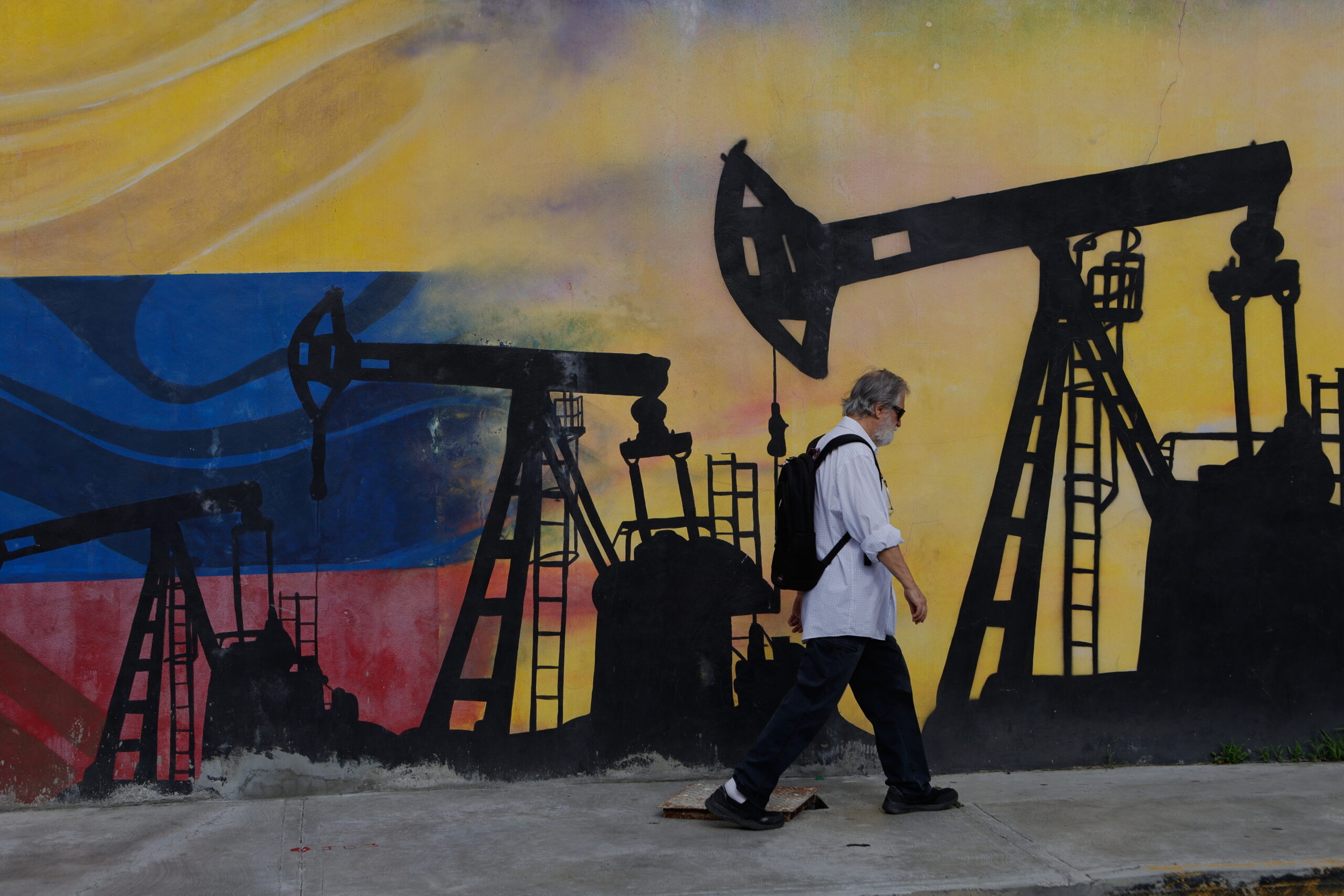
The main reason is that much of Venezuela’s oil reserves under discussion are not currently producing at significant levels.
Developing major oil fields requires substantial investment, infrastructure and time. Even if the agreement moves forward quickly, it could take several years before new production reaches the market.
Francisco Monaldi said a significant increase in Venezuelan oil production is highly unlikely in the short term. Therefore, the agreement is not expected to have a meaningful immediate effect on global oil markets.
Gasoline prices in the United States are influenced by global crude oil prices, refinery capacity, transportation costs, seasonal demand and other market factors. In addition, a future increase in Venezuelan production could potentially contribute to additional global supply, but that effect would take time to materialize.
A long-term strategy rather than an immediate solution
The U.S.-Venezuela oil agreement could eventually reshape the relationship between Washington and Caracas. It could also open the door to greater American involvement in Venezuela’s energy industry.
However, the agreement faces significant questions surrounding its structure, investment incentives, political legitimacy and the enormous infrastructure requirements needed to expand Venezuelan production.
For American consumers, the most important takeaway is that the agreement is unlikely to translate into cheaper gasoline in the near future.
If Venezuela’s production eventually increases substantially, the additional oil could contribute to global supply and potentially put downward pressure on prices. But that scenario remains several years away and depends on the successful development of oil fields, political stability and sustained investment.
For now, experts say the agreement should be viewed less as an immediate solution to high gas prices and more as a potentially significant long-term shift in U.S. energy policy and its relationship with Venezuela.