
A new era of cosmic discovery is about to begin
The universe is filled with mysteries that continue to challenge scientists, from the nature of dark energy and dark matter to distant planets and ancient galaxies. Now, astronomers are preparing to launch a powerful new tool. This tool could fundamentally change how humanity studies the cosmos.
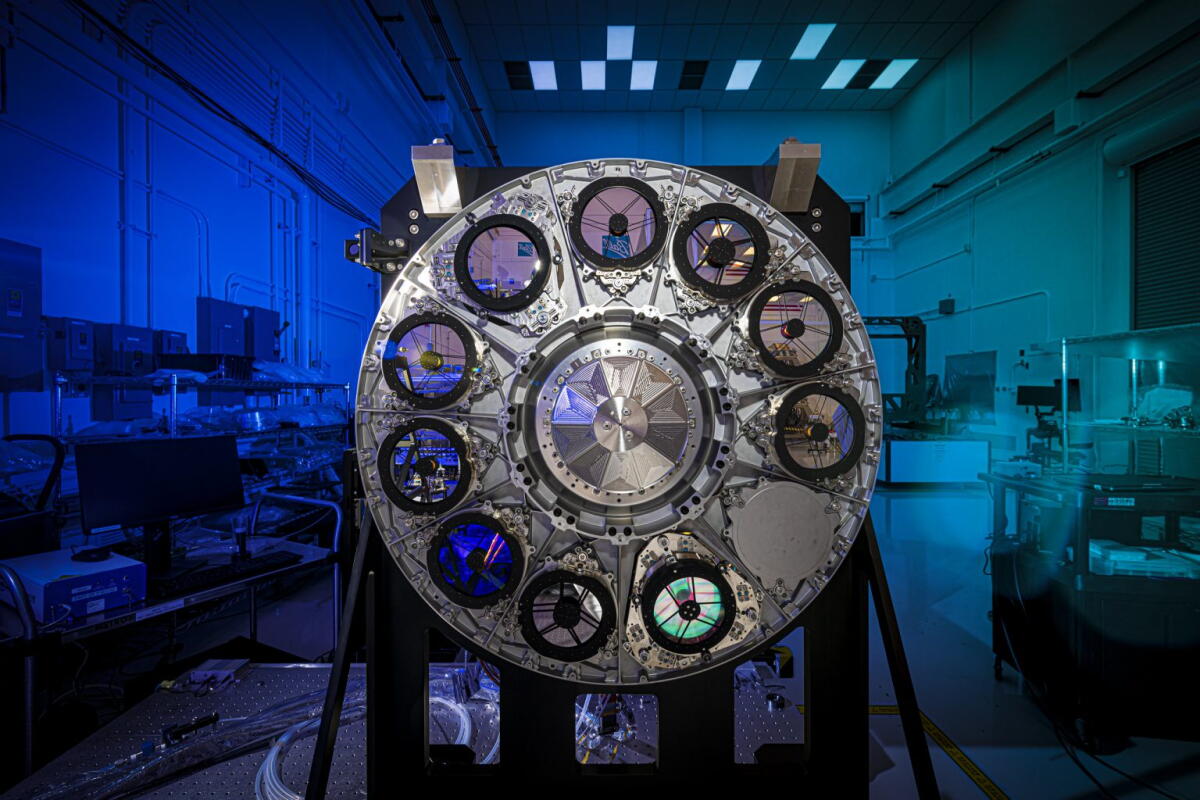
NASA’s $4.3 billion Nancy Grace Roman Space Telescope is scheduled to launch on August 30. It is named after Nancy Grace Roman, NASA’s first chief astronomer and one of the key figures behind the development of the Hubble Space Telescope. The observatory is designed to survey enormous portions of the sky. Moreover, it will investigate some of the biggest questions in modern astronomy.
Roman could provide critical new evidence about how the universe has expanded over time. It could also discover thousands of distant worlds and previously unknown galaxies.
A telescope with an unusual history
The Roman Space Telescope has an extraordinary origin story.
About 15 years ago, NASA was developing plans for a new observatory that could search for Type Ia supernovas — exploding stars that astronomers use as cosmic distance markers.
These supernovas played an important role in one of the most significant discoveries in modern cosmology. Specifically, the expansion of the universe is accelerating because of a mysterious phenomenon known as dark energy.
The discovery fundamentally changed scientists’ understanding of the universe and eventually contributed to the 2011 Nobel Prize in Physics.
During the development of the telescope, however, the National Reconnaissance Office approached NASA with an unexpected proposal.
The agency offered NASA an unused satellite originally designed for surveillance missions. Rather than looking down toward Earth, the spacecraft could potentially be modified to look toward the universe.
NASA accepted the offer.
After extensive modifications, the former spy telescope became the foundation for what is now the Nancy Grace Roman Space Telescope.
Roman could challenge our understanding of dark energy
One of Roman’s most important scientific missions will be to investigate dark energy. Another will be to determine whether scientists’ current model of the universe accurately describes reality.
Cosmologist Daniel Scolnic of Duke University believes Roman could provide decisive evidence about whether the prevailing cosmological model is correct.
In recent years, astronomers have discovered measurements suggesting that some aspects of the model may not fully explain observations of the universe.
Roman’s massive surveys could provide enough data to determine whether those discrepancies represent measurement problems or evidence of new physics.
The telescope will study the distribution and evolution of galaxies and supernovas. This will help scientists understand how the universe has expanded throughout cosmic history.
A massive survey that Hubble could not accomplish
Roman will not simply take individual images of interesting objects. Its greatest strength will be its ability to survey huge areas of the sky quickly.
Although the telescope is expected to have a level of sensitivity and sharpness comparable to Hubble, its much wider field of view will allow it to observe enormous regions of space. It can do so in a fraction of the time.
One planned survey of the Milky Way illustrates the difference.
Roman could survey the galaxy’s stars in roughly one month — an undertaking that would take approximately a century using Hubble.
That capability could transform astronomy from a discipline focused on studying individual cosmic objects. It could become one increasingly driven by enormous datasets.
Searching for planets hidden across the galaxy
Roman will also be a powerful planet hunter.
Astronomers plan to use a technique called gravitational microlensing to detect planets that are extremely difficult or impossible to find using traditional methods.
The technique relies on the gravitational influence of a planet and its host star. When a distant planetary system passes in front of another star from Earth’s perspective, its gravity can slightly bend and magnify the background star’s light.
These subtle changes can reveal the presence of planets that would otherwise remain invisible.
Scott Gaudi of The Ohio State University and his colleagues have developed techniques that could take advantage of Roman’s capabilities.
Among the potential discoveries are planets located near the center of the Milky Way. These include worlds comparable in size and position to Jupiter, Saturn, Uranus and Neptune in our own solar system.
Roman could discover thousands of unexpected worlds
Scientists expect Roman to produce enormous catalogs of planets, stars and galaxies.
But some astronomers believe the telescope’s most important discoveries may be the ones nobody has predicted.
The history of astronomy has repeatedly demonstrated that new observing technologies can reveal phenomena that scientists did not know to look for.
Roman’s ability to survey vast regions of space could therefore lead to unexpected discoveries. These findings could reshape scientific theories in ways that cannot currently be anticipated.
The telescope’s mission is currently planned to last five years. This gives researchers a significant window to explore the universe on an unprecedented scale.
NASA plans to make Roman’s data widely accessible
Another important feature of the mission is its emphasis on making the data available beyond the traditional scientific community.
Roman’s observations will generate massive catalogs that researchers around the world will be able to access.
That could allow students, teachers, amateur astronomers and scientists at institutions with fewer resources to work with the same observations. These are the observations being analyzed by researchers at major universities.
The result could be a more open approach to astronomical discovery, with potentially groundbreaking findings coming from unexpected places.
A new chapter in space exploration
The Nancy Grace Roman Space Telescope represents a major expansion of humanity’s ability to observe the universe.
From investigating dark energy and the expansion of the cosmos to searching for distant planets and mapping enormous regions of the Milky Way, Roman is designed to answer questions. These are questions that have remained unresolved for decades.
Its greatest contribution, however, may come from discoveries scientists are not expecting.
As astronomer Wendy Freedman of the University of Chicago has noted, the history of astronomy shows that new observational capabilities often reveal something unexpected — and those surprises can become the most exciting discoveries of all.
With its launch approaching, the Roman Space Telescope is poised to begin a new chapter in humanity’s exploration of the universe.