SPOKANE, Wash. — Thousands of residents affected by the Spokane wildfires are beginning to return home weeks after devastating fires destroyed hundreds of properties across the region. While evacuation orders have largely been lifted, officials warn that returning residents still face potentially serious health and environmental hazards.
The burned areas remain a hazmat situation, according to Spokane emergency management officials, with dangerous materials scattered throughout properties damaged or destroyed by the fires.
The risks include lithium-ion batteries, household chemicals, lead-based materials, propane tanks and other hazardous debris that can remain after a structure burns.
Before residents can fully rebuild, authorities must first remove and safely dispose of the toxic materials left behind.
Spokane Wildfire Recovery Begins With Hazardous Debris Removal
Sarah Nuss, Spokane’s director of emergency management, says the city is focused on identifying and communicating the risks facing residents returning to their properties.
Although residents are being allowed back into affected neighborhoods, officials do not have the legal authority to prevent people from entering properties. Those properties may still contain dangerous materials.
The U.S. Environmental Protection Agency has begun arriving in the area to assist with the first phase of wildfire debris removal.
That process can take months or even years. This depends on the scale of destruction, environmental contamination and the availability of federal and local resources.
Among the potential hazards left behind are:
- Lithium-ion batteries
- Lead paint and siding
- Propane tanks
- Household chemicals
- Contaminated soil
- Ash and fine particulate matter
- Damaged utilities and infrastructure
- Other hazardous household materials
Officials are urging residents to take precautions while cleanup continues.
Survivors Describe the Devastation Left by the Old Trails Fire
The Old Trails Fire was one of three wildfires that erupted in the Spokane area during an extreme heat and wind event in early August.
The fire destroyed entire neighborhoods after flames crossed the Spokane River.
For residents Melissa and Chris Matthews, returning to their property has been an emotionally difficult experience.
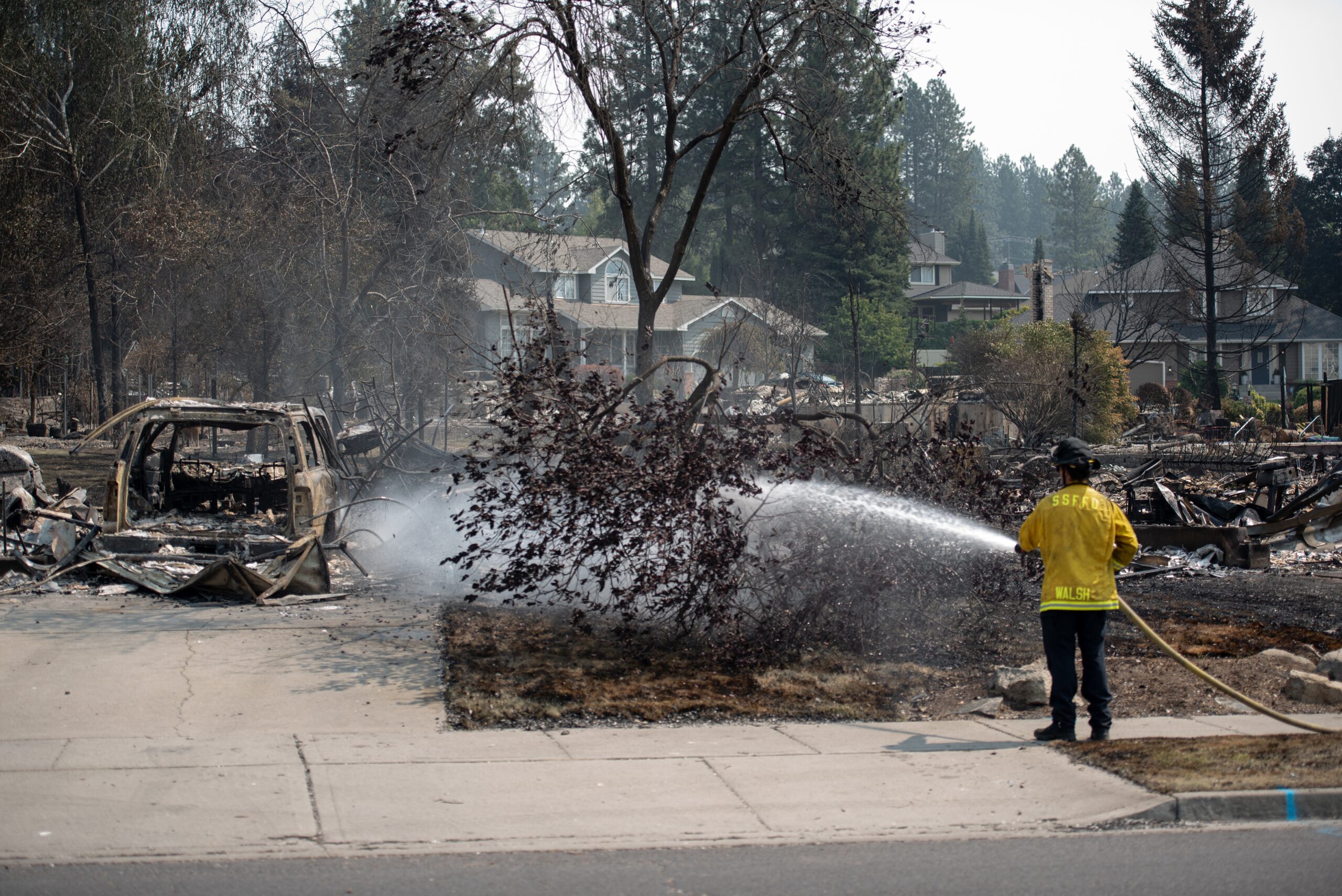
Their home, which had stood for approximately three decades, was reduced to rubble. Their vehicle was also destroyed, leaving behind only a twisted metal frame.
Melissa described the neighborhood as looking as though a bomb had gone off.
The couple has filed an insurance claim and hopes to rebuild. However, they recognize that the recovery process could take years.
Chris Matthews estimates that it could take three or four years before substantial rebuilding takes place.
Previous wildfire disasters suggest that such a timeline may not be unusual.
Research examining wildfire recovery has found that rebuilding can take years. Some communities continue to face significant challenges long after the flames have disappeared.
Wildfire Debris Creates New Health Risks for Residents
The destruction caused by the Spokane wildfires extends beyond burned homes.
Residents returning to affected neighborhoods may encounter toxic ash, contaminated soil, damaged batteries, chemical residues and other materials. These can pose health risks.
In some areas, workers wearing protective equipment are already sorting through destroyed properties.
Residents have also been provided with masks, gloves and other personal protective equipment.
Even relatively small amounts of wind can stir up dust and ash, creating uncomfortable conditions for people visiting their properties.
For survivors such as the Matthews family, the physical environment serves as a constant reminder. The wildfire recovery process is only beginning.
Officials Warn Residents About Water and Infrastructure
Wildfire damage can also create risks that are not immediately visible.
Disaster recovery specialists warn that fires can affect drinking water systems, underground pipes and other infrastructure.
Spokane officials are continuing to test the city’s water system for possible contamination.
Residents whose homes remain standing have been advised to take precautions, including having their properties inspected. They are also told to flush water pipes before fully resuming normal use.
The city is also encouraging residents to use protective equipment while cleaning their properties.
The scale of the destruction makes this work particularly challenging.
Lessons From Previous Wildfire Disasters
Spokane is not the first community to face the complicated recovery process that follows a major urban wildfire.
Communities in California, Hawaii and Colorado have faced similar challenges after catastrophic fires destroyed residential neighborhoods.
In Paradise, California, for example, only a fraction of the area burned during the 2018 Camp Fire had been rebuilt three years after the disaster.
Environmental engineer Andrew Whelton, who has worked on wildfire recovery efforts, argues that testing should continue even after visible debris has been removed.
According to Whelton, communities need to determine whether hazardous chemicals remain in soil and other parts of the environment.
The experience of previous disasters could therefore provide Spokane with a roadmap for navigating its own recovery.
Spokane Begins a Long Road Toward Recovery
For Spokane residents, returning home is only the first step in what could be a lengthy recovery.
Some neighborhoods are beginning to reopen, while other properties have been completely destroyed. These properties require extensive debris removal before reconstruction can begin.
The situation is particularly difficult for residents who have lost their homes and are waiting for insurance payments, federal assistance and other resources.
With affordable temporary housing already limited, some residents may have little choice but to return to damaged properties even while cleanup operations continue.
The recovery from the Spokane wildfire will ultimately depend on coordinated efforts involving city officials, state and federal agencies, environmental specialists, insurers and residents.
While the fires themselves have been extinguished, the hazards they left behind mean that Spokane’s recovery is only beginning.