
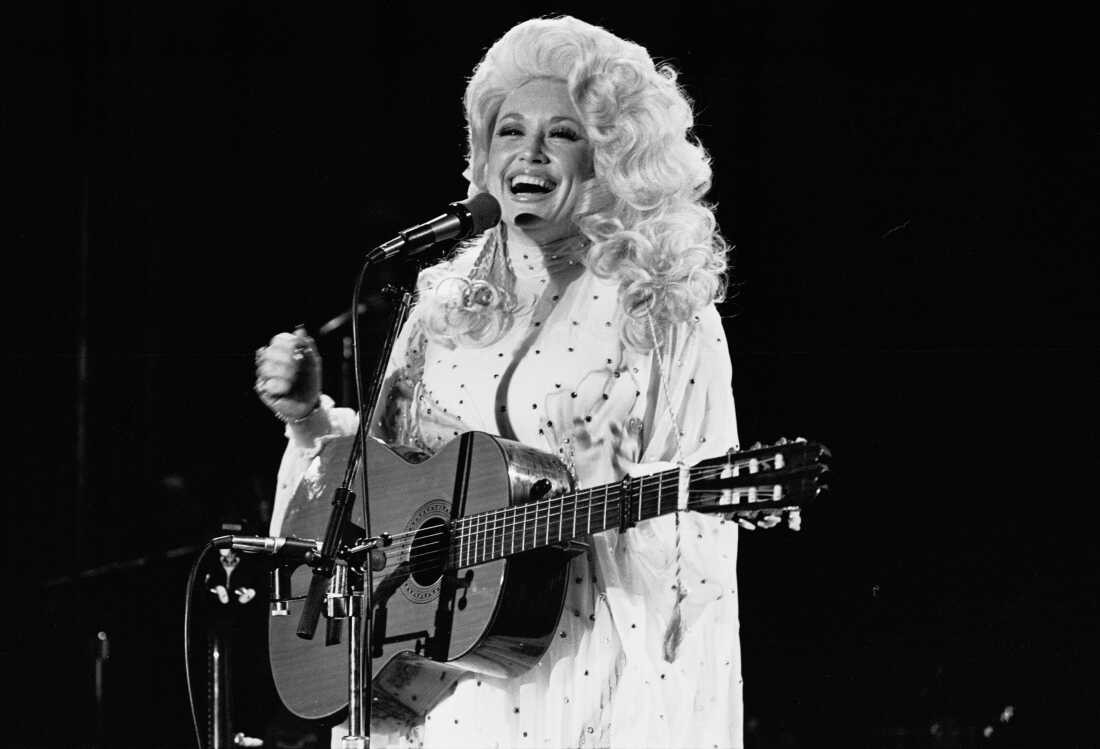
Dolly Parton’s extraordinary career was about far more than chart-topping hits. Across seven decades, the country music legend created a body of work that chronicled love, heartbreak, poverty, ambition, womanhood and resilience — songs that ultimately became part of America’s cultural identity.
Until her passing, Parton occupied a rare place in American popular culture. Her immense musical talent established her as one of country music’s defining artists, while her humor, warmth, charisma and unmistakable personality allowed her to transcend the genre and become a beloved figure across generations.
Her songs were deeply personal, yet remarkably universal. That combination helped turn Parton into something more than a successful songwriter: she became one of the architects of an American musical tradition.
Dolly Parton’s Music Became Part of American Culture
Parton’s songwriting career took shape during a period of profound change in the United States. Beginning in the 1960s, she wrote about experiences that were often overlooked in mainstream music, particularly the lives, struggles and aspirations of women and working-class Americans.
Her 1967 hit “Dumb Blonde” immediately demonstrated her ability to challenge assumptions about women while maintaining the wit and accessibility that would become hallmarks of her music.
The song presented a woman refusing to be defined by other people’s expectations — a theme that would appear repeatedly throughout Parton’s career.
A few years later, “Coat of Many Colors” offered a very different perspective. Drawing from Parton’s Appalachian upbringing, the song transformed childhood poverty into a story about dignity, family and pride.
Rather than treating poverty simply as hardship, Parton found emotional richness in the experiences that shaped her childhood. Her ability to turn personal memories into universally relatable stories became one of her greatest strengths as a songwriter.
From “Jolene” to “I Will Always Love You”
Parton’s songwriting reached another level in the early 1970s, when she created some of the songs that would define her legacy.
Among them was “Jolene,” a song built around jealousy, insecurity and the fear of losing someone you love. Released in 1973, it became one of Parton’s signature compositions and eventually took on a life far beyond its original recording.
The song’s emotional simplicity helped make it extraordinarily adaptable. Artists from different generations and genres have interpreted it, demonstrating the enduring power of Parton’s songwriting.
“Jolene” also revealed another side of Parton’s work. Beneath its catchy melody was a story about vulnerability and romantic competition, but the narrator’s plea ultimately gave agency to the woman at the center of the story.
That combination of emotional honesty and musical accessibility became a defining characteristic of Parton’s greatest songs.
“I Will Always Love You” Became a Global Classic
If “Jolene” established Parton as a songwriter capable of creating enduring characters and stories, “I Will Always Love You” demonstrated how powerful her simplest emotions could become.
Parton originally wrote the song as a farewell to Porter Wagoner, the country performer who had helped launch her career. It was not simply a song about romantic love, but about accepting the end of an important relationship while maintaining affection and gratitude.
Parton recorded the song herself, and it became a hit in 1974 and again in 1983.
But its cultural reach expanded dramatically when Whitney Houston recorded her version for The Bodyguard soundtrack in 1992.
Houston’s interpretation transformed Parton’s country ballad into a global pop phenomenon, introducing the composition to an entirely new audience and demonstrating the remarkable flexibility of Parton’s songwriting.
The song’s success also underscored an important quality of Parton’s work: her compositions often contained enough emotional space for other performers to make them their own.
A Songwriter Who Gave Voice to Women and Working-Class America
One of the defining characteristics of Parton’s catalog is the breadth of experiences represented in her songs.
She wrote about romantic betrayal, poverty, motherhood, ambition, sexuality, family, grief and independence. Her characters were frequently women confronting circumstances that attempted to limit them.
Yet Parton rarely reduced those experiences to simple messages.
Her songs could be funny and heartbreaking, glamorous and humble, sensual and deeply sentimental. That complexity helped her music remain relevant as American culture changed around her.
Her Appalachian roots were equally important. Songs such as “Coat of Many Colors” brought rural working-class life into the mainstream without sacrificing its dignity.
Parton understood that a story about one family, one relationship or one small town could speak to millions of people if it was told with enough honesty.
Dolly Parton’s Legacy Transcended Country Music
Parton ultimately became much more than a country music star.
Her songs were recorded and reinterpreted by artists across genres, while her influence extended into film, television, business, philanthropy and American popular culture.
She also developed an unusual ability to remain recognizable and beloved across political, cultural and generational divides. For many Americans, Parton represented warmth, humor and generosity at a time when public life was increasingly defined by conflict.
That broad appeal was inseparable from her music. Her songs did not require listeners to share the same background or beliefs. They simply required them to recognize something human in the stories she told.
And that may be the clearest explanation for her extraordinary longevity.
An American Songbook of Her Own
The phrase “American songbook” traditionally evokes a collection of compositions that have become part of the country’s shared cultural heritage. Parton’s catalog arguably deserves a place in that tradition.
“Jolene,” “Coat of Many Colors,” “I Will Always Love You” and many other compositions are more than successful country songs. They are cultural reference points — works that have been passed between generations, reinterpreted by other artists and continually rediscovered by new audiences.
Parton did not simply write songs that people remembered.
She wrote songs that people used to tell their own stories.
That is what makes her musical legacy so extraordinary. Her greatest achievement was not the number of hits she produced, but the emotional vocabulary she gave to millions of listeners.
Dolly Parton created music that could belong to everyone — and in doing so, she created an American songbook of her own.