Medicare’s new $50-a-month obesity drug program is seeing faster-than-expected demand, with CVS and Walgreens each reporting roughly 100,000 prescriptions filled since its July launch.
Medicare’s new effort to expand access to obesity medications is gaining momentum, with major pharmacy chains reporting significant demand less than two months after the program began.
CVS and Walgreens each told NPR they have filled around 100,000 prescriptions through the Bridge program, a temporary initiative that allows certain Medicare beneficiaries to obtain obesity medications for $50 a month.
The program began in July and is scheduled to continue through the end of 2027. Its early uptake suggests that demand for GLP-1 medications remains strong among older Americans who meet the program’s eligibility requirements.
Medicare’s $50 obesity drug program explained
Medicare is generally prohibited by law from covering medications used specifically for weight loss. The Bridge program is designed to work within those restrictions by allowing coverage for beneficiaries who meet specific medical criteria.
For example, eligible patients must have obesity combined with certain health conditions, such as difficult-to-control high blood pressure. However, people with sleep apnea or Type 2 diabetes are excluded because Medicare Part D can already cover GLP-1 medications when they are prescribed for those conditions.
The program represents a significant change in access for some Medicare beneficiaries, particularly as the cost of obesity medications has remained a major barrier for patients.
According to Jeremy Shane, a nonresident scholar at the USC Leonard D. Schaeffer Institute for Public Policy & Government Service, the early prescription numbers indicate substantial interest. More information about his work is available through the USC Schaeffer Institute at https://schaeffer.usc.edu/people/jeremy-l-shane/.
Walgreens sees stronger-than-expected demand
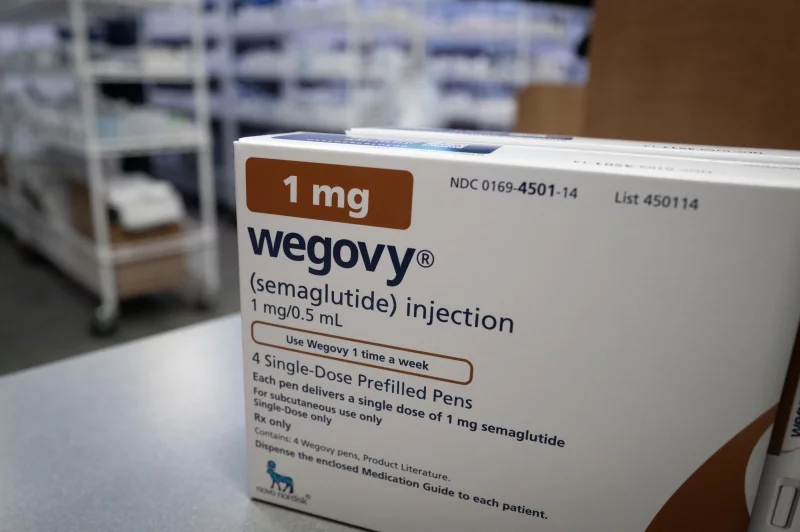
Walgreens says it prepared its pharmacies ahead of the July launch by increasing supplies of several GLP-1 medications, including Wegovy, Zepbound and Foundayo.
Rick Gates, Walgreens’ chief pharmacy officer, said the company expected demand but saw somewhat greater uptake than anticipated.
The pharmacy chain also had to make adjustments as the program began, although Gates said it has not experienced supply problems related to the Bridge program.
One notable finding is that approximately half of the patients Walgreens has served through Bridge had never previously used GLP-1 medications.
That creates an additional role for pharmacists. Patients starting these medications can experience side effects such as nausea and diarrhea, and pharmacists can help patients understand those effects and manage treatment.
The issue is particularly important because stopping treatment prematurely could undermine the potential benefits of medications that often require ongoing use.
CVS has filled more than 100,000 Bridge prescriptions
CVS reported that it had filled more than 100,000 Bridge prescriptions by the middle of August.
The company also said it offers other options for patients who do not qualify for the program, including prescription discount cards, manufacturer coupons and manufacturer vouchers.
The early numbers from CVS and Walgreens are significant because they represent only a portion of the pharmacy market. Walmart, another major pharmacy operator, did not provide NPR with a specific number of Bridge prescriptions but said demand has increased week over week.
Bridge prescriptions have now been processed at more than 5,000 Walmart and Sam’s Club pharmacies across the United States, according to the company.
Millions of Medicare beneficiaries could qualify
The early prescription numbers could represent only a small share of the potential population eligible for the program.
Medicare previously estimated that roughly 4 million beneficiaries could meet the eligibility criteria. Shane said the approximately 200,000 prescriptions reported by CVS and Walgreens could represent between 5% and 10% of the potentially eligible population when prescriptions from other pharmacies are taken into account.
However, the exact number of people participating remains unclear.
The Centers for Medicare and Medicaid Services has not provided NPR with comprehensive enrollment figures. CMS Administrator Mehmet Oz said in a July 29 social media post that 250,000 beneficiaries had signed up, although it is unclear how many of those people had received the required prior authorization to actually fill a prescription.
That distinction matters because enrollment does not necessarily mean that a patient has started treatment.
The potential cost could reach billions
The Bridge program also raises questions about how much the expansion of obesity drug coverage could ultimately cost Medicare.
The administration has not disclosed an estimate for the total cost of the 18-month program. However, the health policy organization KFF estimated that the expense could range from approximately $1.3 billion to $10 billion, depending on participation among eligible beneficiaries. Its analysis is available at https://www.kff.org/medicare/nearly-four-million-medicare-beneficiaries-met-the-eligibility-criteria-in-2023-for-the-medicare-glp-1-bridge/.
For comparison, KFF estimates that Medicare Part D spent about $181 billion on prescription drugs in 2025. That broader spending figure puts the potential cost of the Bridge program into context, although the two figures measure different aspects of Medicare spending.
The financial debate is likely to focus not only on the price of the medications but also on whether treating obesity can reduce other healthcare costs over time.
The long-term value of GLP-1 medications
Shane argues that focusing solely on the immediate cost of obesity medications misses a larger question: whether the drugs can prevent or delay more expensive health problems later in life.
Obesity is associated with multiple chronic conditions, and Medicare spends substantial amounts treating complications that develop as patients age.
If effective treatment helps some beneficiaries avoid or delay serious complications, the resulting savings could offset part of the cost of providing the medications.
A research paper from the USC Schaeffer Institute examined the potential long-term benefits of broader Medicare coverage for weight-loss medications, including possible effects on healthcare spending and quality of life. The paper can be accessed at https://schaeffer.usc.edu/wp-content/uploads/2024/10/2023.04_Schaeffer_White_Paper_Benefits_of_Medicare_Coverage_for_Weight_Loss_Drugs.pdf.
The argument is therefore less about whether the drugs are expensive and more about whether their use produces enough health benefits to justify the expense.
What happens next for Medicare obesity coverage?
The Bridge program is scheduled to run through the end of 2027, giving Medicare time to assess participation, costs and potential health outcomes.
The early response from major pharmacy chains suggests that demand is already substantial. However, prescription volume alone does not establish whether the program will reduce overall Medicare spending or improve long-term health outcomes.
Several questions remain unanswered, including how many eligible beneficiaries will ultimately participate, how long patients will remain on treatment and whether improved health outcomes will translate into lower spending elsewhere in the Medicare system.
The program could therefore become an important test of how Medicare evaluates expensive medications that may also reduce the burden of chronic disease.
For now, the first weeks of the Bridge program offer one clear signal: there is significant demand among Medicare beneficiaries for more affordable access to obesity medications.