
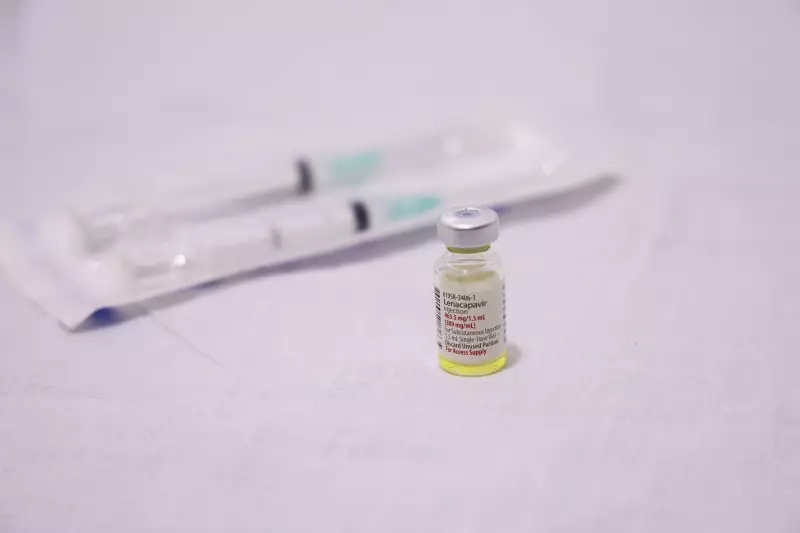
The promise of lenacapavir HIV prevention is unusually simple: two injections a year could replace the daily routine required by oral PrEP for people who want protection from HIV. The World Health Organization recommends injectable lenacapavir as an additional PrEP option, citing its strong effectiveness and potential to help people who struggle with daily pills, stigma or regular access to health services.
The science is not the main question anymore. The harder issue is getting the drug to the people who need it.
Uganda is among the countries beginning to introduce lenacapavir for HIV prevention. Its Ministry of Health announced the rollout in April 2026, following regulatory approval earlier in the year.
That makes Uganda an important test case. The country has decades of experience with HIV prevention, but it also has rural communities, limited health resources and large distances between some patients and clinics.
For people at risk of HIV, those practical problems can matter just as much as the drug itself.
Why lenacapavir HIV prevention is different from daily PrEP
Lenacapavir belongs to a newer generation of HIV medicines designed to remain active in the body for long periods. For HIV prevention, it is administered twice a year rather than taken as a daily tablet.
That difference may sound small. It is not.
Daily PrEP works extremely well when people take it consistently. But remembering a pill every day can be difficult. Some people also worry that keeping HIV medication at home could reveal their sexual health status to a partner or family member.
A twice-yearly injection removes much of that routine.
The WHO describes lenacapavir as the first twice-yearly injectable PrEP option and says it could be particularly useful for people who face problems with adherence, stigma or access to healthcare.
Clinical trials helped drive that enthusiasm. The PURPOSE studies found extremely high protection against HIV among participants receiving lenacapavir for prevention. The results were strong enough to change the conversation around what PrEP can look like.
But there is an important distinction between efficacy and access.
A medicine can work exceptionally well in a clinical trial and still have a limited public health effect if people cannot get it, clinics cannot keep it in stock or health workers do not have enough resources to deliver it.
The World Health Organization’s lenacapavir guidance therefore places the drug within a broader HIV prevention strategy rather than presenting it as a replacement for every existing option.
That matters in Uganda, where oral PrEP remains part of prevention programs and health workers must continue reaching communities that are difficult to serve.
Uganda’s rollout exposes the gap between a breakthrough and access
Uganda received its first major shipment of lenacapavir in February 2026. The shipment contained 19,200 doses and was intended for high-burden and high-incidence districts.
The country’s rollout began in April.
The Global Fund said in April that Uganda was one of nine African countries receiving early shipments as countries started introducing the new prevention option. The wider program aims to reach millions of people in high-incidence, resource-limited countries through 2028.
Yet the arrival of the drug does not automatically solve the delivery problem.
Uganda has remote communities where patients may travel long distances to reach healthcare facilities. In some areas, health workers already rely on boats or other difficult forms of transport to deliver HIV prevention services.
A six-month injection could reduce the number of clinic visits. That could be particularly useful for people who live far from healthcare facilities.
However, the injection still requires a functioning health system.
Clinics need trained staff. They need reliable supplies. Patients need testing and follow-up. Health workers also need to identify people who are eligible for PrEP and explain how the treatment works.
Those requirements become harder when funding and staffing are under pressure.
The Uganda Ministry of Health’s rollout information presents lenacapavir as an expansion of prevention choices, rather than a standalone solution.
That distinction is important because HIV prevention depends on several tools working together.
Oral PrEP remains useful. Condoms remain important. Testing and treatment also play major roles in reducing transmission. A new injectable option adds another layer, particularly for people who find existing methods difficult to maintain.
The Global Fund says early rollout data show strong interest among several priority populations, including adolescent girls and young women, pregnant and breastfeeding women, and people starting PrEP for the first time.
The price problem could determine how far lenacapavir goes
The other major obstacle is cost.
The commercial price of lenacapavir in wealthy markets is far above the price that public-health programs in low-income countries can afford at scale. That creates a difficult question: how quickly can production expand while keeping the drug affordable?
Gilead Sciences, the company that developed lenacapavir, has signed voluntary licensing agreements with generic manufacturers. The aim is to expand production and eventually make lower-cost versions available in eligible countries. Gilead says the licensing arrangements could support access for millions of people in low- and middle-income countries.
The Global Fund is also working with manufacturers and procurement partners to accelerate access to quality-assured generic versions.
The Global Fund’s 2026 rollout plan targets access for an additional 1 million people, bringing its combined U.S.-backed ambition to 3 million people reached with lenacapavir through 2028.
That is a significant commitment. It is also small compared with the potential global need.
This is where the rollout becomes more complicated than the science. Countries need predictable financing, procurement systems and enough health workers to administer the injections. They also need supply chains that can keep the drug available after the first shipments arrive.
There is another risk: focusing too heavily on a new product while older prevention programs weaken.
If oral PrEP services lose staff or funding, adding lenacapavir will not automatically compensate for those losses. The strongest HIV prevention programs are likely to be the ones that offer several choices and allow people to select the method that fits their lives.
For Uganda, lenacapavir is therefore both a breakthrough and a test.
The drug has demonstrated what twice-yearly HIV prevention can achieve. The next challenge is much less glamorous: keeping the injections available, reaching remote communities, training health workers and making sure the people most exposed to HIV are not left waiting for the next shipment.
The Gilead global access strategy for lenacapavir lists Uganda among the countries where the prevention product is available and outlines plans for expanding supply through voluntary licensing and international procurement.
The success of lenacapavir HIV prevention will ultimately be measured not by how impressive the clinical trial results look, but by how many people can actually receive the injection twice a year.