
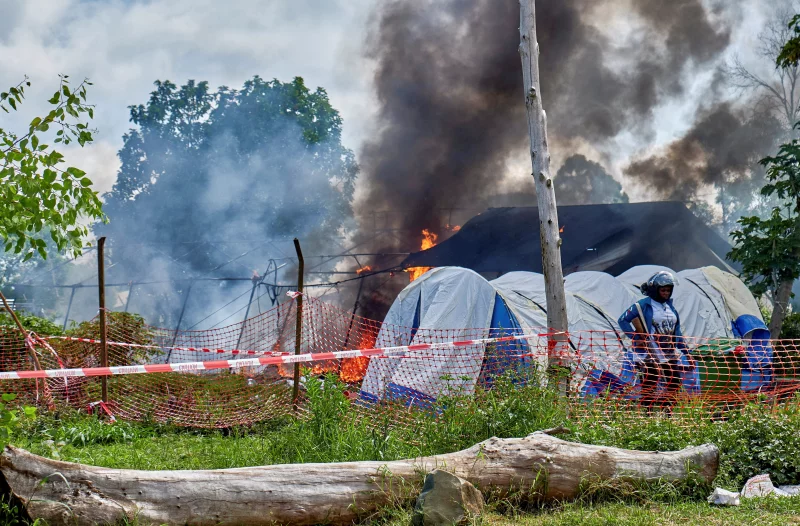
KINSHASA — Ebola clinic attacks in the Democratic Republic of Congo are intensifying concerns among humanitarian organizations and health officials. This is because growing misinformation, panic and anger continue disrupting emergency response operations across affected communities.
Several treatment centers handling suspected Ebola patients were attacked within days after the outbreak escalated internationally. Medical staff fled facilities while patients escaped during the chaos, creating additional fears about uncontrolled virus transmission in eastern Congo.
Health officials working on the ground say the violence reflects a dangerous collapse of trust between local communities and medical responders. Furthermore, many residents continue questioning the legitimacy of the outbreak while false claims spread rapidly across social media platforms.
Public health updates and outbreak monitoring data continue appearing through https://www.who.int/” target=”_blank” rel=”noopener noreferrer”>World Health Organization. There, international agencies are coordinating emergency containment efforts.
Ebola Clinic Attacks Fueled by Rumors and Misinformation
The Ebola clinic attacks have revived memories of previous outbreaks in Central and West Africa. In those outbreaks, fear and misinformation repeatedly triggered hostility toward aid workers and medical facilities.
Doctors and humanitarian organizations operating in Congo say many residents believe treatment centers are places where patients go to die rather than recover. In addition, the extremely high fatality rate associated with Ebola has intensified those suspicions.
Rumors circulating online falsely claim that Ebola does not exist. Moreover, some say that humanitarian organizations are profiting from the outbreak and that lifesaving treatments are intentionally being withheld from local populations.
Regional disease prevention efforts are also being coordinated through Africa Centres for Disease Control and Prevention. At this site, medical teams are working to counter misinformation and strengthen public communication strategies.
Health workers say rebuilding confidence inside affected communities has become one of the most critical aspects of the outbreak response. To support this, local leaders, churches and radio stations are now being used to distribute verified health information and challenge false narratives spreading online.
Several organizations are also prioritizing the recruitment of local staff members who already have trusted relationships within communities. Emergency teams believe these connections may reduce hostility and improve cooperation during medical interventions.
Burial Traditions Become a Major Source of Conflict
One of the biggest triggers behind the Ebola clinic attacks involves funeral practices and the handling of bodies after death.
Traditional burial customs across many Congolese communities involve washing, touching or remaining physically close to the deceased for extended periods. During an Ebola outbreak, these rituals create a major transmission risk because the virus can remain highly contagious after death.
Medical teams therefore enforce strict burial procedures designed to prevent direct contact with infected bodies. However, these restrictions frequently create emotional confrontations between families and health workers.
Information about Ebola transmission risks and protective measures continues to be published through Centers for Disease Control and Prevention. This site provides updated guidance regarding infectious disease containment protocols.
Some recent attacks reportedly began after relatives demanded the return of a loved one’s body for a traditional funeral ceremony. Medical teams refused because of contamination risks, escalating tensions around treatment centers.
Authorities near outbreak zones have also imposed restrictions on funeral attendance in an attempt to reduce transmission rates. In some cases, armed security personnel have been deployed during burials to prevent violence and unauthorized access to bodies.
Humanitarian workers say these confrontations demonstrate how deeply Ebola response measures can clash with cultural traditions. This clash is especially strong during periods of grief and fear.
New Strategies Aim to Rebuild Community Trust
Humanitarian organizations operating in Congo are now implementing new approaches designed to reduce fear surrounding Ebola treatment and burial procedures.
One major innovation involves the use of transparent body bags that allow relatives to view the face of a deceased family member without direct physical contact. Notably, health workers say the change has helped reduce distress among grieving families who previously felt disconnected from the burial process.
Medical teams are also involving relatives earlier in treatment discussions. With this, families understand the possible outcomes before a patient’s condition deteriorates.
Additional outbreak preparedness resources and emergency response information remain available through Doctors Without Borders. This organization is one of those actively supporting Ebola treatment operations in affected regions.
Religious leaders are increasingly being trained to participate in safe burial procedures because of their influence inside local communities. Aid groups believe trusted spiritual figures can help calm tensions and encourage families to cooperate with health protocols.
Community education campaigns delivered through churches, WhatsApp groups and local radio broadcasts are also expanding. This expansion comes as officials attempt to slow the spread of misinformation.
Health responders working across eastern Congo warn that without stronger community trust, controlling the outbreak could become significantly more difficult in the coming weeks.