
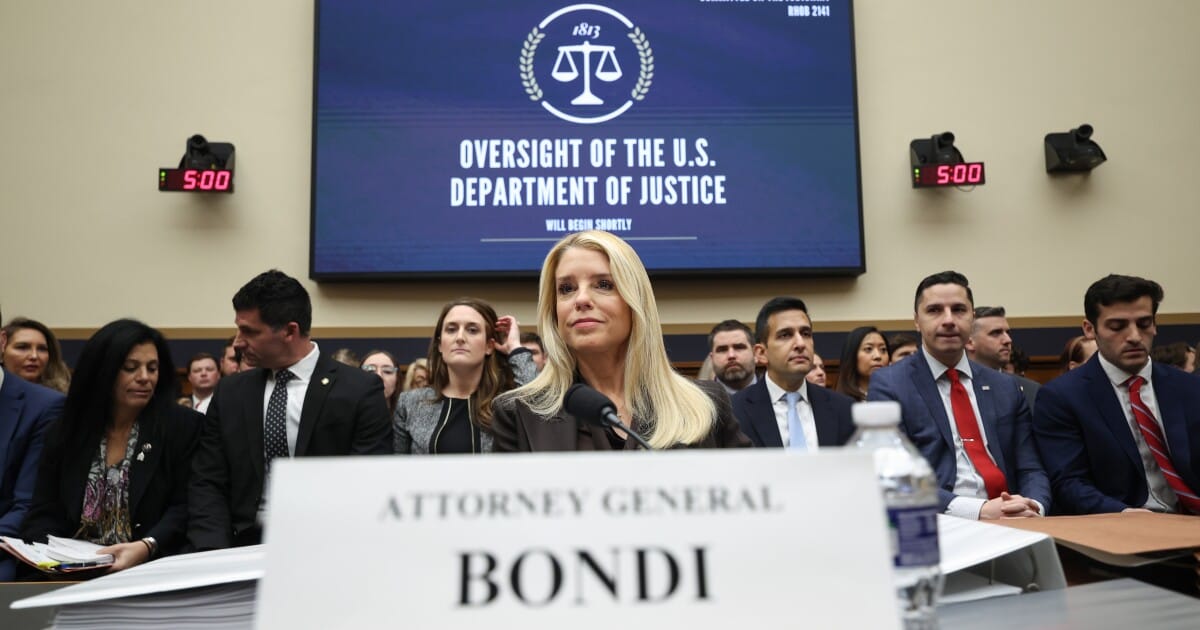
Pam Bondi Defends DOJ Handling of Epstein Files as House Investigation Intensifies
Former Attorney General Pam Bondi defended the Department of Justice’s handling of the Jeffrey Epstein files during testimony before members of Congress. She argued that the agency fulfilled its obligations regarding transparency while balancing the legal responsibility to protect victims. Her appearance comes as lawmakers continue a broad investigation into the federal government’s management of documents connected to the late financier and convicted sex offender Jeffrey Epstein.
The testimony highlights ongoing political and legal debates surrounding the release of millions of pages of records linked to Epstein. His criminal activities and associations with influential figures have remained the subject of intense public scrutiny for years. Meanwhile, congressional investigators, survivors, legal experts, and advocacy organizations continue to push for additional disclosures and greater accountability from government institutions involved in the review process.
For additional information on federal government oversight and investigations, readers can explore the official websites of the U.S. Department of Justice and the House Oversight Committee.
Congressional Review of the Epstein Files Continues
Bondi’s testimony focused largely on the Department of Justice’s efforts to review and release records connected to Epstein under legislative requirements established by Congress. According to her remarks, the review process involved extensive legal analysis and document examination. Furthermore, there was coordination among hundreds of attorneys and staff members responsible for identifying information suitable for public release.
The review of the Epstein files has become one of the most closely watched transparency efforts undertaken by federal authorities in recent years. The process involved evaluating millions of pages of records, photographs, investigative materials, and other documents. At the same time, officials attempted to safeguard sensitive personal information related to victims and witnesses.
Members of Congress have continued examining whether the federal government properly handled the release process and whether additional records remain undisclosed. Lawmakers from both parties have expressed interest in understanding how decisions were made regarding redactions, victim protections, and the publication of sensitive information.
The ongoing investigation is part of a broader congressional effort to examine institutional responses to sex trafficking crimes. Lawmakers want to determine whether government agencies adequately protected victims throughout the legal process. Additional information about congressional activities can be found through the U.S. House of Representatives. Further details are available from the Congress.gov Legislative Database.
Survivors Continue to Demand Transparency and Accountability
While Bondi defended the Department of Justice’s actions, survivors and advocacy groups have continued raising concerns regarding the handling of the files. Several survivors have argued that portions of the document release process exposed private information that should have remained confidential. Additionally, they claim that more records should be made public.
Advocates contend that transparency is essential not only for public accountability but also for ensuring that victims receive justice. They argue that understanding how institutions responded to allegations against Epstein may help identify weaknesses in systems designed to protect vulnerable individuals from exploitation and abuse.
The issue remains emotionally significant for many survivors who have spent years seeking recognition of the harm they experienced. Advocacy organizations have repeatedly emphasized the importance of maintaining victim-centered approaches when handling sensitive records. Moreover, they stress the need to ensure that government agencies remain accountable for their decisions.
The broader discussion surrounding the Epstein files has also reignited debates about how federal agencies balance transparency obligations with privacy protections. Legal experts note that releasing investigative records often involves complex decisions. These choices require careful consideration of ongoing legal interests, victim rights, and public expectations.
Political and Legal Questions Remain Unresolved
The congressional investigation continues amid broader questions regarding the government’s response to Epstein’s criminal activities and the actions of individuals connected to his network. Lawmakers have conducted interviews with multiple high-profile figures. This is part of their effort to reconstruct events and evaluate institutional decision-making.
One area of debate involves the format of congressional interviews. Some lawmakers and advocacy groups have argued that public hearings or videotaped testimony would provide greater transparency and allow the public to better understand witness statements and congressional findings. Nevertheless, others maintain that closed-door interviews can facilitate more detailed discussions involving sensitive information.
Beyond the document releases themselves, the investigation has become part of a larger conversation about government accountability, transparency laws, and public trust in federal institutions. Congressional leaders have stated that they intend to continue gathering testimony and reviewing evidence as they seek answers. Specifically, they want to know how government agencies handled matters related to Epstein and his associates.
As the investigation moves forward, lawmakers are expected to conduct additional interviews and examine whether further records can be released. Survivors, advocacy organizations, and members of Congress continue to call for greater transparency. They also emphasize the need to protect victims and ensure accountability throughout the process.
The outcome of the inquiry could influence future policies governing the release of sensitive investigative records, victim privacy protections, and congressional oversight of federal agencies. For many observers, the central question remains whether the ongoing investigation will provide a fuller understanding of how government institutions responded to one of the most controversial criminal cases in recent American history.