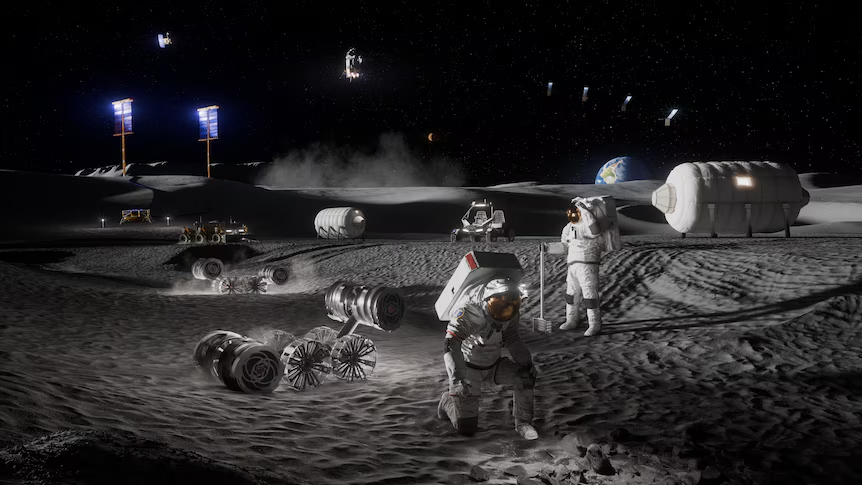
The latest NASA Moon Base Plans mark a major step toward establishing a long-term human presence on the Moon. The agency begins acquiring critical infrastructure designed to support future astronaut missions near the lunar south pole. Following the success of Artemis II, NASA has accelerated preparations for a permanent lunar outpost. The agency has awarded contracts for landers, rovers, and autonomous drones. These will help build the foundation for sustained exploration beyond Earth.
The initiative represents one of the most ambitious space development projects since the Apollo era. NASA’s strategy extends far beyond short-term lunar visits. Instead, it focuses on creating a functional environment capable of supporting scientific research, technology development, resource utilization, and future missions to Mars.
The agency’s roadmap outlines multiple phases spanning the remainder of this decade and well into the 2030s. A growing network of transportation systems, power infrastructure, robotic operations, and human habitats is expected. As a result, the Moon will be transformed into a strategic destination for international space exploration.
NASA Moon Base Plans Prioritize Lunar Transportation and Surface Mobility
A key component of the NASA Moon Base Plans involves deploying advanced transportation systems before astronauts begin long-duration stays on the lunar surface. In this effort, the agency recently selected commercial partners to deliver several pieces of equipment. These will become essential to future operations.
Among the first systems scheduled for deployment are lunar landers designed to transport cargo and equipment directly to the Moon’s south polar region. The area has become a priority because scientists believe it contains water ice deposits. These deposits could eventually be converted into drinking water, breathable oxygen, and rocket fuel.
The landers will also carry specialized lunar terrain vehicles that will allow astronauts and robotic systems to travel greater distances across challenging terrain. These next-generation rovers are expected to significantly expand exploration capabilities. This will be an improvement compared to previous lunar missions.
NASA’s broader Artemis exploration strategy can be explored through the Artemis Program. This program serves as the foundation for future human missions to the Moon.
In addition to crew transportation, mobility systems are being developed to support cargo delivery, scientific experiments, infrastructure deployment, and long-range exploration activities across the lunar surface. Therefore, these systems are essential for future lunar operations.
Drones and Robotics Expected to Play a Major Role in Lunar Operations
Another significant element of the NASA Moon Base Plans is the integration of autonomous drones and robotic technologies. NASA expects these systems to perform tasks that would otherwise require extensive astronaut involvement, improving efficiency and reducing operational risks.
The first lunar drones are expected to conduct reconnaissance missions, inspect infrastructure, monitor environmental conditions, and support navigation around the future lunar base. Moreover, autonomous systems may also assist with surveying potential construction zones and identifying scientifically valuable locations.
NASA officials envision a network of robotic assets operating continuously across the lunar environment. These systems could provide real-time data about terrain conditions, equipment status, and environmental hazards. This data will help mission planners coordinate activities across large areas.
Research involving advanced robotics and autonomous exploration technologies continues through collaborations with organizations such as the Jet Propulsion Laboratory. This institution develops many of NASA’s robotic exploration systems.
As lunar operations expand, autonomous technologies are expected to become increasingly important for supporting both scientific objectives and future commercial activities on the Moon. This trend will enhance the value of future lunar programs.
Artemis Missions Lay the Foundation for a Permanent Lunar Presence
The long-term vision behind the NASA Moon Base Plans extends beyond individual missions. NASA intends to create a sustainable presence that can support repeated crewed expeditions and eventually continuous operations.
The Artemis II mission demonstrated significant progress toward that objective by sending astronauts on a historic journey around the Moon. Future Artemis missions will test additional technologies required for lunar landings, orbital operations, and surface exploration.
Under current planning, Artemis III will help validate systems necessary for returning astronauts to the lunar surface. Subsequent missions are expected to expand infrastructure capabilities, including power generation systems, communication networks, logistics facilities, and scientific laboratories.
International collaboration remains an important component of the initiative. Through agreements such as the Artemis Accords, participating nations are working to establish common principles for peaceful lunar exploration and responsible space activities.
As infrastructure grows during the late 2020s and early 2030s, NASA expects to introduce permanent habitats capable of supporting longer crew stays. These facilities could eventually serve as testing grounds for technologies needed during future human missions to Mars.
Commercial participation also continues to expand through partnerships with aerospace companies developing transportation, logistics, and exploration systems. Companies involved in lunar transportation efforts can be found through organizations such as Blue Origin. Blue Origin is developing lunar landing technology for upcoming missions.
The evolving NASA Moon Base Plans represent a shift from short-duration exploration toward a long-term strategy focused on establishing a lasting human foothold beyond Earth. This shift is creating new opportunities for scientific discovery, technological innovation, and deep-space exploration.