
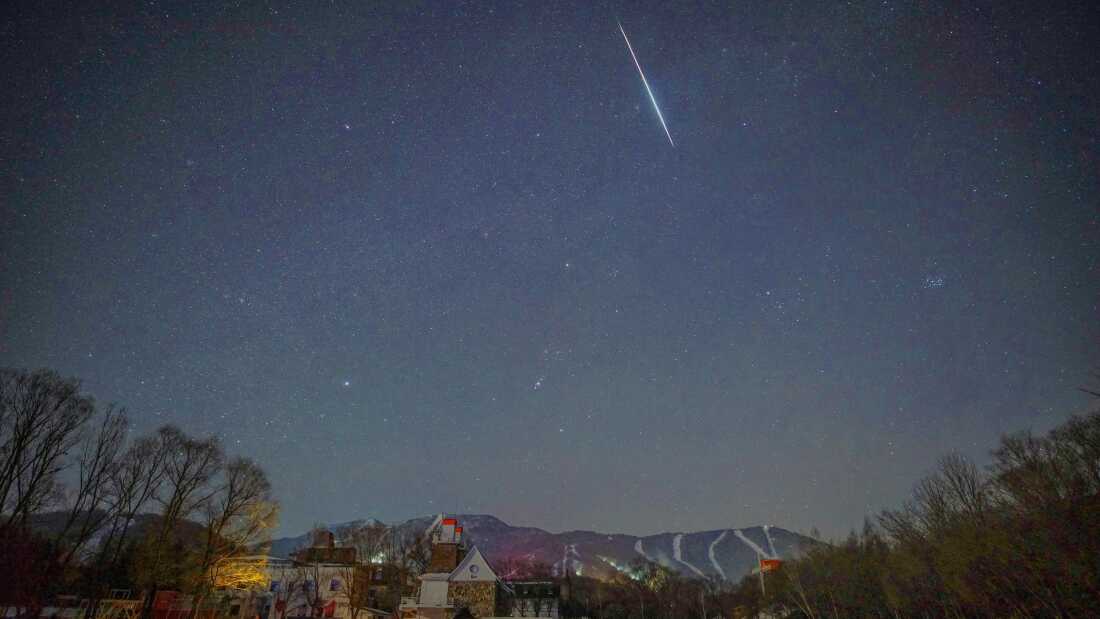
Skywatchers around the world are preparing for the annual Perseid meteor shower, one of the most spectacular astronomical events of the year. As the meteor shower approaches its peak, scientists are reminding the public that the bright streaks crossing the night sky are not actually stars.
Instead, what many people call shooting stars are tiny fragments of rock and dust traveling through Earth’s atmosphere at extremely high speeds.
What Are Shooting Stars?
According to planetary scientists, most meteors are surprisingly small—often no larger than a pea.
When these tiny particles enter Earth’s atmosphere, friction with the air causes them to heat up and glow. As a result, this creates the brilliant streaks of light commonly known as shooting stars.
Despite their dramatic appearance, the vast majority of these space rocks burn up completely before reaching the ground.
The Difference Between Meteors, Meteorites, and Meteoroids
Scientists distinguish several terms that are often confused:
- Meteoroid: A small rock or particle traveling through space.
- Meteor: The bright streak of light produced when a meteoroid enters Earth’s atmosphere.
- Meteorite: A fragment that survives its journey through the atmosphere and lands on Earth’s surface.
Most meteors visible during annual meteor showers never become meteorites because they completely disintegrate high above the ground.
Why the Perseid Meteor Shower Happens
The Perseid meteor shower occurs every year as Earth passes through a trail of dust and debris left behind by Comet Swift-Tuttle.
As our planet moves through this cloud of particles, countless tiny fragments collide with the atmosphere. Therefore, this produces dozens of visible meteors each hour under ideal viewing conditions.
The Perseids are considered one of the year’s best meteor showers because they are both bright and frequent. This makes them popular among amateur astronomers and casual observers alike.
A Favorite Event for Skywatchers
Experts recommend watching the Perseids from locations with minimal light pollution and clear skies. The best viewing conditions typically occur after midnight and before dawn. During these hours, the section of Earth facing the meteor stream is directed into the incoming debris.
No telescope or binoculars are required, as meteors can appear anywhere across the sky.
For many observers, the Perseid meteor shower offers an opportunity to witness one of nature’s most beautiful astronomical displays. In addition, it is a chance to learn more about the small pieces of cosmic debris that regularly enter Earth’s atmosphere.