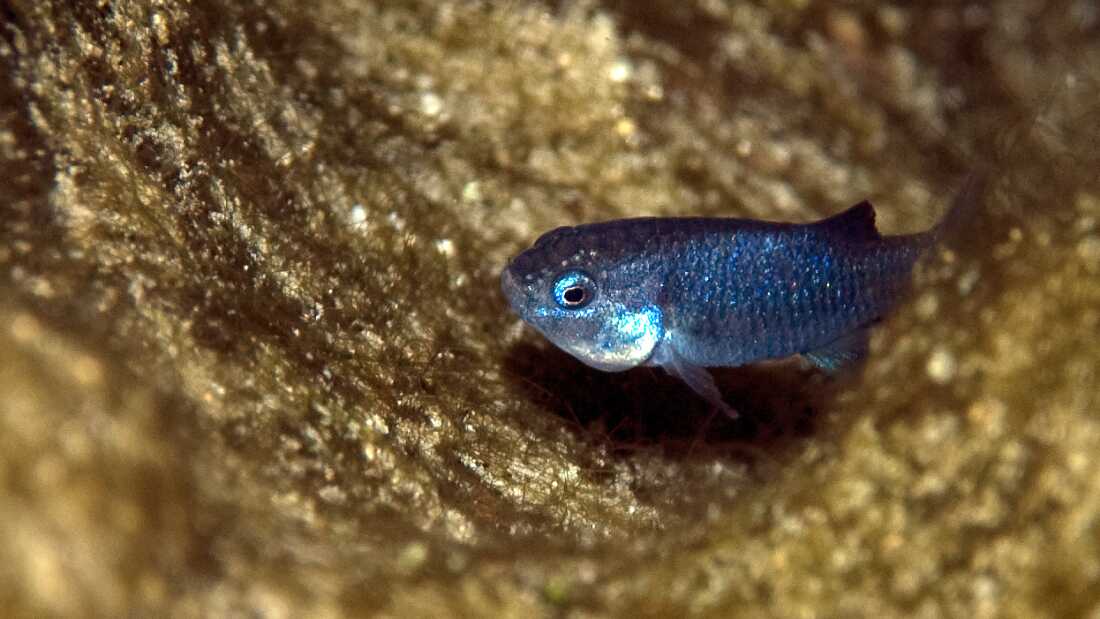
The survival of the Devils Hole pupfish has reached a defining moment in one of the most extreme and fragile ecosystems on Earth. Hidden within a geothermal cavern in Death Valley National Park, this critically endangered species has endured for thousands of years in complete isolation. However, recent events have underscored just how close it came to disappearing entirely, forcing scientists to make unprecedented conservation decisions under intense pressure.
A Population Collapse That Prompted Immediate Action
Roughly a year ago, wildlife officials recorded a dramatic population decline, with only 20 individual fish remaining in Devils Hole. This sudden drop alarmed conservationists, as such a small population significantly increases the risk of extinction due to environmental fluctuations or genetic bottlenecks.
In response, biologists from the U.S. Fish and Wildlife Service implemented an emergency intervention strategy. For the first time in history, captive-bred pupfish—raised over more than a decade as a safeguard against extinction—were introduced into the wild habitat. Initially, 19 fish were released, followed by approximately 50 more in subsequent efforts.
The results have offered cautious optimism. Recent observations counted 77 fish in the cavern, suggesting that the rapid intervention may have stabilized the population, at least in the short term. While still critically low, this number represents a significant recovery compared to the brink-of-extinction levels recorded earlier.
Scientific Trade-Offs and the Cost of Urgency
Despite the apparent success, the urgency of the situation led to compromises that may have long-term scientific consequences. Researchers did not collect genetic samples from the first group of captive-bred fish before their release, a step that is typically essential in conservation biology.
According to experts such as Christopher Martin, this omission means scientists can no longer distinguish between native wild fish and those introduced from captivity. As a result, it will be difficult to assess how the introduced fish contribute to genetic diversity, adaptation, and future population stability.
This gap in data limits the ability to answer critical scientific questions about reproduction, survival rates, and evolutionary resilience. In conservation programs, genetic tracking is often key to understanding whether interventions are truly effective or merely delaying decline. Without that information, long-term management becomes more uncertain.
Conservation Under Pressure in an Uncertain Environment
The decision to act quickly was influenced not only by ecological urgency but also by external pressures affecting federal scientists. Concerns over potential layoffs and a looming government shutdown created an atmosphere of uncertainty, forcing conservation teams to prioritize immediate action over comprehensive data collection.
Biologist Olin Feuerbacher emphasized that the team had to balance the ideal scientific approach with the reality of time constraints. Waiting to gather complete genetic data might have increased the risk of extinction, while acting quickly offered a chance to preserve the species.
The case of the Devils Hole pupfish highlights a broader challenge in modern conservation: the need to make high-stakes decisions in imperfect conditions. As environmental threats intensify and institutional pressures mount, scientists are increasingly required to act swiftly, even when it means sacrificing valuable data.
The fragile recovery of this species serves as both a testament to human intervention and a reminder of its limitations. While the immediate crisis may have been mitigated, the long-term survival of the Devils Hole pupfish will depend on continued monitoring, improved data collection, and sustained support for conservation efforts in one of the planet’s most extreme habitats.