
The Congo Ebola outbreak continues expanding across eastern regions of the country as health officials confirmed at least 282 cases linked to the deadly Bundibugyo strain of the virus. Authorities are struggling to contain the outbreak amid insecurity, weak medical infrastructure, and growing pressure on healthcare workers operating in remote conflict zones.
Most confirmed infections remain concentrated in Ituri province, where 264 cases have been identified. However, the outbreak has now spread across 22 health zones in three eastern provinces, raising concerns among international health organizations about the risk of wider regional transmission.
The Bundibugyo virus is one of the rarer Ebola species and currently has no approved vaccine or fully authorized treatment. Congolese authorities reported that the outbreak has already caused at least 42 deaths inside the country, while neighboring Uganda confirmed an additional fatality connected to the same outbreak.
Public health updates and outbreak monitoring information continue to be coordinated through who.
Health officials in Congo have identified several critical obstacles slowing containment efforts. Early case detection remains difficult in isolated communities, while limited laboratory access and transportation challenges complicate rapid isolation and contact tracing operations.
Medical teams are also attempting to strengthen infection prevention systems inside hospitals and clinics that often lack protective equipment, sanitation resources, and specialized isolation units.
Congo Ebola Outbreak Intensifies Pressure on Health Workers
The Congo Ebola outbreak has placed extraordinary pressure on frontline healthcare workers, many of whom operate under dangerous conditions while treating infected patients. Several medical professionals have themselves contracted the virus during the response effort.
Despite those risks, recovery stories emerging from treatment centers have become a powerful symbol of hope for communities affected by the outbreak.
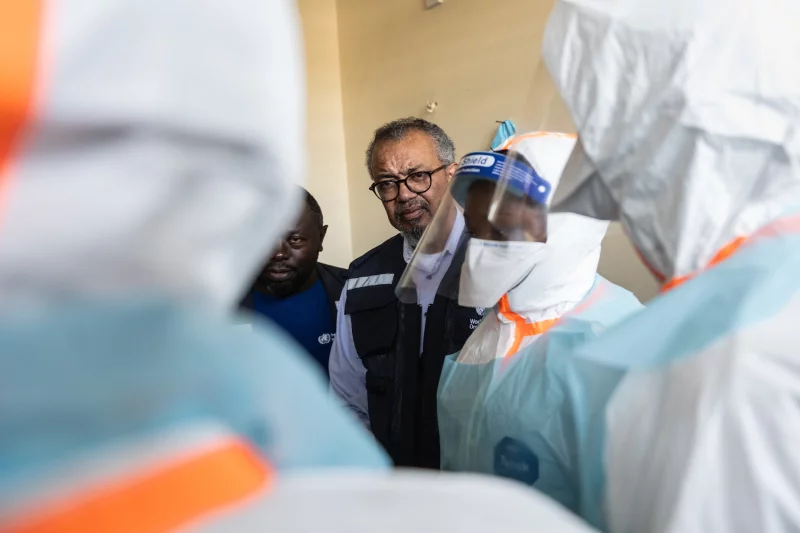
During a recent visit to Bunia, the capital of Ituri province, World Health Organization Director-General Tedros Adhanom Ghebreyesus met with healthcare workers who survived Ebola infections after receiving treatment at newly established facilities.
One survivor, nurse Baraka Bulambulu, described his emotional reaction after learning that his final test result was negative.
Another healthcare worker, nurse Ezo Étienne, recalled how symptoms suddenly appeared while he was treating patients inside a medical facility. He experienced dizziness and vomiting before later testing positive for Ebola.
The virus spreads primarily through direct contact with bodily fluids from infected or deceased individuals. Medical teams continue relying heavily on supportive care measures designed to manage symptoms and stabilize patients during treatment.
International efforts to accelerate vaccine development are also intensifying. The Coalition for Epidemic Preparedness Innovations announced new funding commitments of up to USD 62 million to support experimental vaccines targeting the Bundibugyo virus. Vaccine development initiatives involving global research partnerships continue through cepi.
Researchers from Moderna, the University of Oxford, and the International AIDS Vaccine Initiative are currently advancing separate vaccine candidates designed specifically for this Ebola strain.
Armed Conflict and Regional Instability Complicate Containment Efforts
The Congo Ebola outbreak is unfolding in one of the most unstable regions of Central Africa, where armed conflict continues disrupting humanitarian operations and public health responses.
Eastern Congo remains heavily affected by attacks from multiple armed organizations, including the Allied Democratic Forces, a rebel faction linked to the Islamic State network. Ethnic militias and regional insurgent groups also control several strategic territories near outbreak zones.
Security incidents have repeatedly interrupted medical interventions, delayed aid deliveries, and increased distrust toward healthcare personnel among some local communities.
Authorities recently confirmed that armed fighters killed multiple civilians in North Kivu province, an area already dealing with Ebola transmission concerns. At the same time, tensions involving the Rwanda-backed M23 rebel movement continue destabilizing cities and transportation corridors across eastern Congo.
Regional surveillance efforts have intensified as neighboring countries attempt to prevent cross-border transmission. Uganda has already reported several Ebola cases connected to the outbreak and introduced stricter border controls to reduce additional spread. Cross-border disease surveillance information and emergency coordination measures remain active through https://www.afro.who.int/
Public health specialists warn that controlling the outbreak will require sustained international support, expanded medical infrastructure, improved community engagement, and stronger security conditions in affected provinces.
Additional epidemiological data and infectious disease monitoring resources related to Ebola outbreaks in Africa continue to be published through cdc.gob