
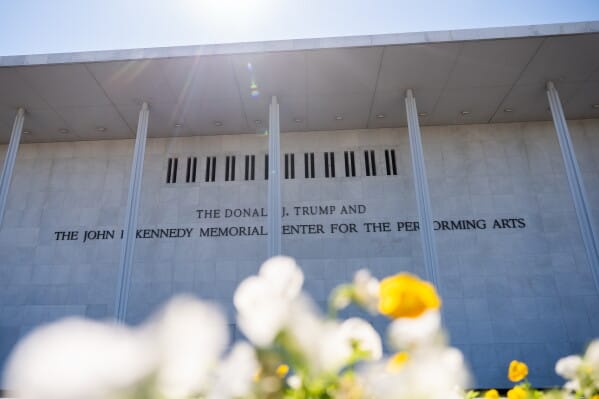
The legal battle over the Trump Kennedy Center intensified after a federal judge ruled that President Donald Trump cannot rename the iconic performing arts institution. The judge also temporarily stopped plans to close the venue for a major renovation project. This decision represents a significant development in an ongoing dispute involving governance, preservation, and the future direction of one of America’s most recognizable cultural landmarks.
The ruling determined that the Kennedy Center must continue operating under its congressionally established name honoring President John F. Kennedy. In addition, the court questioned the process behind proposed renovation plans. These plans would have shuttered the facility for two years beginning in July.
The center remains one of the nation’s leading performing arts venues. It continues to host events connected to American culture and heritage. More information about the institution can be found at The Kennedy Center.
Trump Kennedy Center Renaming Effort Faces Legal Setback
U.S. District Judge Christopher Cooper concluded that the legal authority to rename the Kennedy Center rests exclusively with Congress. The ruling emphasized that the institution was established as a memorial to President John F. Kennedy and cannot be formally renamed through unilateral actions by the center’s governing board.
Court documents stated that federal law clearly identifies the facility as a memorial dedicated to Kennedy. This makes any alternative designation legally questionable without congressional approval. As part of the decision, the judge ordered the removal of signage, branding materials, and online references that used titles such as “Trump Kennedy Center” or other variations combining the names of Trump and Kennedy.
The dispute has drawn attention from lawmakers, arts organizations, and legal observers. These groups argue that the center’s historic mission extends beyond changing political administrations. Information regarding federal legislative authority is available through Congress.gov.
President Trump criticized the ruling and argued that the institution faces serious financial and structural challenges. He maintained that substantial restoration efforts are necessary to modernize the facility and improve its long-term viability.
Court Questions Closure and Renovation Planning Process
Beyond the naming controversy, the court also temporarily blocked plans to close the Kennedy Center for a large-scale renovation project. The proposed closure was expected to begin shortly after events commemorating the 250th anniversary of the United States.
According to the ruling, board members may not have received sufficient information before approving the closure proposal. The court expressed concerns about whether decision-makers had enough documentation and analysis. These materials are necessary to evaluate the operational, financial, and cultural consequences of shutting down the venue for an extended period.
The administration and current board leadership have argued that significant restoration work is necessary to preserve the building and improve visitor experiences. Funding totaling approximately USD 257 million has reportedly been approved for renovation efforts.
Additional information about federal courts and judicial proceedings can be accessed through United States Courts.
The uncertainty surrounding the renovation plans has already affected programming schedules and staffing decisions. This has created concerns among artists, performers, and organizations that regularly use the facility.
Kennedy Center Lawsuit Highlights Governance and Cultural Preservation Issues
The lawsuit was filed by Representative Joyce Beatty of Ohio, who challenged actions taken by the center’s leadership following changes to board governance. Beatty argued that efforts to rename and close the institution exceeded legal authority and undermined the center’s historic purpose.
The court ultimately agreed that congressional action would be required before any formal name change could occur. However, the ruling does not permanently prevent future renovation projects or operational changes. Instead, it requires the governing board to gather adequate information. The board must also conduct a more thorough evaluation before pursuing major decisions affecting the institution.
The case has generated broader discussion about the relationship between cultural institutions and government oversight. Many observers view the Kennedy Center as a national symbol that balances artistic excellence with its role as a living memorial to President Kennedy.
Further information about national cultural preservation initiatives can be found at National Park Service.
As legal proceedings continue, the Kennedy Center remains open. Meanwhile, questions surrounding governance, restoration priorities, and institutional identity continue to shape debate over the future of the landmark venue.