
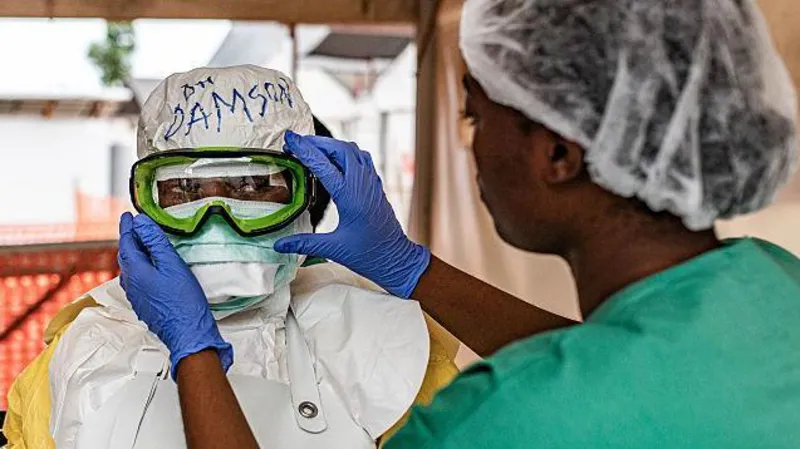
The question “What is Ebola and why is stopping the latest outbreak so difficult” has taken on renewed urgency. This is because international health authorities declared the latest outbreak in the Democratic Republic of Congo a public health emergency of international concern.
Health experts are confronting a combination of challenges rarely seen together. The virus involved belongs to a less common Ebola species. There is no approved vaccine specifically designed for it. In addition, many of the affected communities are located in areas where armed conflict continues to disrupt daily life.
Those factors have complicated efforts to identify infections, trace contacts and deploy medical teams quickly enough to contain transmission.
What Is Ebola and Why Is Stopping the Latest Outbreak So Difficult? Understanding the Disease
Ebola is a severe viral disease that primarily originates in animals before occasionally spreading to humans. Scientists believe fruit bats serve as one of the virus’s main natural reservoirs. However, outbreaks can also begin through contact with infected wildlife.
Symptoms do not appear immediately. The incubation period can range from two to twenty-one days. Early signs often resemble common illnesses such as malaria or influenza, making diagnosis difficult during the first stages of infection.
Patients frequently develop fever, fatigue, headaches and muscle pain before progressing to vomiting, diarrhea and severe dehydration. In advanced cases, the disease can damage multiple organs and may cause internal or external bleeding.
Medical guidance and outbreak information continue to be monitored through organizations such as https://www.who.int/“>World Health Organization. This agency coordinates international response efforts during major health emergencies.
The virus spreads through direct contact with infected bodily fluids, including blood, vomit and other secretions. Because caregiving and funeral practices often involve close physical contact, outbreaks can accelerate rapidly when preventive measures are not implemented.
Rare Bundibugyo Strain Creates New Challenges for Health Authorities
One reason the current outbreak has attracted global attention is the specific strain involved. The virus responsible belongs to the Bundibugyo species of Ebola. This is a variant that has caused only a handful of known outbreaks since it was first identified.
Unlike the more widely studied Zaire strain, Bundibugyo does not currently have an approved vaccine. Researchers are continuing to evaluate potential vaccine candidates through institutions such as https://www.cdc.gov/“>Centers for Disease Control and Prevention. Other international public health networks also support these efforts.
The absence of approved treatments adds another layer of complexity. Health officials are evaluating whether experimental antiviral therapies may help reduce infections among individuals exposed to confirmed cases.
Diagnostic efforts have also faced obstacles. Initial laboratory testing in some affected regions was designed primarily to detect more common Ebola variants. This delayed confirmation of the outbreak and allowed additional opportunities for transmission.
Scientists continue studying emerging viral threats through organizations including https://www.africacdc.org/“>Africa CDC. There, researchers are assessing containment strategies and disease surveillance systems across the continent.
Conflict, Displacement and Cultural Barriers Complicate Containment Efforts
Even with medical expertise and international support, stopping an outbreak becomes considerably harder. This challenge increases when public health teams cannot safely reach affected communities.
Large portions of the outbreak zone have been impacted by ongoing insecurity, population displacement and limited infrastructure. In some areas, roads remain difficult to navigate, extending travel times and delaying emergency response operations.
Humanitarian organizations operating in the region continue coordinating assistance through groups such as https://www.msf.org/“>Médecins Sans Frontières. This group has extensive experience responding to Ebola outbreaks in challenging environments.
Funeral ceremonies have emerged as another concern. Traditional burial practices often involve close contact with the deceased. This creates opportunities for transmission if proper protective measures are not followed.
Health officials also report that misinformation remains a significant obstacle. In some communities, symptoms have been attributed to spiritual causes or traditional beliefs rather than infectious disease. As a result, some patients initially seek help outside formal healthcare systems. This delays diagnosis and increases the likelihood of additional infections.
The first confirmed patient in the current outbreak reportedly developed symptoms weeks before the disease was officially identified. By the time health authorities recognized the outbreak, multiple chains of transmission had already been established. Therefore, response teams were forced into a race against time to contain further spread.