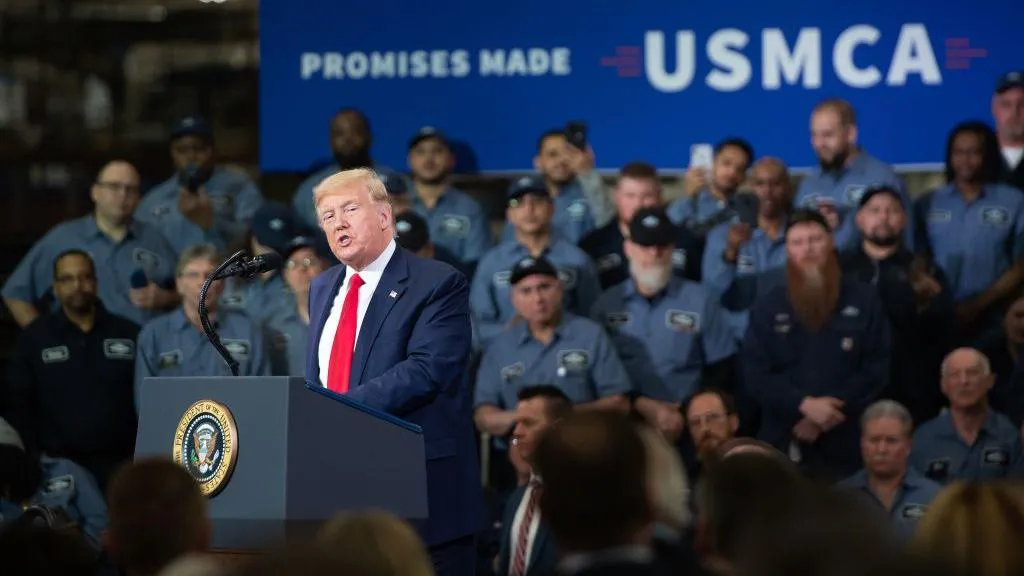
The USMCA trade agreement is entering a new period of uncertainty as policymakers in the United States, Canada and Mexico prepare for negotiations. These negotiations could redefine the future of economic cooperation across North America. Although the trade pact remains in force, renewed political attention has raised questions about whether its current framework still reflects the priorities of the region’s three largest economies.
Business leaders, manufacturers and agricultural producers are watching developments closely. The agreement governs one of the world’s largest trading relationships, supporting supply chains that move goods across borders every day. Any significant revisions could influence investment decisions, production planning and long-term commercial strategies throughout the continent.
Trade analysts note that periodic reviews were designed to keep the agreement responsive to changing economic conditions. However, the possibility of prolonged negotiations has introduced a degree of uncertainty that many industries had hoped to avoid.
USMCA Trade Agreement Review Highlights Key Areas of Disagreement
The USMCA trade agreement covers a broad range of sectors, including manufacturing, agriculture, digital commerce, labor standards and intellectual property. While the framework has strengthened regional trade since replacing the North American Free Trade Agreement, several issues remain under active discussion.
Automotive manufacturing continues to receive particular attention. This is because modern vehicle production depends on highly integrated supply chains that cross national borders multiple times before final assembly. Questions surrounding regional content requirements, investment incentives and competitiveness remain central to policy discussions.
Agricultural trade also remains a recurring point of negotiation. Dairy products, grain exports and food market access have generated periodic disagreements. Meanwhile, governments seek to balance domestic interests while preserving stable commercial relationships.
Background information on the agreement is available through the Office of the United States Trade Representative. This source outlines the treaty’s principal objectives and implementation framework.
Trade experts emphasize that review mechanisms are common in modern commercial agreements. However, they do not automatically signal the end of long-term cooperation.
Businesses Seek Stability While Governments Push for Modernization
The future of the USMCA trade agreement carries significant implications for companies. These companies rely on predictable cross-border commerce. Manufacturers often make investment decisions years in advance. As a result, uncertainty surrounding future trade rules can influence hiring, factory expansion and supply-chain planning.
Business organizations across North America have repeatedly argued that stable trade rules encourage investment and strengthen regional competitiveness. At the same time, some domestic industries support more frequent reviews, believing they provide governments with greater flexibility to address emerging economic challenges.
Economic research published by the Organisation for Economic Co-operation and Development highlights the importance of predictable trade frameworks in supporting long-term economic growth, productivity and foreign investment.
Digital trade has also become increasingly important since the agreement first entered into force. E-commerce, cloud computing, cybersecurity and cross-border data flows now represent a larger share of North American economic activity. As a result, discussions focus on whether existing rules remain sufficient for today’s digital economy.
North American Trade Will Continue to Evolve
The USMCA trade agreement is expected to remain the foundation of North American commerce while negotiations continue. Economists generally expect all three governments to pursue reforms that preserve regional economic integration. At the same time, they must respond to new geopolitical, technological and industrial realities.
Future discussions are likely to address supply-chain resilience, critical minerals, advanced manufacturing, clean energy investment and economic security. These issues have become increasingly important as governments seek to strengthen domestic industries without disrupting regional trade.
Trade data and economic indicators continue to be monitored by the InternationalTrade Administration, while broader regional statistics are available through the World Bank.
Although negotiations may extend over several years, businesses across North America are expected to continue adapting their investment strategies. They must do this as policymakers work toward an updated framework capable of supporting one of the world’s most integrated trading regions.