
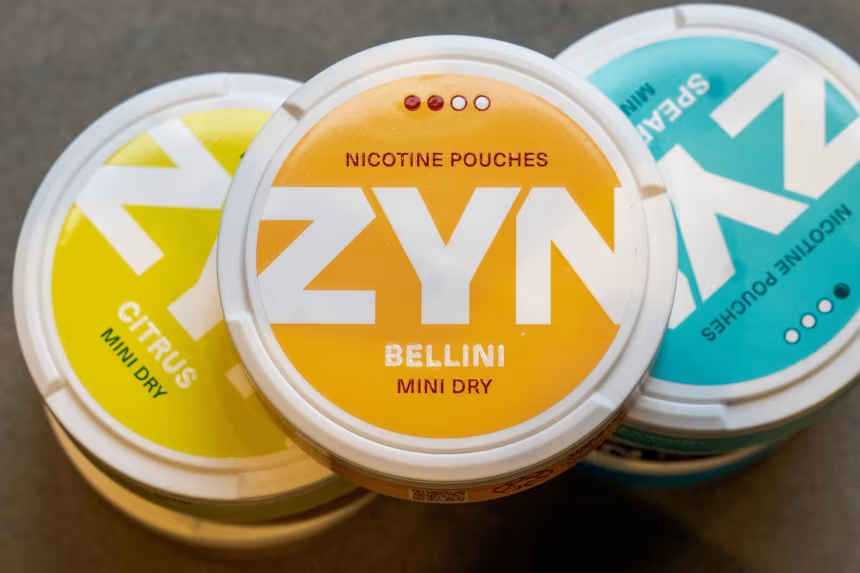
The ZYN reduced risk claim received a major regulatory boost after the U.S. Food and Drug Administration authorized Philip Morris International to market specific ZYN nicotine pouch products as presenting lower health risks than traditional cigarettes for adult smokers who switch completely. This decision marks one of the most significant regulatory developments for smoke-free nicotine products. Additionally, it could reshape competition across the growing oral nicotine market.
According to the FDA, the authorization applies to selected ZYN nicotine pouch varieties after the agency concluded that replacing cigarettes entirely with these products may substantially reduce exposure to many of the harmful chemicals produced through tobacco combustion. Moreover, regulatory information regarding modified-risk tobacco products is available through the U.S. Food and Drug Administration.
ZYN Reduced Risk Claim Reflects FDA Review of Scientific Evidence
The ZYN reduced risk claim follows an extensive scientific review. This review examined whether adult cigarette smokers could benefit from switching completely to nicotine pouches instead of continuing to smoke combustible tobacco products.
The authorization allows Philip Morris to communicate that exclusive use of approved ZYN products instead of cigarettes may lower the risk of developing several smoking-related diseases, including lung cancer, chronic bronchitis, emphysema, heart disease and stroke. However, the decision does not classify the products as safe or risk-free. Nor does it suggest they are appropriate for individuals who do not currently use nicotine.
Federal regulators emphasized that the public health benefit depends largely on existing smokers moving away from cigarettes. They noted this is more important than encouraging nicotine initiation among young people or non-users.
Scientific information on tobacco harm reduction continues to be evaluated by organizations including the Centers for Disease Control and Prevention. This organization maintains that eliminating all tobacco and nicotine use remains the safest option.
Oral Nicotine Products Continue Rapid Growth Across the Market
Demand for nicotine pouches has expanded rapidly over the past several years. As a result, the category has become one of the fastest-growing segments within the broader nicotine industry.
Unlike cigarettes or many vaping products, nicotine pouches contain no tobacco leaf and do not require combustion or inhalation. Users place the pouch beneath the upper lip, allowing nicotine to be absorbed through the oral tissue.
Philip Morris has reported substantial growth in ZYN sales in the United States as increasing numbers of adult consumers seek alternatives to smoking. Industry analysts view the FDA authorization as an important competitive advantage. This is because modified-risk claims require extensive scientific documentation before receiving regulatory approval.
At the same time, health experts continue monitoring trends in youth nicotine use and emphasize the importance of preventing underage access. Furthermore, public health guidance regarding nicotine products and smoking cessation remains available through the National Cancer Institute.
Regulatory Decision Could Influence the Future of Tobacco Harm Reduction
The FDA’s decision arrives as tobacco manufacturers continue investing heavily in smoke-free products. They are also seeking clearer regulatory pathways for innovative nicotine alternatives.
Industry executives have argued that predictable authorization processes encourage investment in products intended for adult smokers looking to move away from combustible cigarettes. Meanwhile, public health advocates continue calling for strict marketing controls to prevent reduced-risk messaging from attracting younger audiences.
The authorization may also influence future applications submitted by competing manufacturers. These companies hope to secure similar modified-risk status for oral nicotine products and other smoke-free technologies.
As the U.S. nicotine market continues evolving, regulators are expected to closely monitor consumer behavior, product marketing practices and long-term public health outcomes before considering additional reduced-risk authorizations. Meanwhile, ongoing tobacco product regulation and policy developments can also be followed through the Campaign for Tobacco-Free Kids.