
Energy Prices Drive Sharp Increase in Producer Costs
Wholesale inflation in the United States accelerated in March, reaching its highest annual level in three years as surging energy prices placed renewed pressure on businesses. The latest data from the <a href=”https://www.bls.gov”>Bureau of Labor Statistics</a> showed that the Producer Price Index (PPI) climbed 4% compared to the same period last year, reflecting a significant uptick in input costs across multiple sectors.
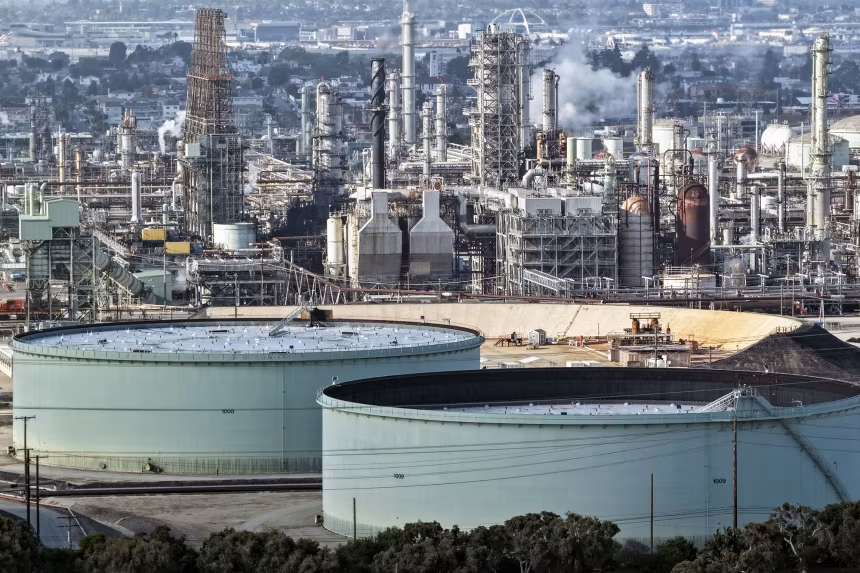
On a monthly basis, producer prices rose by 0.5%, maintaining the same pace recorded in February. A major contributor to this increase was the sharp rise in fuel costs, particularly gasoline, which jumped by 15.7% during the month. This single category accounted for nearly half of the overall increase in wholesale prices, highlighting how energy markets continue to shape broader inflation trends.
The surge in oil prices has been closely tied to geopolitical tensions, particularly the ongoing conflict involving Iran. As global supply concerns intensified, businesses faced higher operational costs, which are often passed along through supply chains. Analysts tracking energy markets through platforms like the <a href=”https://www.eia.gov”>U.S. Energy Information Administration</a> have noted that volatility in crude oil pricing remains a central factor influencing inflation metrics.
Mixed Signals as Core Inflation Remains Contained
Despite the headline increase, underlying inflation indicators suggested a more moderate trend beneath the surface. When excluding the typically volatile categories of food and energy, core PPI rose by just 0.1% in March, leaving the annual core rate at 3.8%. This indicates that while energy costs surged, other areas of the economy showed relative stability.
Declines in food prices and flat performance in service-related costs helped offset some of the upward pressure created by fuel expenses. Economists had anticipated a more dramatic spike in wholesale inflation, with projections pointing to a potential monthly increase of 1.1% and an annual rate closer to 4.6%. The lower-than-expected figures suggest that some sectors have not yet fully absorbed the impact of rising energy costs.
Timing also played a role in shaping the report’s outcome. The data collection period captured pricing conditions relatively early in the escalation of geopolitical tensions, meaning that the full effect of higher oil prices may not yet be fully reflected in the numbers. Insights from financial analytics providers such as <a href=”https://www.factset.com”>FactSet</a> have highlighted this lag as a key reason forecasts exceeded the actual results.
Implications for Consumers and Monetary Policy
Wholesale inflation is widely regarded as a leading indicator of future consumer price trends, as rising production costs often translate into higher retail prices over time. Recent data suggests that these pressures are already beginning to filter through the economy, reinforcing concerns about persistent inflation.
Figures tied to categories that feed into the Federal Reserve’s preferred inflation gauge, the Personal Consumption Expenditures (PCE) index, showed signs of strengthening. This has raised expectations that broader inflation measures could accelerate in the coming months, potentially complicating efforts to stabilize prices.
The <a href=”https://www.federalreserve.gov”>Federal Reserve</a> continues to monitor these developments closely, balancing the need to control inflation with the risk of slowing economic growth. While policymakers often look beyond short-term fluctuations in energy prices, sustained increases in core inflation could influence decisions on interest rates.
At the same time, the labor market remains relatively resilient, with steady hiring trends suggesting that businesses are maintaining cautious optimism despite rising costs. However, uncertainty linked to geopolitical developments and fluctuating energy markets continues to weigh on economic outlooks, leaving both businesses and policymakers navigating a complex and evolving inflation landscape.