
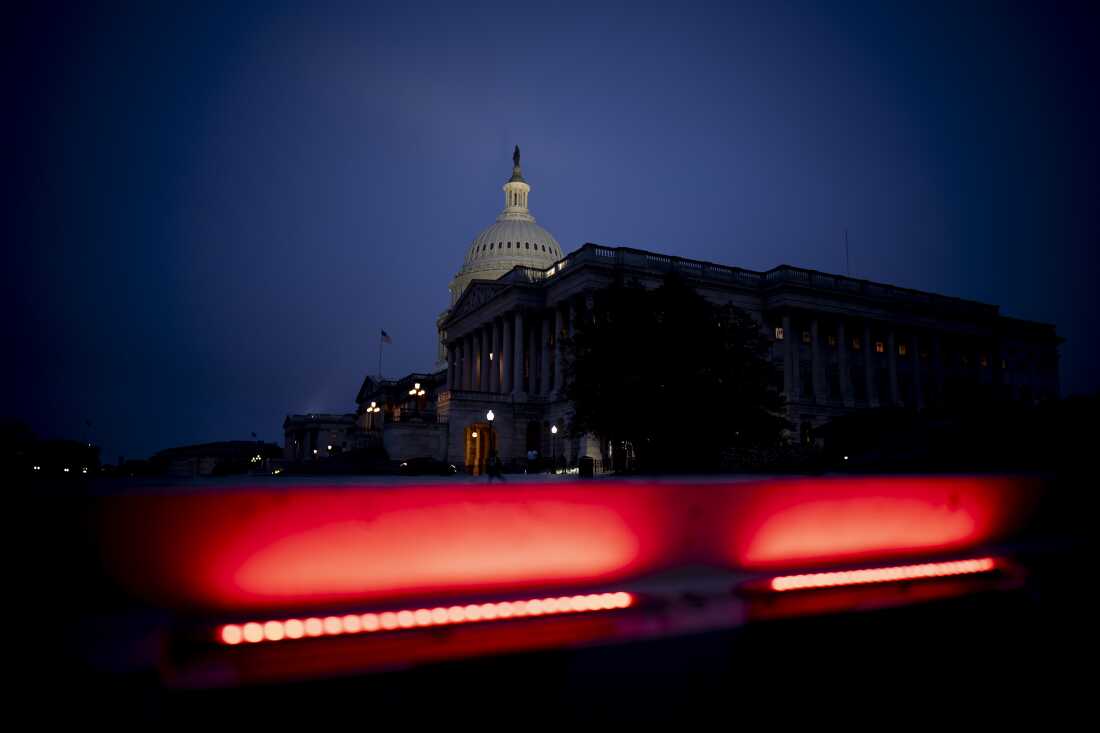
Growing Political Pressure to Eliminate the Filibuster
The future of the Senate filibuster is facing renewed uncertainty in 2026 as political pressure intensifies around efforts to pass sweeping election legislation known as the SAVE America Act. President Donald Trump has urged Senate Republicans to eliminate the procedural rule, which currently requires 60 votes to advance most legislation, in order to secure passage of the bill with a simple majority.
At the center of the debate is Senate Majority Leader John Thune, who has so far resisted calls to dismantle the filibuster, citing a lack of sufficient votes within his own party. The filibuster, long considered a defining feature of the Senate, forces bipartisan negotiation by allowing the minority party to block legislation unless a supermajority is reached.
Legislative processes and Senate procedures can be explored further through official resources such as <a href=”https://www.senate.gov”>U.S. Senate</a> and policy overviews available at <a href=”https://www.brookings.edu”>Brookings Institution</a>, where analysts continue to assess the evolving role of the filibuster in modern governance.
Legislative Gridlock and Real-World Consequences
The impact of the filibuster is already evident in ongoing policy disputes, particularly in debates surrounding federal immigration enforcement funding. Disagreements between Republicans and Democrats have stalled legislation related to agencies under the Department of Homeland Security, contributing to partial funding lapses and operational disruptions.
Because the Senate requires 60 votes to advance most bills, the minority party retains significant leverage to demand policy concessions. This dynamic has led to prolonged negotiations and, in some cases, government shutdown scenarios affecting agencies beyond the immediate scope of the dispute.
Alternative legislative tools, such as budget reconciliation, are being explored by lawmakers seeking to bypass the filibuster. However, reconciliation is limited in scope and cannot be used for all types of policy changes. Budget rules and legislative pathways are outlined in detail by institutions like <a href=”https://www.cbo.gov”>Congressional Budget Office</a> and procedural explainers at <a href=”https://www.crsreports.congress.gov”>Congressional Research Service</a>.
Historical Debate and the Future of Senate Rules
The filibuster has evolved significantly over time, shifting from a rarely used tactic to a routine feature of Senate procedure. While some lawmakers argue that it protects minority rights and encourages compromise, others contend that it enables legislative obstruction and prevents action on widely supported policies.
Debates over reform are not new. Both major political parties have previously considered weakening or eliminating the rule when faced with legislative roadblocks. Changes in recent decades have already reduced the threshold for confirming federal judges and executive branch nominees, signaling that Senate rules are not immutable.
Proposals such as reinstating the “talking filibuster,” which would require senators to physically hold the floor to block legislation, have gained traction as a potential compromise. Advocates argue that such reforms could preserve minority rights while making obstruction more difficult to sustain.
As political divisions remain deep and legislative priorities intensify, the question of whether the filibuster will survive 2026 remains unresolved. The outcome will have lasting implications for how laws are passed in the United States, shaping the balance between majority rule and minority power in one of the nation’s most influential institutions.