
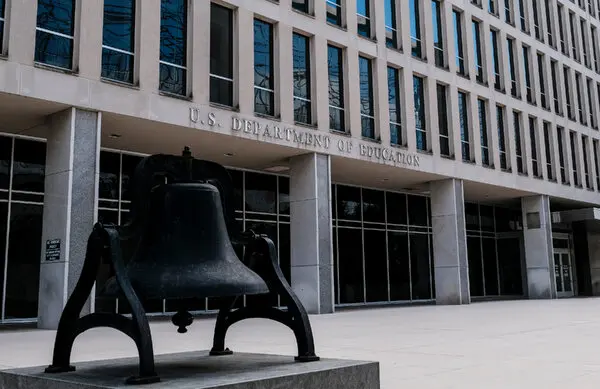
The Trump administration has announced a significant restructuring of federal education oversight by transferring two major responsibilities of the U.S. Department of Education to other government agencies. The move represents one of the most substantial steps yet in the administration’s ongoing effort to reduce the size and authority of the Education Department.
Under the new plan, oversight of programs serving students with disabilities will largely move to the Department of Health and Human Services (HHS), while many civil rights enforcement responsibilities will shift to the Department of Justice (DOJ).
The changes affect areas that have long been considered core functions of the Education Department, including disability services, educational equity, and student discrimination protections.
Education Department Restructuring Expands Federal Agency Changes
The Education Department restructuring includes transferring substantial responsibilities from the Office of Special Education and Rehabilitative Services (OSERS) to HHS.
Additional information about federal education programs can be found at U.S. Department of Education.
OSERS administers programs that support students with disabilities and helps ensure compliance with the Individuals with Disabilities Education Act (IDEA), one of the most important federal education laws in the United States.
The law guarantees students with disabilities access to a free and appropriate public education while providing protections and support services across K-12 schools nationwide.
Federal officials stated that HHS is positioned to coordinate disability-related services more effectively because of its extensive involvement in healthcare, rehabilitation, and family support programs.
Education Secretary Linda McMahon said the partnership aims to improve outcomes for individuals with disabilities by aligning educational services with broader health and workforce development initiatives.
Despite the transfer, certain leadership and management functions may remain within the Education Department because federal law still assigns specific responsibilities under IDEA to the agency.
Civil Rights Enforcement Moving to the Justice Department
The administration also announced that much of the Office for Civil Rights (OCR) will transition to the Department of Justice.
Information regarding federal civil rights enforcement can be accessed through U.S. Department of Justice.
OCR has historically been responsible for investigating complaints involving discrimination in schools and universities. The office enforces federal protections related to disability, race, national origin, and gender discrimination.
Its attorneys and investigators play a critical role in ensuring that educational institutions comply with federal civil rights laws.
The office has experienced significant uncertainty in recent months due to staffing changes, budget reviews, and organizational restructuring efforts.
Administration officials argue that moving civil rights enforcement to the Justice Department will create stronger coordination between federal agencies and improve enforcement capabilities.
According to federal officials, the transition is intended to streamline investigations and strengthen legal responses to civil rights violations affecting students nationwide.
Disability Advocates Express Serious Concerns
The announcement has generated strong reactions from disability rights advocates, education organizations, and former federal officials.
Resources related to disability rights and educational access are available through U.S. Department of Health and Human Services.
Critics argue that transferring responsibilities away from the Education Department could weaken oversight of school districts and reduce accountability for ensuring students receive legally required services.
Advocates warn that separating educational oversight from the agency specifically created to administer federal education policy may create confusion and delays in addressing student needs.
Several disability rights organizations have expressed concerns that schools could face less federal scrutiny regarding compliance with special education requirements.
Former agency employees also raised concerns that reduced oversight may make it more difficult for families to challenge districts that fail to provide appropriate accommodations and support services.
Supporters of the restructuring, however, contend that consolidating related services across agencies can improve efficiency and eliminate bureaucratic overlap.
A Larger Effort to Reduce the Department of Education
The latest changes align with President Donald Trump’s longstanding objective of reducing the federal government’s role in education and shifting more authority to states and local communities.
Information about federal education laws and programs is available at Congress.gov.
Since taking office, administration officials have repeatedly stated that education decisions should be made closer to students, families, and local school systems rather than by federal agencies in Washington.
Education Secretary Linda McMahon has described the effort as a strategy to streamline government operations, reduce administrative layers, and focus federal resources on essential functions.
While the Education Department will continue operating, the transfer of special education and civil rights responsibilities further narrows its role and signals a significant shift in how federal education policy may be administered in the years ahead.
The long-term impact of the Education Department restructuring will depend on how responsibilities are implemented, how agencies coordinate oversight, and whether Congress or the courts become involved in future challenges related to the transition.