
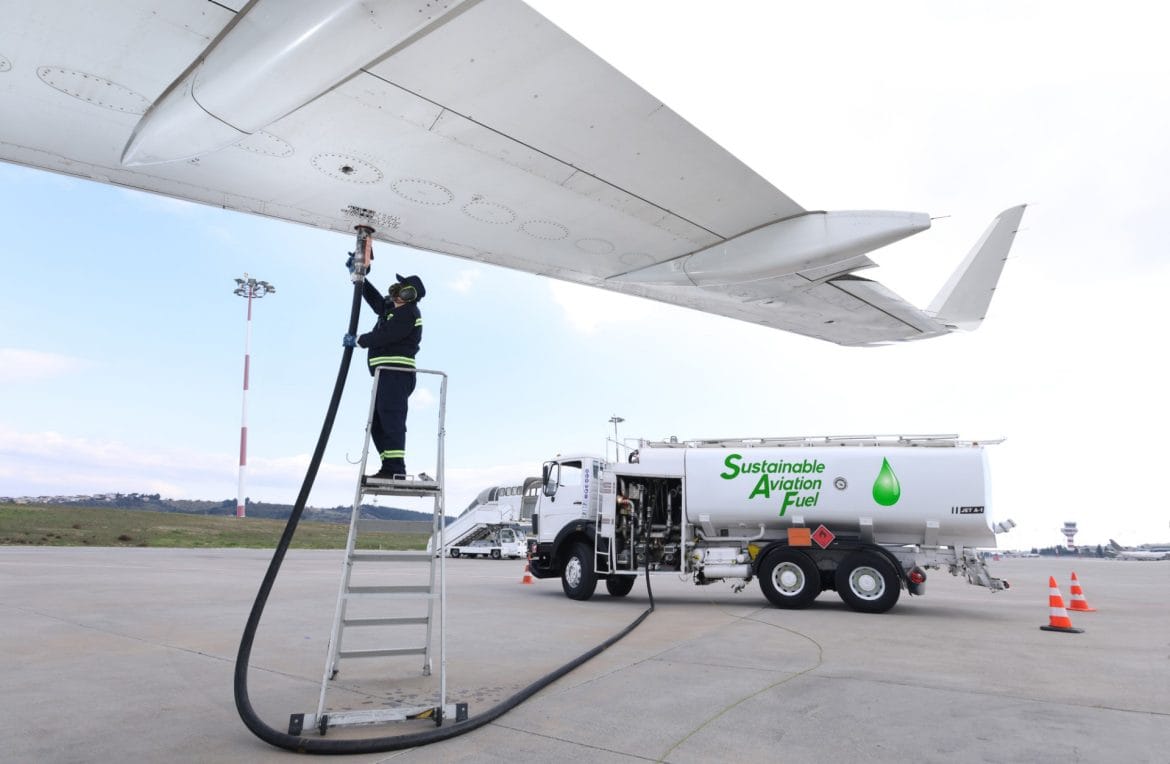
Sustainable aviation fuel is becoming one of the most important technologies in the effort to reduce carbon emissions from air travel. As global fuel markets experience disruptions and airlines face rising operational costs, governments, researchers, airports, and carriers are accelerating investments in alternative energy sources. These sources are capable of supporting long-term aviation growth.
Recent geopolitical tensions and fluctuations in energy supplies have highlighted the aviation industry’s dependence on conventional jet fuel. Importantly, these challenges have renewed interest in sustainable aviation fuel, commonly known as SAF, as a practical option for lowering emissions. Moreover, SAF improves energy diversification across the sector.
Unlike traditional aviation fuel derived primarily from fossil resources, sustainable aviation fuel can be produced from a variety of renewable feedstocks. These include agricultural residues, forestry waste, municipal solid waste, and even wastewater-derived materials. Industry information and sustainability initiatives can be explored through International Air Transport Association.
How Sustainable Aviation Fuel Can Help Decarbonize Air Travel
The aviation sector is responsible for a significant share of global transportation emissions, making decarbonization a major priority for airlines and policymakers. While electric aircraft and hydrogen-powered aviation remain under development, sustainable aviation fuel offers another solution. This solution can be implemented using existing aircraft fleets and airport infrastructure.
SAF is designed to function similarly to conventional jet fuel while generating substantially lower lifecycle carbon emissions. Depending on the production method and feedstock, some sustainable aviation fuel pathways can reduce greenhouse gas emissions by more than 50%. This is a significant reduction compared to traditional aviation fuels.
Researchers continue to explore innovative production techniques that maximize environmental benefits while maintaining fuel performance standards. In addition, new technologies are expanding the range of materials that can be converted into aviation fuel. This is creating opportunities for regional fuel production and increased energy resilience.
Technical information about sustainable aviation technologies is available through U.S. Department of Energy.
Washington and Pennsylvania Advance Regional SAF Production Projects
Several regional initiatives across the United States are working to strengthen sustainable aviation fuel supply chains. In Washington State, researchers, universities, and aviation stakeholders are collaborating to accelerate SAF development through advanced research and commercialization efforts.
Organizations involved in these initiatives are evaluating how local biomass resources, agricultural byproducts, and waste materials can be transformed into renewable aviation fuel. Ultimately, these projects aim to support economic development while reducing the aviation sector’s environmental footprint.
Pennsylvania is also emerging as an important hub for sustainable aviation fuel innovation. Airport operators, energy developers, and regional leaders are exploring new production opportunities that could help establish local SAF supply networks. These efforts seek to create reliable fuel sources closer to major transportation hubs, reducing logistical challenges and increasing market availability.
Information regarding renewable fuel development and environmental policy can be found at United States Environmental Protection Agency.
Challenges Remain as Sustainable Aviation Fuel Scales for Global Demand
Despite its promise, sustainable aviation fuel faces several challenges before it can achieve widespread adoption. Production capacity remains limited compared to global aviation demand. Furthermore, SAF currently costs more than conventional jet fuel in many markets.
Industry leaders continue to emphasize the importance of public-private partnerships, infrastructure investments, and supportive regulatory frameworks to accelerate production and reduce costs. In addition, expanding feedstock availability and improving manufacturing efficiency will also play a critical role in increasing supply.
At the same time, growing commitments from airlines, airports, and governments are helping drive momentum. Many aviation organizations view sustainable aviation fuel as a critical component of broader climate strategies. These strategies are aimed at achieving net-zero emissions in the coming decades.
As technology advances and new facilities come online, sustainable aviation fuel is expected to play an increasingly important role in shaping the future of commercial aviation. It will also help reduce the industry’s environmental impact. Additional aviation sustainability resources are available through International Civil Aviation Organization.