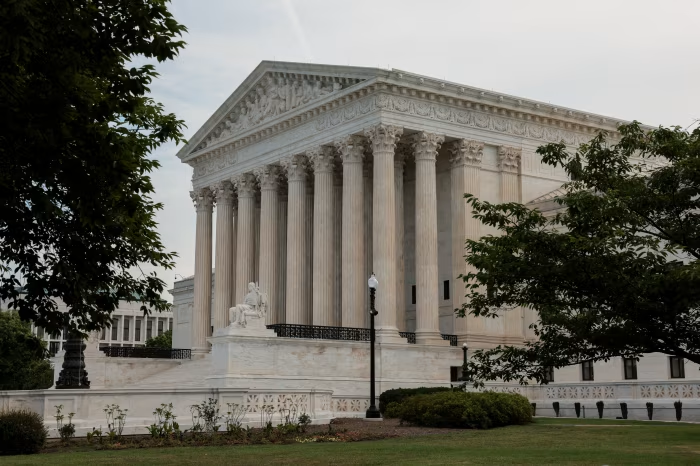
The Supreme Court campaign finance ruling has significantly changed the legal framework governing political party spending in federal elections. In a closely watched 6-3 decision, the Court struck down longstanding limits on how much political parties may spend in coordination with their candidates. The Court concluded that the restrictions violated constitutional protections for political speech and association.
The decision overturns a legal precedent that had remained in place for more than two decades. It represents another major development in the evolution of campaign finance law. In addition, the ruling is expected to influence future elections by allowing political parties to play a more direct financial role in supporting their candidates during federal campaigns.
Legal scholars and election law experts say the decision will likely reshape fundraising strategies, campaign operations, and the relationship between candidates and national political parties.
Court Overturns Longstanding Limits on Coordinated Party Spending
For many years, federal law limited the amount that political parties could spend in direct coordination with candidates seeking federal office. Those restrictions were originally established following the Watergate era. They were part of broader efforts to reduce opportunities for political corruption and strengthen public confidence in the electoral process.
Supporters of the previous rules argued that limiting coordinated spending helped prevent individuals from bypassing campaign contribution limits by channeling large donations through political party committees. According to that view, the restrictions served as an important safeguard against excessive financial influence in elections.
The Supreme Court majority concluded that the existing limits placed unconstitutional burdens on political parties and their ability to participate fully in political campaigns. By removing these restrictions, the Court expanded the role parties may play in directly supporting candidates during election cycles.
Debate Continues Over Transparency and Corruption Concerns
The ruling has generated renewed discussion about the balance between protecting political speech and preventing corruption in campaign financing. Critics argue that expanding coordinated spending could increase the influence of wealthy donors. Furthermore, they say it could make it easier for large financial contributions to shape electoral outcomes.
Some election law experts maintain that public disclosure requirements alone may not fully address these concerns. While campaign contributions to political parties are generally reported publicly, private conversations and fundraising arrangements between candidates, donors, and party officials often remain outside public view.
Supporters of stronger campaign finance regulations argue that these private interactions could allow financial support to be coordinated in ways that voters cannot easily observe, even when formal disclosure rules are followed.
Others contend that existing transparency requirements, ethics regulations, and public reporting systems provide sufficient safeguards while preserving constitutional protections for political participation.
Decision Continues the Court’s Broader Shift in Campaign Finance Law
The Supreme Court campaign finance ruling is widely viewed as part of a broader judicial trend toward reducing restrictions on political spending. Over the past several years, the Court has issued multiple decisions that expanded constitutional protections for political expenditures. At the same time, the Court has narrowed the scope of certain campaign finance regulations.
Legal experts expect the latest ruling to encourage political parties to take a more active financial role in future federal elections. Campaign organizations may now develop new fundraising strategies that rely more heavily on coordinated expenditures to support candidates.
The decision is also expected to influence future debates in Congress and among state governments regarding election law, campaign transparency, and the appropriate balance between free speech protections and anti-corruption safeguards.
As future election cycles unfold, policymakers, legal scholars, and political organizations will closely monitor how the new legal framework affects fundraising practices, campaign spending, and public confidence in the electoral system.