A remarkable conservation project in Washington state is bringing together marine scientists and the Samish Indian Nation to protect one of the Pacific Ocean’s most endangered species: the sunflower sea star.
Once abundant along the West Coast, sunflower stars have experienced a dramatic population collapse after a devastating outbreak of sea star wasting disease, which has eliminated an estimated 90% of the species.
What Is a Sunflower Sea Star?
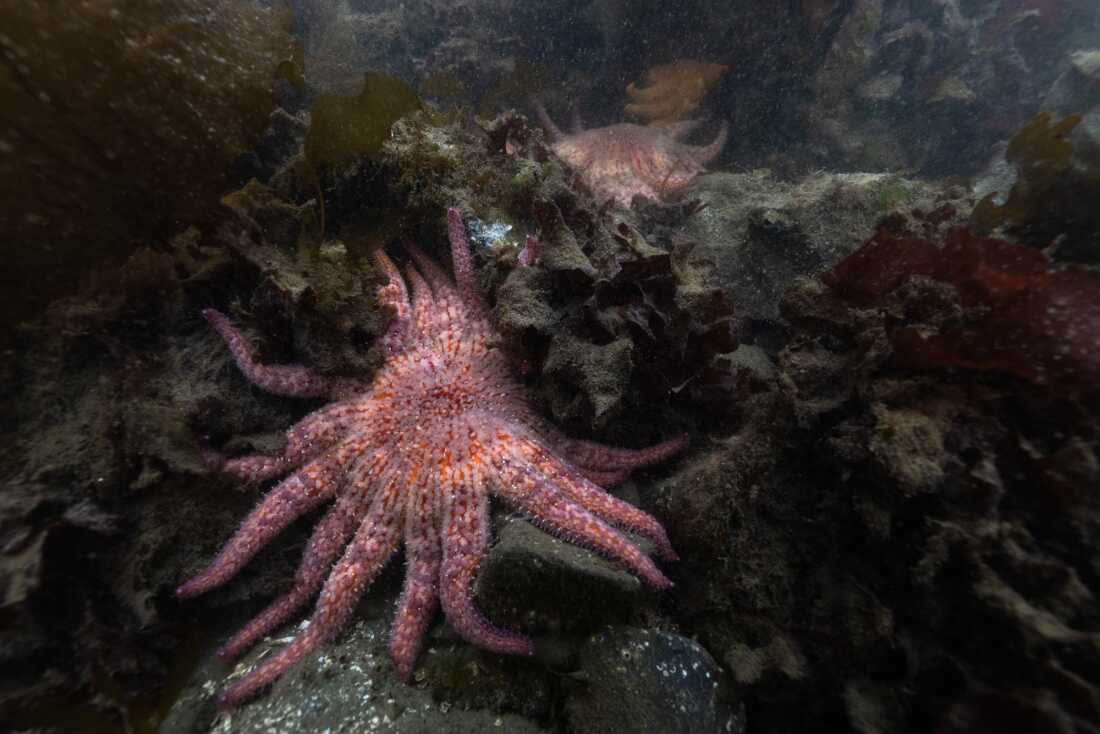
The sunflower sea star (Pycnopodia helianthoides) is one of the largest sea stars in the world.
These impressive marine predators can:
- Grow to more than 3 feet (1 meter) in diameter
- Develop up to 24 arms
- Move at speeds of up to 5 feet per minute
- Consume large numbers of sea urchins every day
Scientists consider them a keystone species, meaning their presence has a major influence on the entire marine ecosystem.
The Disease That Nearly Wiped Them Out
Beginning in 2013, a mysterious epidemic known as sea star wasting disease spread from Mexico to Alaska.
The disease caused sea stars to develop lesions, lose their limbs and eventually disintegrate.
Researchers later identified bacteria from the Vibrio family as a major factor behind the outbreak. Rising ocean temperatures associated with climate change may have accelerated the spread of the disease.
The sunflower sea star was one of the species most severely affected.
Why the Samish Indian Nation Is Working to Save Them
The Samish people have a deep cultural connection to the marine environment.
Although sunflower stars have never been as culturally significant as salmon, they play a critical ecological role by controlling sea urchin populations.
Without predators, sea urchins multiply rapidly and consume vast amounts of kelp.
The relationship looks like this:
Sunflower stars → eat sea urchins → protect kelp forests → support marine life
Healthy kelp forests provide habitat and protection for:
- Salmon
- Crabs
- Clams
- Fish
- Orcas
For the Samish people, protecting kelp means protecting an ecosystem that has supported their communities for generations.
Raising Endangered Stars in a Laboratory
Researchers at the University of Washington spent years learning how to breed and raise sunflower stars in captivity.
The process involved:
- Breeding adult stars
- Raising microscopic larvae
- Growing juveniles in laboratory tanks
- Feeding them thousands of sea urchins
- Monitoring them for signs of disease
- Preparing healthy adults for release into the wild
After concerns that sea star wasting disease had returned to the region, an initial release was postponed.
Six months later, researchers and the Samish Indian Nation transported 20 laboratory-raised sunflower stars to waters near Decatur Island.
A Promising First Release
Divers carefully placed the stars on the seafloor among the kelp beds.
Months later:
- Fourteen of the 20 stars were still alive.
- Researchers found no evidence of disease.
- Kelp growth had increased in the release area.
Scientists consider those results encouraging.
The Goal: Restoring an Entire Ecosystem
Researchers acknowledge that they will never be able to replace the billions of sea stars lost during the epidemic.
Instead, their goal is to restore enough animals to rebuild healthy populations that can once again regulate sea urchin numbers and help kelp forests recover.
Laboratories in Washington, Oregon and California are now raising additional sunflower stars for future releases.
The project is about much more than saving a single species.
It’s an effort to restore an entire ecosystem while strengthening the connection between Indigenous knowledge, modern science and environmental conservation.