The Qatar gifted Air Force One has officially arrived at Joint Base Andrews in Maryland, reaching a major milestone in the ongoing modernization of the presidential air transport fleet. The Boeing 747 aircraft, which was provided by the Qatari government and later accepted by the United States, arrived earlier than initially expected and is now entering the final stages of preparation before potential presidential service.
The aircraft has attracted significant public attention since it was first proposed as a temporary replacement solution while the long-term presidential aircraft program continues development. The arrival marks the beginning of an important testing and certification phase that will determine when the aircraft becomes available for official missions.
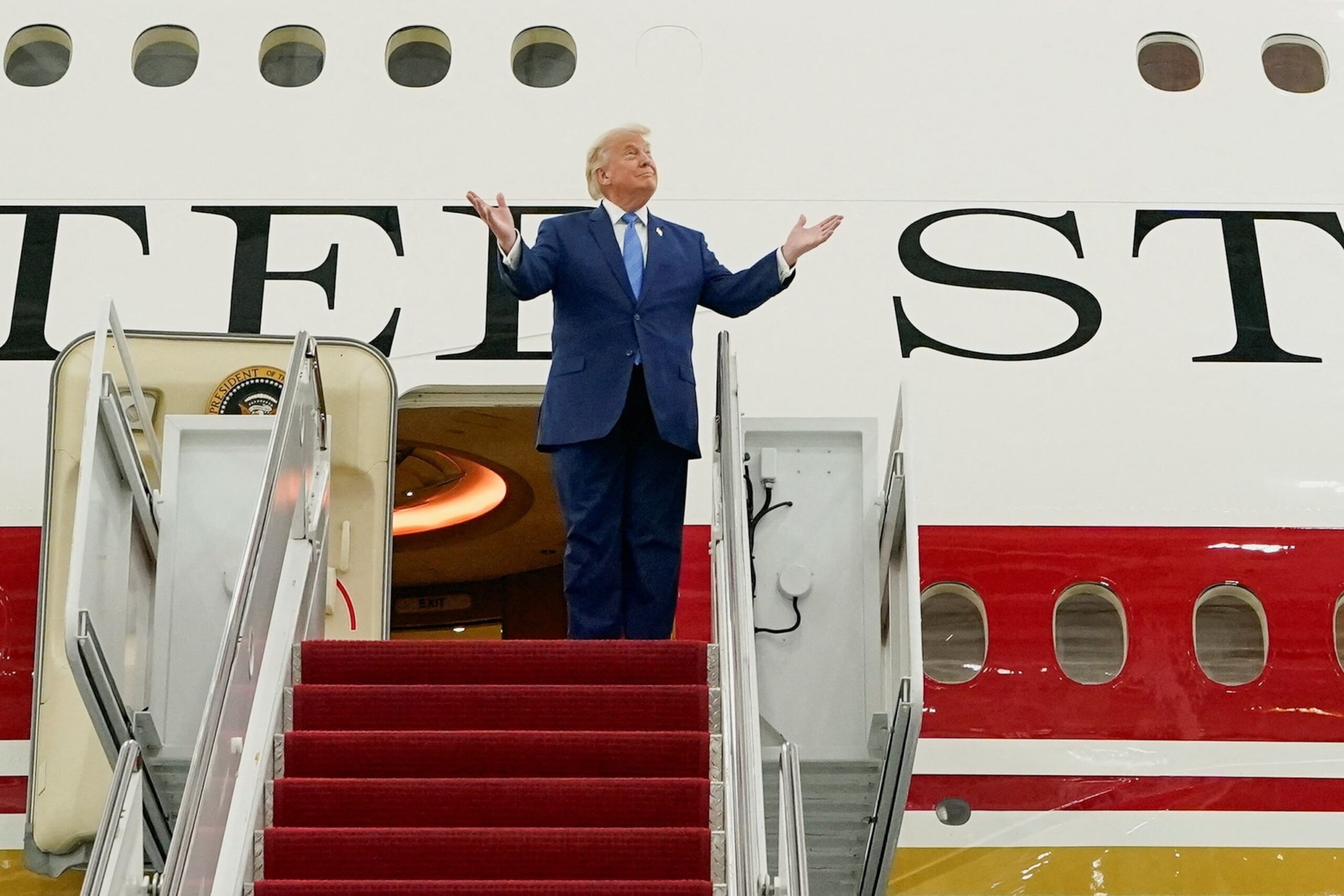
President Donald Trump personally toured the aircraft following its arrival and praised both its design and capabilities, describing it as one of the most advanced executive aircraft ever prepared for presidential use.
Additional information regarding presidential transportation and government aviation programs can be found through The White House.
New Air Force One Aircraft Features Extensive Upgrades
The Boeing 747 originally served as transportation for the Qatari head of state before undergoing modifications to meet U.S. operational requirements. While much of the aircraft’s interior structure remained intact, engineers implemented numerous upgrades necessary for secure government operations.
President Trump highlighted the aircraft’s luxury features, range, and performance capabilities during remarks delivered after touring the jet. He also unveiled a new exterior color scheme featuring red, white, and blue elements inspired by the American flag.
The redesign represents a departure from the traditional light blue and white appearance associated with presidential aircraft since the Kennedy administration. According to Trump, the new design reflects a more modern visual identity while emphasizing national symbolism.
The aircraft is expected to serve as an interim solution while the next generation of presidential aircraft continues development under long-term modernization programs.
Information regarding military aviation programs is available through United States Air Force.
Commissioning Flights Will Determine Operational Readiness
Before the aircraft can officially enter service, it must complete a series of commissioning flights. These evaluations serve as a comprehensive assessment of performance, safety systems, communications capabilities, and mission readiness.
The Air Force describes the process as the aircraft’s final examination before joining the executive airlift fleet. Successful completion of these flights would allow the aircraft to become available for presidential transportation missions.
Officials involved in the program have emphasized that the accelerated delivery timeline required careful planning and modifications to project requirements. By prioritizing operational capabilities and mission readiness, the aircraft was delivered significantly earlier than many observers initially expected.
Military aviation experts note that commissioning flights are a critical step for any aircraft entering government service, particularly one tasked with transporting the President of the United States and serving as an airborne command platform.
Additional details about federal aviation standards and aircraft certification can be found through Federal Aviation Administration.
Aircraft Delivery Marks Important Step in Presidential Fleet Modernization
The arrival of the Qatar gifted Air Force One comes as the United States continues efforts to modernize its executive transportation capabilities. The current presidential aircraft fleet has served for decades and remains one of the most recognizable symbols of the presidency worldwide.
Air Force leadership praised the accelerated delivery process, noting that many experts believed the timeline would be difficult to achieve. Officials credited extensive coordination between government agencies, aviation specialists, and military personnel for bringing the aircraft into the fleet ahead of schedule.
While additional testing remains necessary, the aircraft’s arrival demonstrates significant progress in maintaining uninterrupted executive airlift capabilities while future presidential aircraft programs continue toward completion.
The development also highlights the growing importance of secure, reliable, and technologically advanced airborne command platforms in supporting presidential travel and national security operations. More information about defense modernization efforts is available through U.S. Department of Defense.