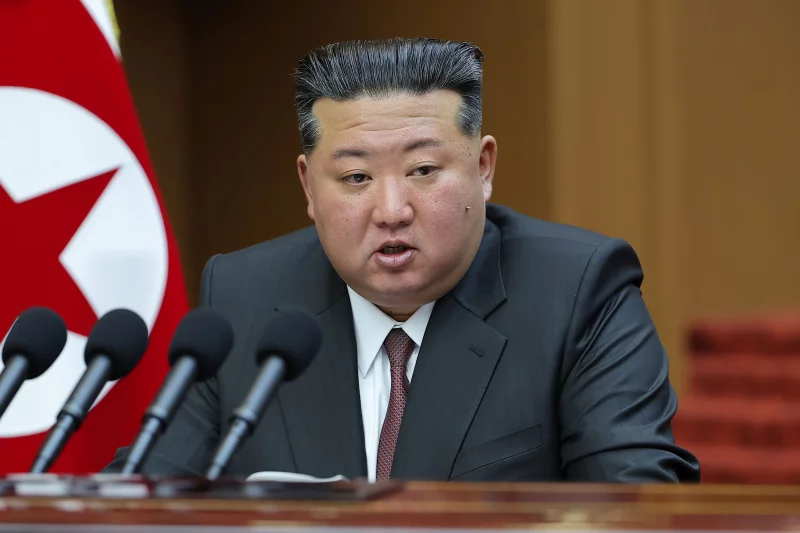
The newly disclosed North Korea nuclear facility marks another significant step in Pyongyang’s ongoing effort to expand its nuclear weapons program. Leader Kim Jong Un used the announcement to reaffirm his government’s commitment to strengthening its strategic deterrent. This signaled that nuclear development remains a central pillar of national policy, despite years of international sanctions and diplomatic pressure.
Images released by state authorities showed Kim touring what appeared to be a sophisticated uranium enrichment complex equipped with extensive rows of centrifuges and industrial infrastructure. As a result, the disclosure immediately drew attention from security analysts and government agencies monitoring North Korea’s nuclear activities. It could indicate a substantial increase in the country’s capacity to produce weapons-grade nuclear material.
The development comes as tensions remain elevated across Northeast Asia. At the same time, North Korea continues to invest heavily in military modernization. Information regarding global nuclear safeguards and monitoring efforts can be reviewed through iaea International Atomic Energy Agency, which oversees international nuclear verification frameworks.
North Korea Nuclear Facility Raises Concerns Over Uranium Enrichment Capacity
Analysts believe the newly revealed North Korea nuclear facility is likely connected to uranium enrichment operations, a critical process used to produce fuel for nuclear weapons. Although authorities did not disclose the facility’s exact location, specialists examining released photographs noted characteristics commonly associated with centrifuge halls.
The images showed long corridors filled with metallic cylindrical equipment arranged in dense formations. Such systems are typically used to enrich uranium by increasing the concentration of fissile isotopes required for military applications.
Experts have suggested that the site may represent an expansion of existing infrastructure at Yongbyon, North Korea’s most well-known nuclear complex. Additionally, information about international efforts to prevent nuclear weapons proliferation can be found in UN United Nations nuclear disarmament initiatives.
This latest disclosure is particularly significant because it would represent another major enrichment facility beyond those already known to foreign intelligence agencies and nuclear experts. Furthermore, the existence of multiple operational enrichment sites could significantly increase North Korea’s ability to expand its stockpile of nuclear materials.
Security specialists have repeatedly warned that the country’s enrichment capabilities have continued to grow despite economic restrictions. Even so, the apparent scale of the newly disclosed installation suggests that long-term investments in nuclear infrastructure remain a strategic priority for the government.
Kim Jong Un Strengthens Nuclear Weapons Strategy
During his visit to the North Korea nuclear facility, Kim Jong Un emphasized the need to expand the country’s nuclear deterrent in both quality and quantity. His remarks reflected a consistent policy direction. This has become increasingly visible since diplomatic negotiations with the United States stalled several years ago.
North Korean leadership continues to describe nuclear weapons as essential for national security and regime survival. As a result, investments in enrichment technology, missile development, and warhead production have remained at the center of military planning.
The country’s nuclear doctrine has evolved considerably over the past decade. Details about international treaties and nuclear nonproliferation efforts are available through UN. Treaty on the Non-Proliferation of Nuclear Weapons.
Military analysts believe North Korea’s long-term objective extends beyond deterrence alone. By strengthening its arsenal, Pyongyang may seek greater leverage in future negotiations concerning sanctions, economic restrictions, and regional security arrangements.
The government has repeatedly asserted its status as a nuclear weapons state and has shown little indication that it intends to abandon its atomic capabilities. Instead, recent policy statements suggest an emphasis on expanding production capacity. They also highlight efforts to improve delivery systems capable of carrying nuclear payloads.
Questions Remain About North Korea’s Nuclear Arsenal and Missile Capabilities
While many experts agree that North Korea has made substantial advances in nuclear technology, debate continues regarding the full operational effectiveness of its strategic weapons systems. Some analysts believe the country possesses missiles capable of reaching long-distance targets, while others argue that critical technological challenges may still remain.
Among the most important issues is whether nuclear warheads can reliably survive atmospheric reentry after traveling across intercontinental distances. In addition, concerns involve the development of multiple independently targetable reentry vehicles, a technology that could allow a single missile to carry several nuclear warheads.
The scale of North Korea’s arsenal is also difficult to determine with precision. Estimates vary widely, with some assessments suggesting the country possesses dozens of nuclear weapons. However, others believe the total stockpile may exceed one hundred warheads.
The growing sophistication of the North Korea nuclear facility network continues to shape international security discussions. Current information regarding global nuclear security challenges and threat reduction efforts can be explored through the Nuclear Threat Initiative.
As uranium enrichment infrastructure expands and missile development programs continue, governments throughout the region are expected to maintain close monitoring of North Korea’s nuclear activities. This will be especially true as questions persist regarding future weapons testing, arsenal growth, and broader strategic ambitions.