
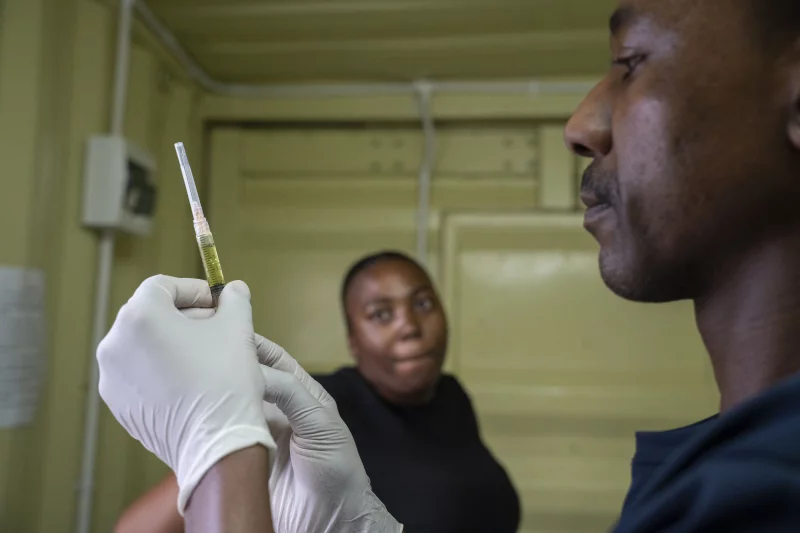
The national rollout of Lenacapavir HIV prevention programs in South Africa marks a significant development in the global fight against HIV. Health authorities have begun introducing the long-acting injectable medication across hundreds of healthcare facilities. As a result, they are offering a new prevention strategy that requires only two injections per year. This strategy could dramatically lower infection rates among high-risk populations.
South Africa carries one of the world’s largest HIV burdens, with millions of people living with the virus. Approximately 160,000 new infections are reported annually. Medical experts believe the arrival of Lenacapavir HIV prevention programs could transform how vulnerable communities access preventive care. In particular, adolescent girls and young women remain disproportionately affected by new infections.
The introduction of the treatment has generated considerable interest among healthcare professionals, researchers, and policymakers seeking more effective tools to combat HIV transmission. Furthermore, information about global HIV prevention initiatives can be explored through the UNAIDS. This organization tracks progress in the international response to the epidemic.
Lenacapavir HIV Prevention Offers a New Approach to Reducing Infections
Unlike traditional daily oral pre-exposure prophylaxis (PrEP) medications, Lenacapavir HIV prevention relies on a long-acting injection administered every six months. This approach addresses one of the biggest challenges in HIV prevention: maintaining consistent adherence to daily medication schedules.
For many individuals, remembering to take a pill every day can be difficult due to work schedules, social factors, stigma, transportation barriers, or limited access to healthcare services. The twice-yearly injection significantly reduces these obstacles. Consequently, it may improve long-term protection against HIV exposure.
The rollout is initially focused on districts with high HIV prevalence and will be implemented through hundreds of healthcare facilities across the country. Moreover, health authorities hope that expanding access to long-acting prevention options will strengthen efforts to reduce new infections among populations facing elevated risk.
Additional information regarding HIV prevention, treatment, and public health strategies can be found through the World Health Organization. This organization continues to support international efforts to reduce HIV transmission worldwide.
Researchers have described Lenacapavir as one of the most promising prevention technologies introduced in recent years. They highlight its effectiveness and simplified dosing schedule as key advantages.
Funding Challenges Threaten Expansion of Lenacapavir HIV Prevention
Despite the optimism surrounding the new treatment, experts warn that funding constraints could limit the immediate impact of Lenacapavir HIV prevention programs.
International health organizations have committed resources to support implementation. However, healthcare leaders argue that available funding remains insufficient to reach the large number of people who could benefit from the treatment. The situation has become more challenging following reductions in certain international HIV assistance programs. These programs previously supported prevention infrastructure, community outreach initiatives, and healthcare services.
Current implementation plans are expected to provide access to hundreds of thousands of individuals over the next several years. However, public health specialists emphasize that broader population coverage will require substantial additional investment.
Details regarding global efforts to combat HIV, tuberculosis, and malaria can be reviewed through the The Global Fund. This organization remains one of the largest international financing mechanisms supporting disease prevention and treatment programs.
Healthcare organizations also face operational challenges related to workforce capacity, supply chain management, community education, and long-term sustainability. Experts stress that the effectiveness of Lenacapavir HIV prevention will depend not only on the medicine itself. It will also depend on the ability of healthcare systems to deliver it consistently and equitably.
Generic Production Could Expand Access Across Africa
One of the most important developments for the future of Lenacapavir HIV prevention is the anticipated arrival of lower-cost generic versions. Currently, the branded medication remains expensive. This limits widespread adoption in many low- and middle-income countries.
Licensing agreements are expected to allow generic manufacturers to produce the drug for distribution across numerous countries. This includes countries in sub-Saharan Africa where HIV prevalence remains among the highest in the world.
Health experts believe generic competition could dramatically reduce costs and make large-scale prevention programs financially viable. Projections suggest future generic versions may become available at a fraction of current pricing levels. Therefore, this development creates opportunities for governments to expand national HIV prevention strategies.
Information about the manufacturer and ongoing research involving the treatment is available through the Gilead Sciences. This is the pharmaceutical company that developed Lenacapavir.
South African officials are also exploring opportunities to strengthen regional pharmaceutical manufacturing capabilities. Increased local production could improve supply security, reduce dependence on international imports, and support broader access throughout the region.
Public health modeling indicates that widespread adoption of Lenacapavir HIV prevention among HIV-negative individuals could substantially reduce transmission rates over the coming decades. This is particularly true if adoption is supported by expanded healthcare infrastructure, sustained funding, and affordable generic availability.