
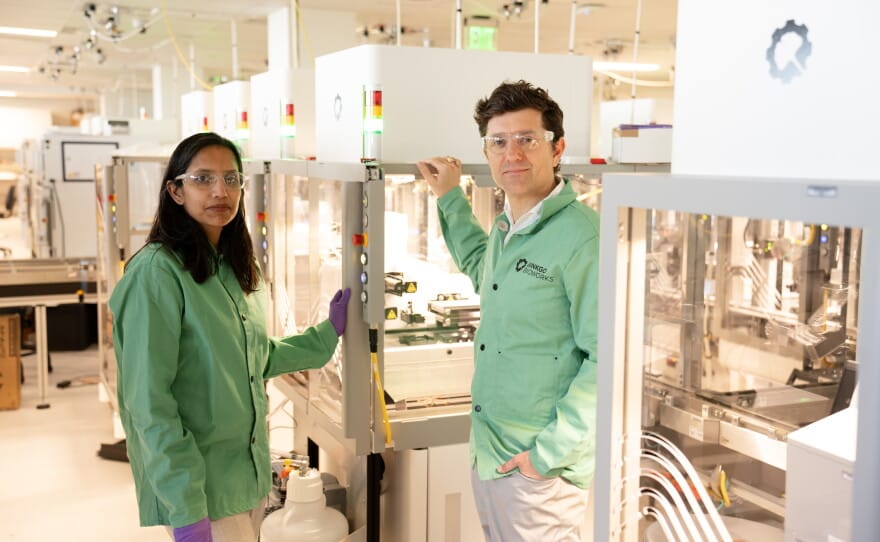
Autonomous laboratories are rapidly changing the future of scientific discovery by combining advanced robotics, artificial intelligence, and automated experimentation. What once required teams of researchers spending countless hours manually conducting laboratory procedures can now be performed by intelligent robotic systems. These robots operate around the clock. As AI technologies become more sophisticated, scientists are beginning to delegate not only repetitive tasks. Moreover, portions of the scientific decision-making process itself are being delegated.
The concept, once viewed as highly ambitious, is now becoming a reality in biotechnology facilities. In these locations, automated systems design, execute, and analyze thousands of experiments at unprecedented speed. These developments are helping researchers accelerate innovation in pharmaceuticals, agriculture, materials science, and environmental technologies.
How Autonomous Laboratories Are Revolutionizing Research
The rise of autonomous laboratories represents a major shift in the way scientific research is conducted. Traditional laboratory work often requires researchers to manually prepare samples, conduct experiments, monitor results, and repeat procedures many times. Only after repeating, researchers reach meaningful conclusions.
Advances in robotics have enabled laboratories to automate many of these repetitive processes. Automated liquid handling systems, robotic workstations, and AI-driven experimental platforms can now manage complex workflows with minimal human intervention.
One of the leading companies in this field is Ginkgo Bioworks, a biotechnology company that has invested heavily in creating highly automated research facilities. Within these environments, robotic systems move biological samples between workstations. In addition, these robots perform precise measurements and generate vast amounts of experimental data.
These autonomous laboratories allow researchers to run significantly more experiments than would be feasible through manual methods. The increased speed enables scientists to explore larger datasets. Furthermore, researchers identify promising solutions faster and reduce the time needed to develop new technologies.
The growing adoption of AI tools is also helping researchers process information more efficiently. Platforms such as OpenAI technologies are increasingly being explored for scientific applications, including experimental design and data interpretation.
AI Is Moving Beyond Automation Into Scientific Decision-Making
While robotics initially focused on executing predefined instructions, recent advances in artificial intelligence have expanded the role of machines within research environments.
Scientists are now experimenting with systems capable of generating hypotheses, proposing experimental pathways, and recommending potential solutions to complex scientific problems. Rather than simply carrying out instructions created by researchers, AI models can participate in parts of the discovery process itself.
This transition marks a significant evolution for autonomous laboratories. Researchers can define goals and constraints, while AI systems generate experimental strategies designed to achieve desired outcomes. The resulting plans can then be executed automatically by robotic platforms.
In biotechnology research, AI-driven systems have demonstrated the ability to analyze large biological datasets. These systems can identify promising molecular candidates more rapidly than traditional approaches. Information from organizations such as the National Institutes of Health continues to highlight the growing role of computational methods in accelerating biomedical innovation.
By integrating machine learning algorithms with automated laboratory infrastructure, researchers can conduct tens of thousands of experiments in parallel. This creates opportunities for faster breakthroughs in medicine, agriculture, and industrial biotechnology.
The Future of Autonomous Laboratories and Human Scientists
Despite rapid advances in automation, experts emphasize that human scientists remain central to the research process. Autonomous laboratories are designed to enhance scientific capabilities rather than replace researchers entirely.
Scientists continue to play critical roles in defining research objectives, evaluating results, interpreting complex findings, and ensuring that experiments align with ethical and regulatory standards. Human expertise is also essential when determining which scientific questions are worth pursuing. Furthermore, expertise is needed for deciding how discoveries can be applied in real-world settings.
As investment in artificial intelligence continues to grow, institutions across academia and industry are exploring new models for integrating automated systems into research operations. Organizations involved in advancing scientific innovation, including the National Science Foundation, have increasingly highlighted the importance of emerging technologies. These technologies can accelerate discovery and improve research efficiency.
The combination of AI, robotics, and advanced computing is creating a new generation of autonomous laboratories capable of operating at scales previously impossible. These systems can continuously generate data, refine experimental designs, and support scientific teams in addressing some of the most complex challenges. These challenges span healthcare, environmental sustainability, food production, and biotechnology.
As autonomous laboratories become more sophisticated, they are expected to play an increasingly important role in the global scientific ecosystem. This change will enable researchers to move from concept to discovery faster than ever before.