
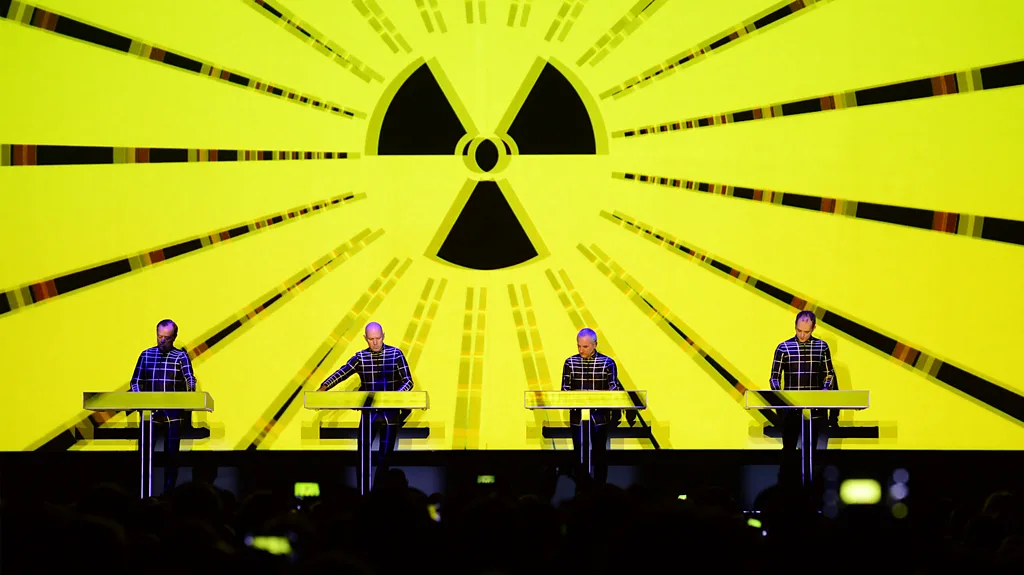
Kraftwerk’s groundbreaking track Radioactivity has reached its 50th anniversary while continuing to influence generations of musicians, producers and electronic music innovators around the world. Originally released as part of the group’s 1975 album Radio-Activity, the song evolved far beyond its experimental beginnings. Eventually, it transformed into one of the most recognizable anti-nuclear protest anthems in modern music history.
From its opening sequence of Geiger counter effects, pulsing synthesizers and Morse code signals, the track immediately introduced listeners to a futuristic sonic landscape unlike anything mainstream audiences had previously encountered. The German electronic pioneers combined scientific fascination with subtle tension. As a result, they created a hypnotic composition that reflected both technological optimism and Cold War anxiety.
Over time, the song became more than an experimental electronic piece. It developed into a cultural symbol that connected avant-garde music, political commentary and club culture across multiple decades. Today, Radioactivity remains one of the defining works in electronic music history and a cornerstone of Kraftwerk’s influential catalog.
A Revolutionary Sound That Changed Electronic Music
When Kraftwerk recorded Radio-Activity, the group was already gaining international recognition after the success of Autobahn. Yet the band pushed its sound even further by embracing fully electronic instrumentation and minimalist production techniques. The album marked the emergence of the group’s most celebrated lineup. This featured Ralf Hütter, Florian Schneider, Karl Bartos and Wolfgang Flür.
The project was developed inside the band’s famous Kling Klang Studio in Düsseldorf, where the musicians experimented with synthesizers, tape editing and early electronic processing systems. Their approach helped establish a blueprint for genres that would later dominate popular music. These genres included synth-pop, techno, electro and ambient music.
Many artists now view Kraftwerk as one of the most important innovators in modern sound design. The influence of Kraftwerk can still be heard in contemporary electronic productions, hip-hop rhythms and dance music structures used across the global music industry.
What made Radioactivity particularly unique was its ability to merge mechanical precision with emotional atmosphere. The track’s spoken vocal delivery and eerie melodic repetition created a futuristic experience that felt detached from traditional rock music. Nevertheless, it remained deeply immersive.
The album also reflected growing public fascination with communication technology, broadcasting systems and atomic science during the 1970s. Its themes blended scientific curiosity with an undercurrent of caution, giving the music an almost cinematic quality.
From Experimental Track to Anti-Nuclear Protest Anthem
While the original version of Radioactivity focused largely on the concept of radio waves and nuclear energy, the song underwent a dramatic transformation in the early 1990s. Kraftwerk revisited the track for their album The Mix. They reinvented it with a stronger political message centered on nuclear disasters and environmental concerns.
The updated version replaced much of the earlier ambiguity with direct references to catastrophic nuclear incidents and contamination. Lyrics referencing locations associated with nuclear tragedy helped reposition the song as a clear anti-nuclear statement.
Environmental activism groups embraced the track during a period of heightened concern about nuclear safety and radioactive contamination. Kraftwerk later performed the song during major environmental campaigns, including events connected to Greenpeace. This further cemented its status as a protest anthem.
The transformation of Radioactivity demonstrated Kraftwerk’s rare ability to reinterpret their own music without losing its original identity. The same hypnotic electronic pulse that once symbolized futuristic communication became a warning about technological risk and environmental damage.
Musicians and producers from multiple generations have cited the track as a defining influence on their creative development. Artists involved in synth-pop, industrial music, techno and experimental electronica frequently describe Kraftwerk’s work as foundational to their understanding of modern sound production.
The group’s influence extended beyond Europe and North America. Japanese electronic pioneers, emerging Detroit techno artists and British synth innovators all drew inspiration from Kraftwerk’s minimalist structures and machine-like rhythms.
Kraftwerk’s Legacy Continues Across Modern Culture
Five decades after its release, Radioactivity continues to resonate with audiences because its themes remain strikingly relevant. The song’s exploration of technology, communication systems and environmental fear still reflects contemporary global concerns.
Younger electronic artists continue discovering Kraftwerk through streaming platforms, vinyl reissues and modern festival performances. The group’s pioneering use of synthesizers and digital sequencing has become essential study material for musicians exploring electronic composition.
Interest in vintage synthesizer culture has also contributed to renewed appreciation for the band’s early recordings. Enthusiasts studying analog synthesizer technology often point to Kraftwerk’s innovative sound design as a landmark moment in music production history.
Critics and historians frequently describe Radioactivity as one of the rare songs capable of existing simultaneously as experimental art, dance music and political commentary. Its layered identity allowed the track to remain culturally significant while adapting to changing social and musical landscapes.
The song’s enduring relevance can also be linked to Kraftwerk’s visual presentation and conceptual philosophy. Their robotic stage personas, multimedia performances and minimalist aesthetic helped define the visual language of electronic music long before digital culture became mainstream.
Today, institutions dedicated to music preservation and innovation continue highlighting the group’s influence on modern audio technology and performance art. Organizations connected to electronic music instruments frequently reference Kraftwerk’s contributions when discussing the evolution of synthesizer-based music and digital production techniques.
As the anniversary of Radioactivity is celebrated worldwide, the track remains a powerful reminder of how electronic music can simultaneously challenge artistic boundaries, influence political discourse and shape the future of sound itself.