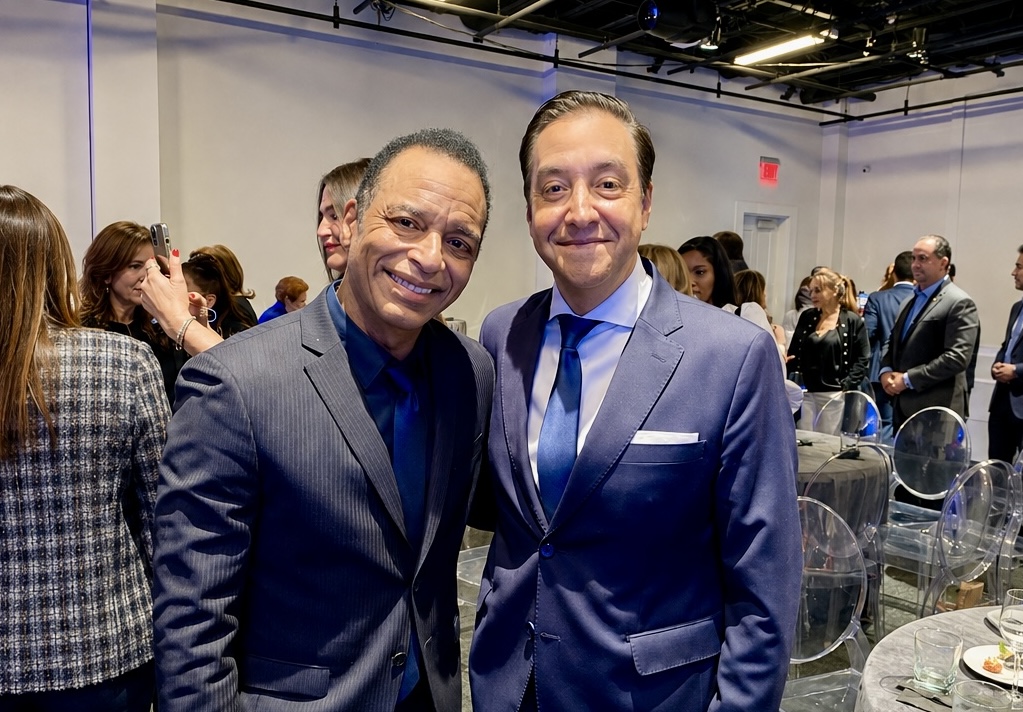
Javier Cárdenas-Moreno, President and CEO of Rhino Equipment, joined an American-Cuban singer and other prominent political and business leaders at a high-level gathering. This event focused on strengthening connections between Latin America and the United States.
The event brought together influential figures from the business, political, and cultural communities to discuss “Building Bridges Between Latin America and the United States”. They also explored how stronger relationships between the two regions can create new opportunities for economic growth, investment, entrepreneurship, innovation, and collaboration.
The gathering highlighted the importance of developing relationships that extend beyond traditional political and economic channels. It brought together business executives, policymakers, entrepreneurs, and cultural figures around a shared vision for stronger ties between the Americas.
Javier Cárdenas-Moreno Brings a Business Perspective to the Conversation
As President and CEO of Rhino Equipment, Javier Cárdenas-Moreno participated in the gathering as a representative of the private sector. He also represented the international business community.
His participation reflects the growing role of business leaders in conversations about the relationship between Latin America and the United States. Companies operating across international markets are increasingly positioned to build commercial connections. They can also create employment, attract investment, and contribute to economic development.
For Cárdenas-Moreno, discussions about strengthening ties between Latin America and the United States are particularly relevant to the broader business environment. Cross-border relationships can facilitate trade, investment, technology exchange, and entrepreneurship. They also create opportunities for companies seeking to expand their presence in regional and international markets.
The event provided an opportunity to exchange perspectives with political and business leaders. At the same time, participants explored how the private sector can contribute to stronger connections throughout the Americas.
Building Bridges Between Latin America and the United States
The central theme of the gathering was building bridges between Latin America and the United States.
The relationship between the two regions encompasses trade, investment, manufacturing, energy, technology, infrastructure, tourism, education, culture, and entrepreneurship. Strengthening these connections can create opportunities for businesses and communities on both sides.
Building stronger bridges requires more than government-to-government relationships. Business leaders, entrepreneurs, investors, universities, cultural figures, and civil society organizations can all contribute to developing deeper connections.
The private sector can play a particularly important role by creating partnerships that generate economic activity. In addition, these partnerships connect people, markets, and ideas across borders.
Business and Investment as Drivers of Stronger Regional Ties
Investment and business cooperation were central to the broader conversation about strengthening relationships between Latin America and the United States.
American companies have significant opportunities to invest in Latin American markets. Meanwhile, Latin American businesses can expand their presence in the United States and participate in international supply chains.
For entrepreneurs and executives, stronger economic relationships can provide access to new customers, suppliers, technologies, financing, and strategic partnerships.
Business leaders such as Javier Cárdenas-Moreno can contribute to these conversations by bringing perspectives from companies operating in industries connected to construction and equipment. In addition, they contribute insights on infrastructure and international commerce.
The development of stronger commercial relationships can also contribute to employment and economic opportunities in communities across the region.
Infrastructure Can Connect Markets and Communities
Infrastructure represents another important area where Latin America and the United States can strengthen cooperation.
Modern transportation networks, ports, energy systems, telecommunications infrastructure, and construction projects are essential to improving productivity and connecting markets.
Infrastructure development also creates demand for equipment, technology, skilled labor, financing, and specialized services. For companies in the construction equipment industry, this creates a direct connection between infrastructure investment and international business opportunities.
Rhino Equipment’s presence in the construction equipment sector places the company within an industry that supports infrastructure development. It also encourages economic activity across different markets.
Strengthening infrastructure connections throughout the Americas could therefore contribute not only to economic competitiveness but also to greater regional integration.
The Role of Entrepreneurship and Innovation
The conversation also highlighted the importance of entrepreneurship and innovation in creating bridges between Latin America and the United States.
Entrepreneurs frequently operate across borders, developing new products, services, technologies, and business models that connect different markets.
Innovation can help companies overcome geographic and economic barriers while creating new opportunities for collaboration.
The next generation of entrepreneurs in Latin America has the potential to play an increasingly important role in strengthening the region’s relationship with the United States. They can do this through technology, digital commerce, manufacturing, creative industries, and emerging businesses.
Creating an environment where entrepreneurs can access capital, education, mentorship, technology, and international markets will be essential. This effort is necessary to maximizing this potential.
The Cultural Power of Building Bridges
The presence of an American-Cuban singer added an important cultural dimension to the gathering.
Music and culture have the ability to connect communities across borders, languages, and generations. Latin American and U.S. cultural relationships have historically influenced entertainment, music, art, food, media, and popular culture.
The participation of cultural figures alongside business and political leaders demonstrated that building bridges between Latin America and the United States is not exclusively an economic or governmental process.
Cultural exchange can strengthen relationships by creating shared experiences and opening conversations between communities.
The combination of business, political, and cultural perspectives provided a broader understanding of the many ways in which connections between the two regions can be strengthened.
Political and Business Leaders Share a Common Opportunity
The participation of political and business leaders underscored the importance of cooperation between the public and private sectors.
Governments establish frameworks that can facilitate trade, investment, infrastructure development, and international cooperation. Businesses, meanwhile, create products, services, jobs, investment, and commercial relationships.
When these two sectors work together, they can help create conditions that encourage sustainable economic growth and stronger international partnerships.
Events that bring together leaders from different sectors provide an opportunity to exchange ideas. Additionally, they help identify areas where collaboration can generate long-term value.
Strengthening the Relationship Between the Americas
The United States and Latin America are connected by geography, trade, investment, migration, culture, and longstanding social relationships.
Yet there remains significant potential to deepen these connections.
Strengthening commercial relationships, encouraging entrepreneurship, expanding infrastructure investment, supporting innovation, and promoting cultural exchange can contribute to a more integrated and competitive hemisphere.
For business leaders, this represents both a responsibility and an opportunity.
Javier Cárdenas-Moreno and the Future of Regional Business Connections
Javier Cárdenas-Moreno’s participation in the gathering reflects the increasingly important role of private-sector leaders in conversations about the future of the Americas.
As President and CEO of Rhino Equipment, his engagement with political, business, and cultural leaders creates opportunities to exchange perspectives on international commerce and infrastructure. Moreover, it encourages investment and economic development.
The gathering reinforced the idea that building bridges between Latin America and the United States requires participation from multiple sectors of society.
Business leaders can invest and create jobs. Entrepreneurs can innovate. Governments can facilitate cooperation. Cultural figures can strengthen people-to-people connections.
Together, these efforts can help create a stronger network of relationships between Latin America and the United States.
A Shared Vision for Latin America and the United States
The gathering ultimately highlighted the importance of looking at the relationship between Latin America and the United States through a broader lens.
Building bridges means creating opportunities for business, investment, infrastructure, entrepreneurship, innovation, education, and cultural exchange.
For Javier Cárdenas-Moreno and other business leaders, these conversations provide an opportunity to contribute to a vision. In this vision, stronger international relationships generate tangible economic and social opportunities.
The participation of leaders from the business, political, and cultural spheres demonstrated that the future of the Americas will depend on collaboration across sectors and borders.
By strengthening connections between businesses, governments, entrepreneurs, and communities, Latin America and the United States can continue building a relationship. This relationship is based on shared opportunity, economic cooperation, and long-term regional development.