MONTPELIER, Vermont — As colleges and universities across the United States face rising costs, declining enrollment and financial instability, a new institution in Vermont is attempting to rethink the traditional model of higher education from the ground up.
The Greenway Institute, scheduled to open in fall 2027, aims to offer a different approach to college by eliminating many of the amenities and administrative structures that contribute to high tuition costs. Instead, the school plans to emphasize hands-on learning, close relationships with faculty and practical experience.
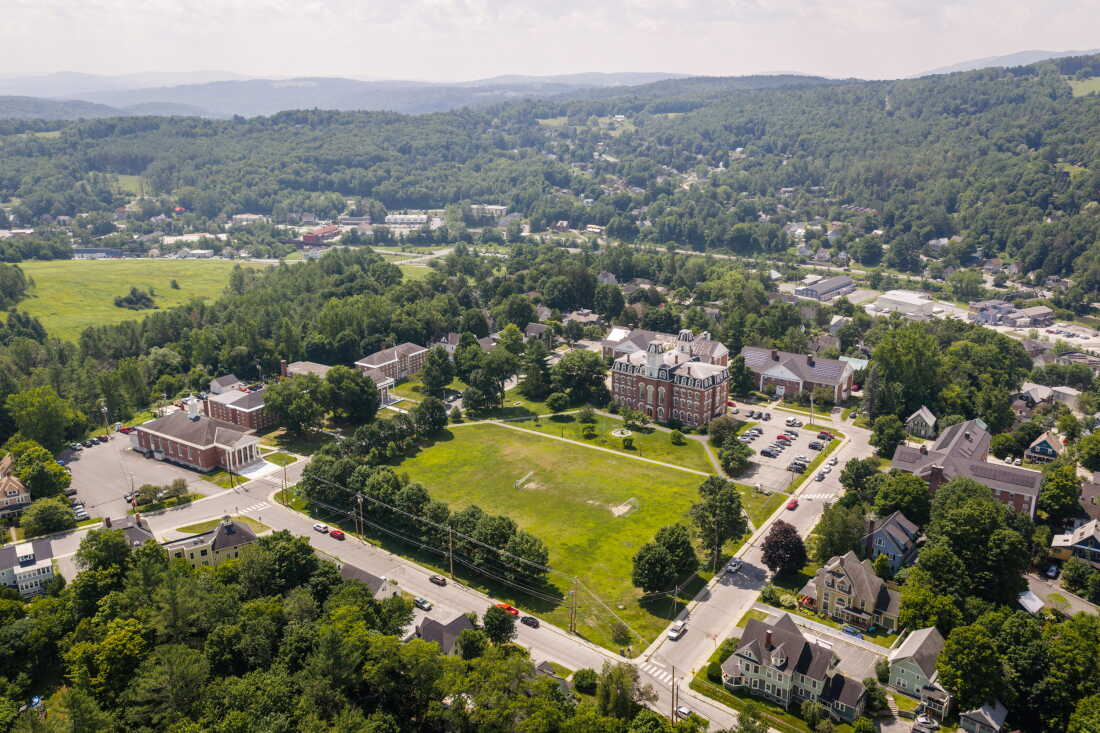
The institution is being developed on a historic campus in Montpelier that dates back to the 19th century. Its founders argue that the current higher education model is increasingly difficult to sustain, pointing to the dozens of colleges that have closed or merged in recent years and hundreds more facing financial risks.
A Different Model for Higher Education
Greenway Institute’s approach is deliberately unconventional. Students will not have access to many of the amenities typically associated with American college life, such as traditional meal plans or extensive recreational facilities.
Instead, the school plans to focus exclusively on engineering education, combining academic instruction with real-world projects supervised by faculty mentors.
“We need new models in higher ed,” said founding president Mark Somerville, a former provost at Olin College of Engineering.
The idea is to reduce unnecessary costs while giving students more direct experience with the tools and technologies they are likely to encounter in their careers.
Learning by Doing
Greenway tested its educational model during a prototype semester in 2025, when four students from other colleges participated in a hands-on program.
Rather than spending most of their time listening to conventional lectures, students worked on projects including wind turbines and solar-powered traffic signals.
The experiment reflects growing interest in work-based learning as a way to better connect college education with employment.
Research cited by the article indicates that students who participate in work-based learning can have stronger employment prospects, career advancement and earnings compared with students who rely primarily on traditional forms of instruction.
A Response to Higher Education’s Financial Crisis
The Greenway project comes at a particularly challenging moment for American higher education. Since 2016, more than 150 colleges and universities have closed or merged, while hundreds of additional institutions are considered financially vulnerable.
Vermont has experienced its own wave of closures, with seven private colleges shutting down over the past decade.
Greenway’s founders believe that these pressures create an opportunity to rethink what a college actually needs to provide.
The school has raised approximately $4.5 million toward a $30 million fundraising goal and plans to begin operations in 2027.
Its founders and advisers include technology executives, business leaders, educators and professionals with experience at institutions such as Harvard, Dartmouth and Tufts.
The College of the Future?
The Greenway Institute is part of a broader movement exploring alternative models for higher education. Several experimental institutions are working to reduce costs, integrate apprenticeships and place greater emphasis on practical skills.
The fundamental question is whether universities can continue operating according to a model developed for a very different era — or whether students increasingly want an education that is more affordable, practical and directly connected to the workplace.
For Greenway, the answer is clear: college may need to start over to move forward.