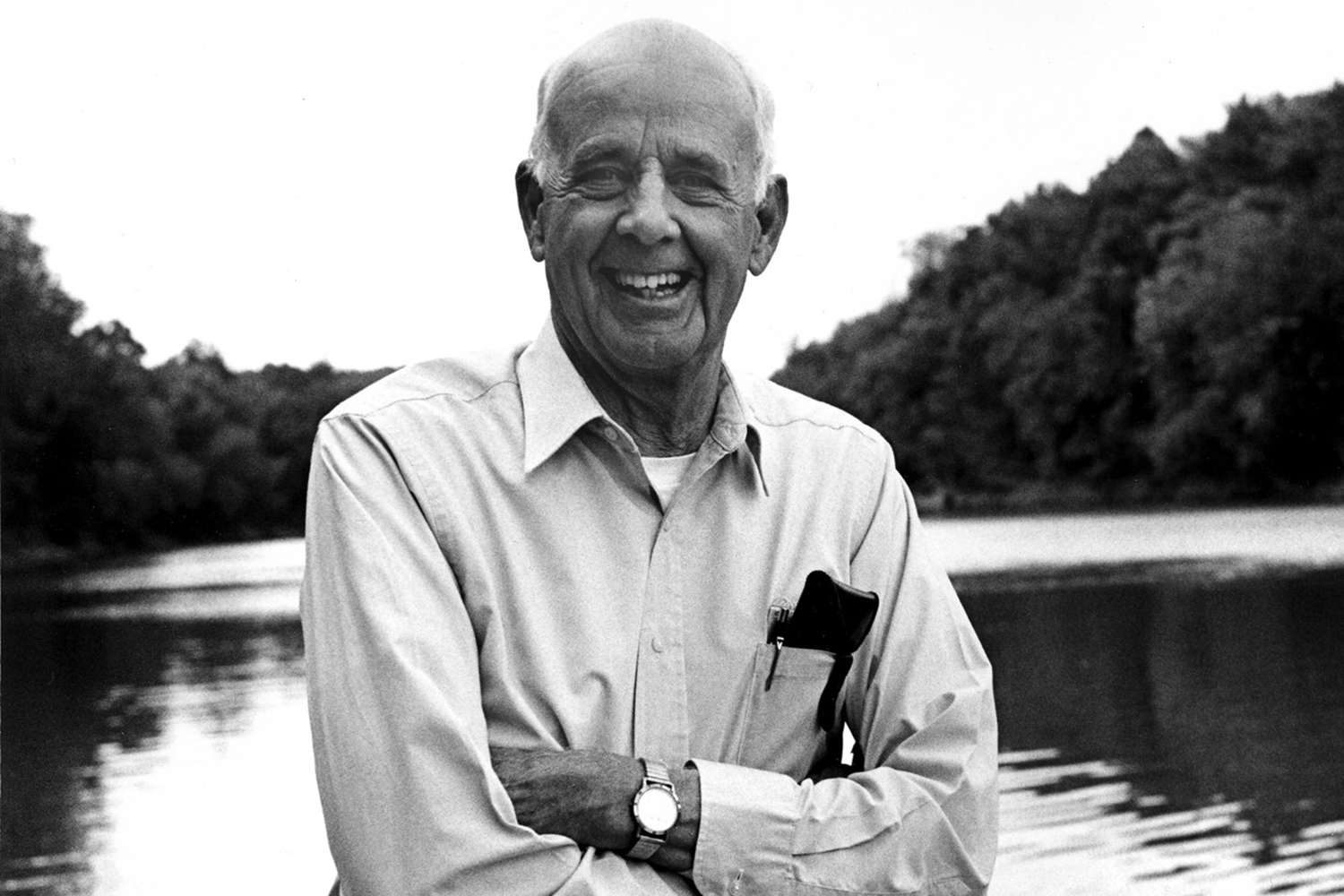
Wendell Berry, the acclaimed American novelist, poet, essayist and environmentalist whose writing was deeply rooted in the land and rural life, has died at the age of 92.
Berry died at his home in Port Royal, Kentucky, where he spent much of his life writing, farming and advocating for a closer relationship between people, communities and the natural world.
For Berry, the land was more than a setting for his work. It was central to his life and philosophy. His family had farmed and lived on the same land in Henry County, Kentucky, for seven generations before him, creating a connection to place that shaped much of his literary career.
From Academia to Rural Kentucky
Berry began his career in academia and studied at the University of Kentucky before attending Stanford University. His early achievements as a writer and scholar eventually led him to New York University, where he became an English professor while still in his 20s.
But life in the city did not suit him.
Berry ultimately left academia and returned to Kentucky, choosing a life centered on farming, writing and his local community. That decision became one of the defining choices of his career.
His experiences as a farmer would go on to influence a body of work that explored agriculture, environmental stewardship, community, economics and the responsibilities people have toward the places they call home.
A Literary Voice Rooted in the Land
Throughout his decades-long career, Berry wrote across multiple forms, including novels, poetry, essays and short stories. His work frequently challenged modern ideas about consumption, industrial agriculture and the growing separation between people and the natural world.
His writing earned him a devoted readership and made him an influential voice in American environmental and agricultural thought.
Rather than separating his literary work from his life as a farmer, Berry treated the two as closely connected. Farming became both a way of life and a source of insight that informed his writing.
A Legacy of Writing, Farming and Environmentalism
Berry’s influence extended well beyond literature. His essays and public arguments helped shape conversations about sustainable agriculture, rural communities and environmental responsibility.
His life offered a powerful example of the principles he often explored in his work: the importance of knowing a place, caring for the land and maintaining meaningful connections with local communities.
By choosing Kentucky over the academic and literary opportunities of major cities, Berry built a career that remained closely tied to the land he loved.
His death at 92 marks the end of a remarkable life in which farming and literature were never separate pursuits, but complementary parts of the same philosophy.
Wendell Berry leaves behind a substantial literary legacy and a body of work that continues to challenge readers to reconsider their relationship with nature, agriculture and the communities around them.