
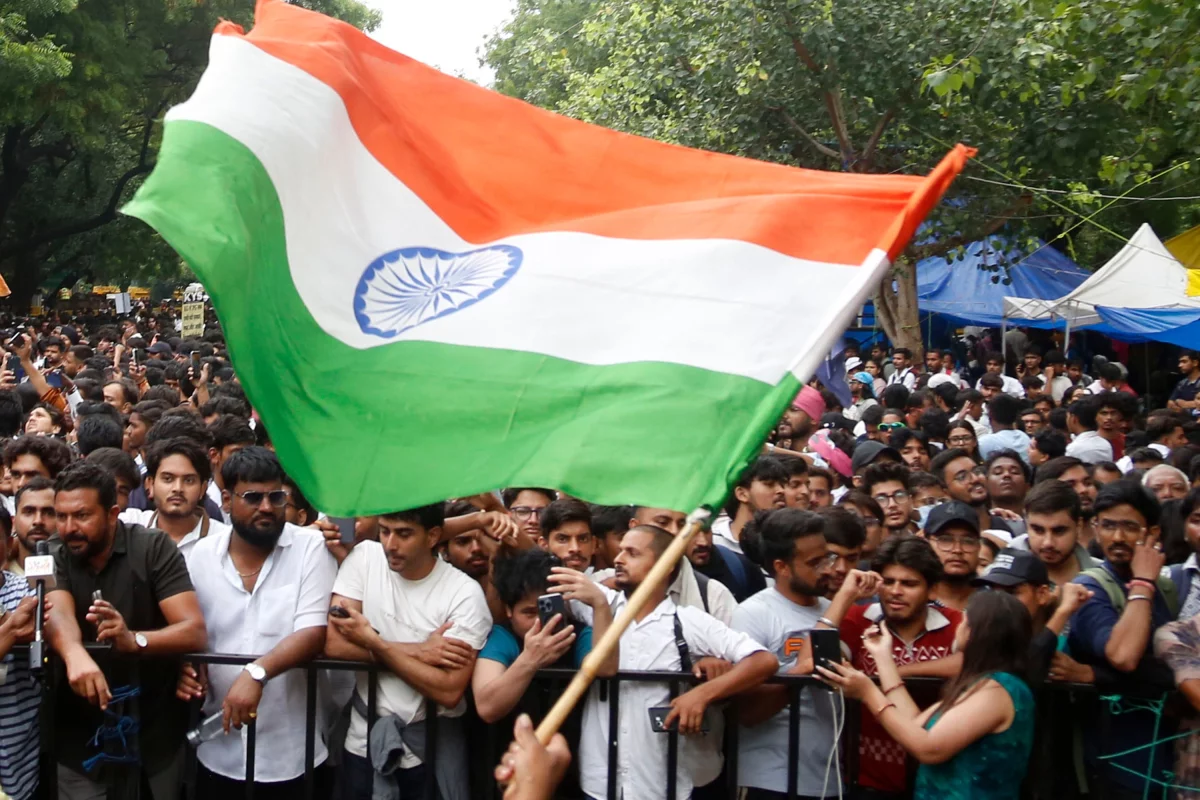
A growing student movement demanding sweeping reforms to India’s examination system continued to gain momentum this week. Demonstrators remained gathered in New Delhi despite heightened security and recent confrontations with police. What began as a campaign led primarily by university students has evolved into a broader civic movement. Now, the movement attracts teachers, young professionals, parents and education advocates.
Participants say their demonstrations are focused on restoring confidence in public examinations. This comes after repeated allegations involving test irregularities, administrative failures and delayed recruitment processes. The movement has also sparked a wider national debate about transparency, accountability and equal access to educational opportunities.
Recent information about India’s education system and public initiatives can be found through the Ministry of Education. The Ministry publishes official policies, academic programs and institutional updates.
Protesters Push for Education Reform and Greater Transparency
Organizers insist their campaign extends beyond a single examination dispute. In addition, they are calling for stronger oversight of competitive testing. They also seek faster investigations into reported irregularities. The group wants reforms designed to improve confidence in the country’s recruitment and admissions processes.
Many participants argue that millions of students invest years preparing for highly competitive examinations. These students expect the evaluation process to remain fair and transparent. Civil society organizations have echoed concerns that long-term confidence in educational institutions depends on credible examination systems. Effective administrative oversight is also crucial.
Legal protections related to constitutional rights and public institutions are available through the Constitution of India. This document outlines the country’s constitutional framework.
Public Support Grows Beyond Student Communities
Although students remain at the center of the demonstrations, the movement has attracted support from professionals working in technology, healthcare, engineering and other sectors. Moreover, many participants describe the protests as part of a broader discussion about employment opportunities. The protests are also about merit-based recruitment and institutional accountability.
Observers note that social media has significantly expanded the movement’s visibility. It allows organizers to coordinate peaceful gatherings while encouraging broader public participation. Furthermore, the increasing involvement of families and working professionals reflects how education policy has become an issue affecting multiple generations.
National demographic and workforce indicators can be explored through the Ministry of Statistics and Programme Implementation. This Ministry publishes official socioeconomic data relevant to education and employment.
Authorities Face Pressure to Balance Security and Dialogue
Government officials continue evaluating possible policy responses while security forces maintain a visible presence around designated protest areas. Meanwhile, analysts believe meaningful dialogue between public institutions and movement representatives could play an important role in reducing tensions. Additionally, this dialogue could address concerns surrounding examination administration.
Education specialists argue that long-term solutions may require stronger digital security, improved examination oversight, faster grievance mechanisms and greater institutional transparency. Regardless of how negotiations develop, the demonstrations have already elevated education governance into one of the country’s most closely watched public policy discussions.
Additional information about higher education standards and academic quality initiatives is available through the University Grants Commission. The Commission oversees key aspects of higher education across India.