
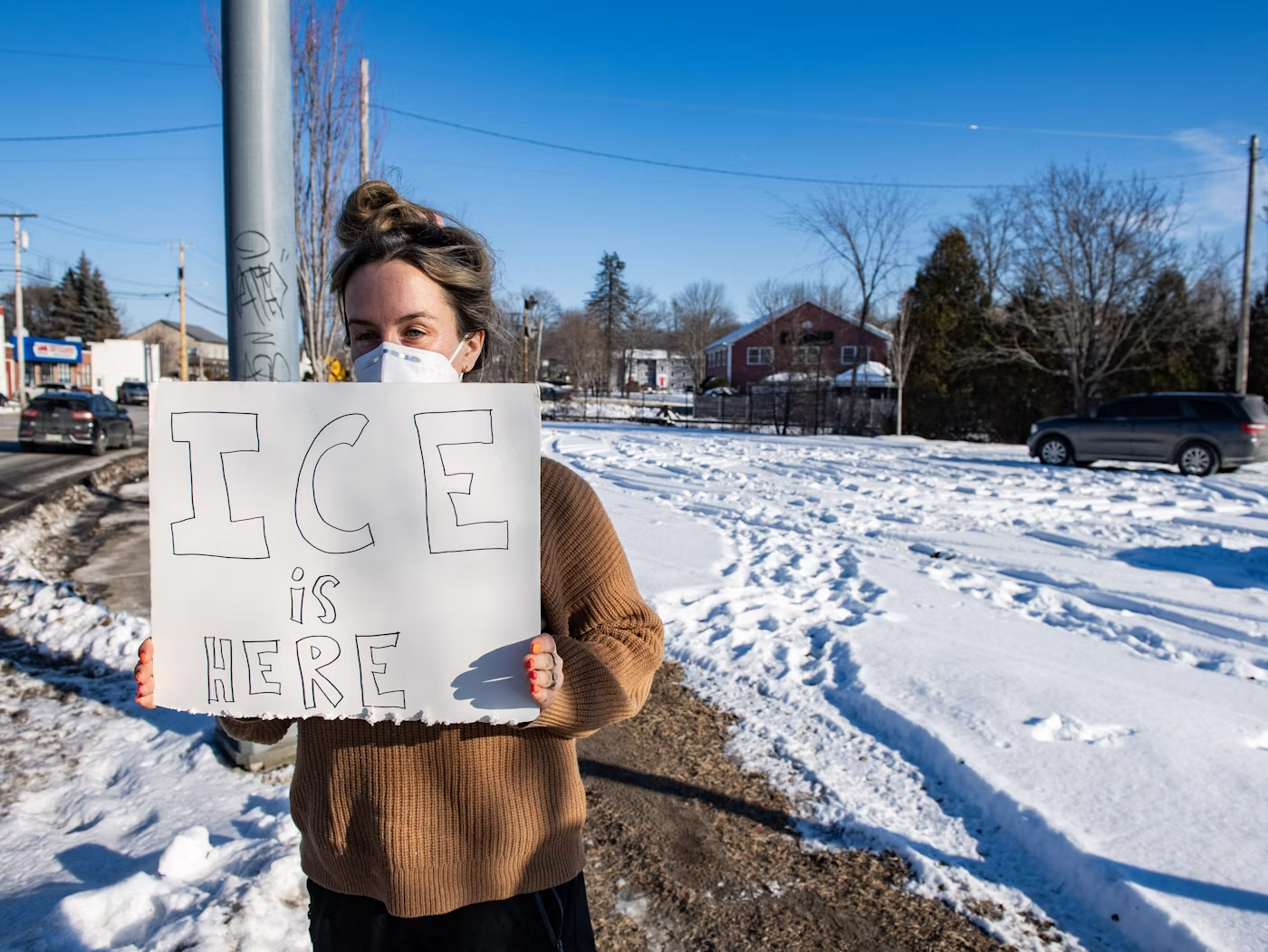
ICE protester data collection practices are drawing increased attention. This comes after a previously undisclosed letter to members of Congress shed new light on how federal immigration authorities gather and retain information about individuals encountered during enforcement operations.
The controversy centers on questions about whether federal agencies are maintaining records on protesters, observers, and other individuals who have not been arrested or charged with crimes. While Department of Homeland Security officials continue to deny the existence of a dedicated database of protesters or domestic terrorists, civil liberties advocates argue that recent disclosures suggest federal authorities may be collecting and preserving personal information on people engaged in lawful observation and protest activities.
The issue has become part of a broader national debate. This debate involves immigration enforcement, surveillance technology, privacy rights, and constitutional protections related to free speech and peaceful assembly.
Congressional Letter Reveals Details About Information Collection Practices
The renewed scrutiny stems from a letter sent by former acting Immigration and Customs Enforcement Director Todd Lyons to members of Congress. The letter responded to questions about data collection practices.
According to the letter, ICE does not maintain a separate database specifically dedicated to protesters. However, the agency acknowledged collecting information in situations involving potential violations of federal law, concerns about officer safety, or incidents connected to enforcement operations.
Information regarding federal immigration enforcement policies is available through U.S. Immigration and Customs Enforcement.
The correspondence stated that information gathered during interactions with individuals may include biographical details, biometric information, and other situational records. In addition, the agency further indicated that records generated during such encounters may be retained as official government documents even when individuals are not arrested or detained.
The disclosure has generated concern among privacy advocates. They argue that maintaining records on people engaged in constitutionally protected activities could have broader implications for civil liberties.
Supporters of the practice contend that law enforcement agencies routinely collect information relevant to investigations, operational security, and public safety responsibilities.
The differing interpretations have fueled ongoing debate regarding the scope of federal authority and the limits of government information gathering.
Civil Liberties Groups Raise Questions About First Amendment Protections
Several civil rights organizations have expressed concern about reports that observers of immigration enforcement operations have been photographed, identified, or otherwise documented by federal agents.
Advocates argue that individuals who peacefully observe government activity, record public events, or engage in lawful protest are exercising rights protected by the First Amendment. For more information, constitutional protections can be found through the American Civil Liberties Union.
Some individuals have alleged that federal agents recorded license plate information, photographed observers, or attempted to identify participants at enforcement locations. In several instances, legal challenges have been filed alleging violations of constitutional rights.
Government officials have maintained that law enforcement personnel may collect information when they believe it is relevant to public safety, investigations, or potential criminal activity.
The dispute reflects broader tensions surrounding the role of surveillance technologies in modern law enforcement operations. Notably, advances in facial recognition systems, license plate databases, and digital identification tools have expanded the ability of agencies to identify individuals in public spaces.
As these technologies become increasingly sophisticated, legal experts continue to debate how constitutional protections should apply to their use.
Surveillance Technology and Immigration Enforcement Remain Under Review
The controversy surrounding ICE protester data collection also highlights the growing role of technology in immigration enforcement.
Federal agencies have expanded the use of digital investigative tools designed to assist with identification, verification, and operational planning. Information about homeland security operations and technology programs can be found through the Department of Homeland Security.
Privacy advocates argue that expanded surveillance capabilities require stronger safeguards to prevent misuse and ensure that information about law-abiding individuals is not retained unnecessarily. Meanwhile, government officials contend that modern technologies are essential for protecting officers, conducting investigations, and enforcing federal law.
Members of Congress have also begun examining the issue more closely. As part of this, lawmakers have requested additional information regarding what data is collected, how long it is retained, who has access to it, and what protections exist for individuals not accused of wrongdoing.
Research organizations focused on digital rights and government transparency, including groups such as the Electronic Frontier Foundation, have emphasized the importance of oversight. This need for oversight is increasing as surveillance capabilities continue to expand.
As litigation, congressional inquiries, and public debate continue, the discussion surrounding ICE protester data collection is likely to remain a significant issue. It is likely to be part of ongoing conversations about immigration enforcement, privacy rights, and the balance between public safety and civil liberties in the United States.