
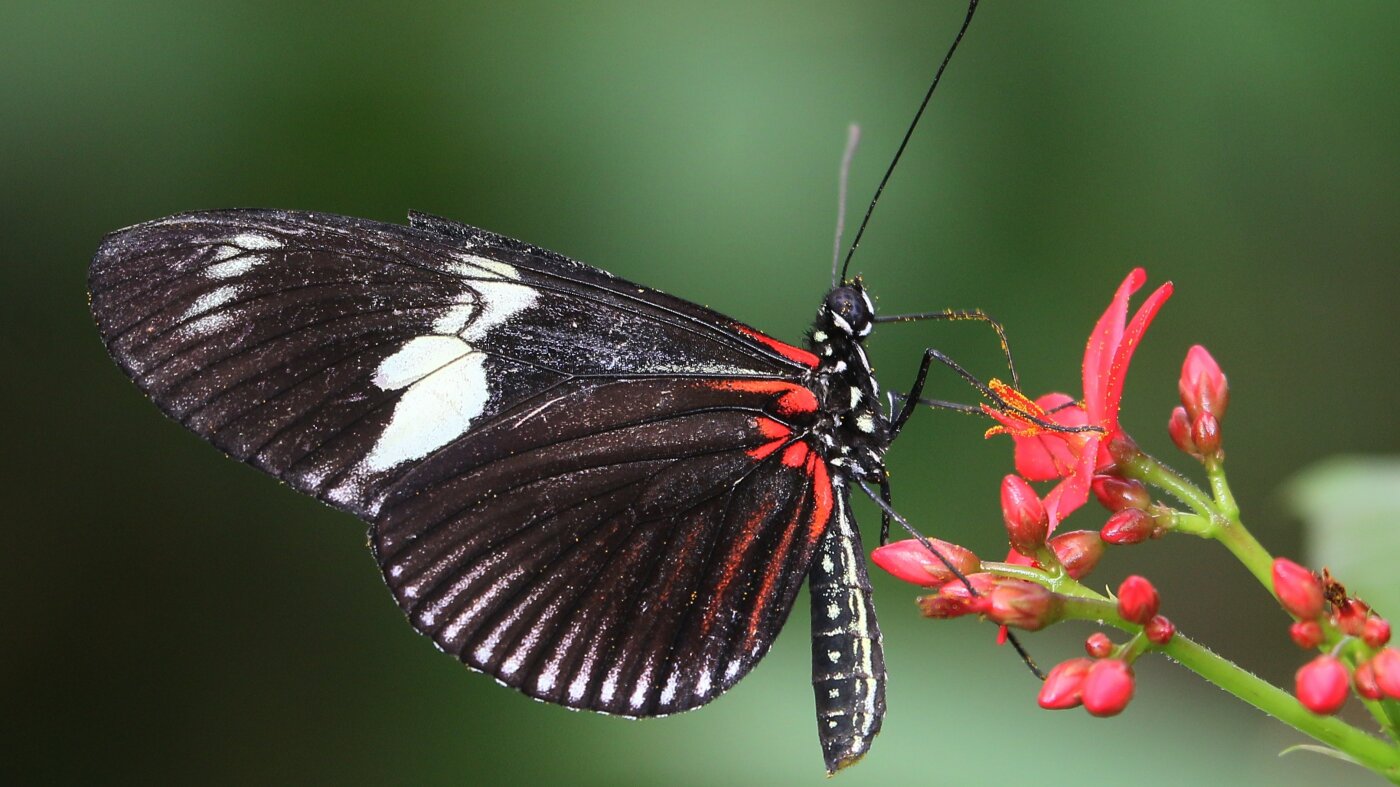
The remarkable lifespan of the Heliconius butterfly is attracting growing attention from scientists seeking to better understand the biological mechanisms behind aging and longevity. While most butterflies survive only a few weeks after reaching adulthood, Heliconius species can live for several months, making them exceptional among insects.
Researchers believe this unusual longevity could provide valuable insights into how nutrition, genetics, and metabolism influence the aging process—not only in insects but potentially across a wide range of animals.
A Butterfly That Defies Expectations
Compared with most butterfly species, Heliconius butterflies have an extraordinarily long lifespan. Scientists estimate they can live nearly 25 times longer than many of their close relatives, a biological advantage that has puzzled researchers for decades.
One of the most distinctive characteristics of these tropical butterflies is their ability to consume pollen in addition to nectar. Unlike most butterflies, which primarily feed on sugary liquids, Heliconius butterflies digest pollen, providing them with a rich source of amino acids and proteins.
This nutrient-rich diet is believed to support tissue maintenance, improve reproduction, and extend survival well beyond the lifespan typically observed in other butterfly species.
However, researchers caution that pollen alone does not fully explain the insects’ impressive longevity.
Beyond Diet: The Search for the Aging Mechanism
Scientists suggest that the extended lifespan of Heliconius butterflies likely results from a combination of biological adaptations rather than a single dietary factor.
Current research is exploring how their metabolism, immune system, cellular repair processes, and genetic regulation interact to slow aging. Understanding these mechanisms may reveal evolutionary strategies that allow certain species to maintain health and reproductive capacity for much longer periods.
By studying these butterflies, researchers hope to identify biological pathways that could eventually contribute to advances in aging research and age-related disease prevention.
Lessons From Nature’s Long-Lived Species
Heliconius butterflies are not the only animals attracting scientific interest for their exceptional lifespans. Other species, including certain bats, whales, turtles, and naked mole-rats, have evolved unique biological traits that allow them to remain healthy far longer than expected for their size or metabolism.
Comparing these diverse species enables scientists to investigate common genetic and physiological mechanisms associated with healthy aging.
Rather than searching for a single “longevity gene,” researchers increasingly believe that long life results from a complex interaction between nutrition, DNA repair, immune function, and environmental adaptation.
As research continues, the Heliconius butterfly serves as another example of how nature’s extraordinary adaptations can help expand scientific understanding of aging. While practical applications for human health remain years away, studying these resilient insects could eventually contribute to new strategies for promoting healthier aging and extending quality of life.