
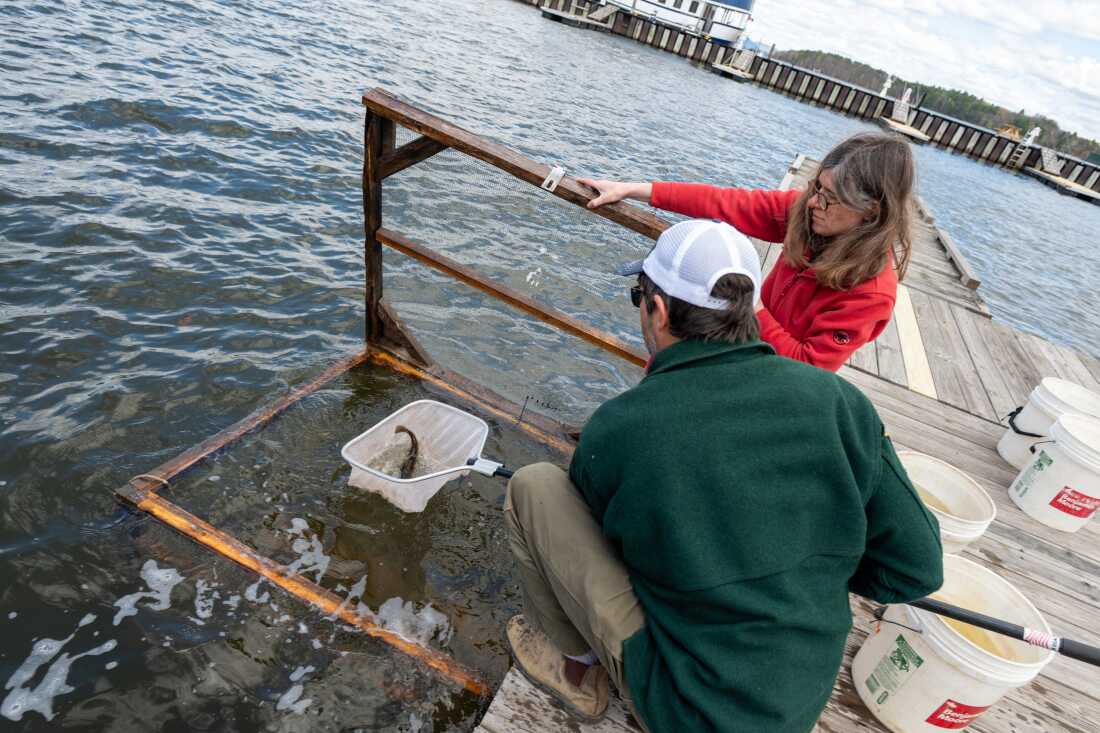
Researchers are studying a rare and unusual disease affecting brown bullhead catfish in Lake Memphremagog, a body of water that spans the border between Vermont and Quebec, after discovering evidence of what appears to be a transmissible cancer spreading among the fish population.
The condition, first noticed during routine wildlife surveys, has raised important questions about fish health, disease transmission, and aquatic ecosystem conservation.
An Unusual Discovery During Fish Surveys
The Vermont Fish & Wildlife Department conducts annual fish population surveys in Lake Memphremagog to monitor the health of local species.
In 2013, biologists began noticing something unusual in several brown bullhead catfish.
The fish displayed dark, tar-like streaks and patches across their bodies, including on:
- The skin
- Lips
- Fins
- Gills
- Mouth
- Eyes
Researchers quickly realized they were observing more than a typical skin infection.
A Rare Form of Cancer
Scientists believe the disease is a transmissible cancer, an exceptionally rare type of cancer in which living cancer cells themselves spread from one individual to another.
Unlike most cancers, which develop independently within each organism, transmissible cancers behave almost like infectious diseases.
Only a handful of naturally occurring transmissible cancers have ever been documented in wildlife, making this discovery particularly significant.
How the Disease Affects the Fish
The dark lesions can interfere with several essential functions.
Affected catfish may experience:
- Difficulty feeding
- Damage to their gills
- Reduced vision when the eyes are involved
- Increased vulnerability to predators and disease
Although some fish continue to survive with the condition, severe cases may significantly reduce their quality of life.
Why Researchers Are Paying Close Attention
Understanding how this cancer spreads could provide valuable insights into:
- Wildlife disease transmission
- Fish population health
- Cancer biology
- Environmental stressors affecting aquatic ecosystems
Researchers are also working to determine whether environmental conditions within the lake may contribute to the disease’s spread or whether the cancer is transmitted primarily through direct contact between fish.
A Rare Opportunity for Cancer Research
Transmissible cancers are among the rarest diseases known in nature.
Previous examples have been identified in:
- Tasmanian devils
- Dogs (Canine Transmissible Venereal Tumor)
- Certain marine shellfish
If confirmed, the catfish disease would represent another important example of this unusual biological phenomenon and could help scientists better understand how cancer cells evade immune systems and move between individuals.
Monitoring the Lake’s Fish Population
Wildlife biologists continue to monitor the affected catfish during annual surveys to track how widespread the disease has become and whether it is impacting the overall fish population.
Their ongoing work will help determine whether management actions are needed to protect the health of Lake Memphremagog’s aquatic ecosystem.
Why This Discovery Matters
While transmissible cancers remain extremely rare, each new case offers researchers a unique opportunity to study one of biology’s most unusual diseases.
By investigating how the illness spreads among catfish, scientists hope to improve understanding not only of fish health but also of cancer itself, providing insights that could benefit wildlife conservation and biomedical research alike.