
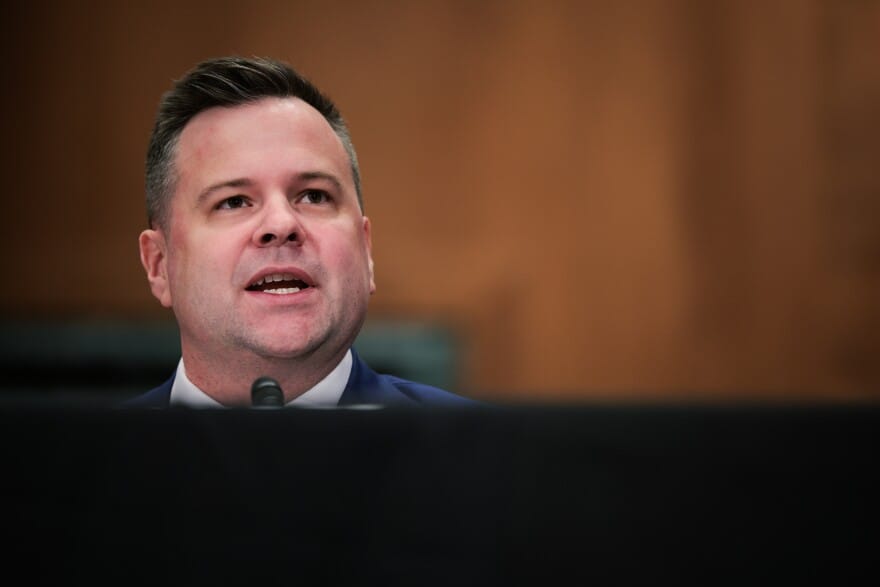
Bill Pulte has become the focus of a growing political and national security debate following President Donald Trump’s decision to appoint him as acting director of national intelligence. The move surprised lawmakers from both parties. Moreover, it immediately affected ongoing negotiations over the future of one of the United States’ most significant intelligence-gathering authorities.
The appointment places Pulte, currently serving as director of the Federal Housing Finance Agency (FHFA), in a position overseeing the nation’s intelligence community. This includes agencies responsible for collecting and analyzing foreign intelligence information.
At the same time, Congress is debating whether to extend Section 702 of the Foreign Intelligence Surveillance Act (FISA), a surveillance authority widely viewed by intelligence officials as a critical national security tool. Furthermore, the timing of Pulte’s appointment has added a new layer of political complexity to those discussions.
Who Is Bill Pulte and How Did He Rise to National Prominence?
Bill Pulte is a businessman, investor, and philanthropist. His public profile expanded significantly through social media before he entered government service.
A member of the family associated with one of America’s most recognized homebuilding businesses, Pulte graduated from Northwestern University. Later, he established investment ventures focused on home-services industries. He also became widely known for large-scale charitable campaigns conducted through social media platforms.
Information regarding federal housing finance oversight is available through the Federal Housing Finance Agency.
During the late 2010s and early 2020s, Pulte gained millions of followers by distributing money directly to individuals facing financial hardships, medical expenses, or other personal challenges. As a result, his online philanthropic efforts generated substantial media attention. This helped build a significant digital audience.
Over time, Pulte became increasingly involved in Republican political circles. He emerged as a supporter of Donald Trump’s political agenda. Following Trump’s return to the White House, Pulte was appointed to lead the FHFA. The agency is responsible for overseeing key components of the U.S. housing finance system, including Fannie Mae and Freddie Mac.
His tenure at the agency has attracted both praise and criticism. This is particularly regarding policy announcements, public communications, and investigations involving prominent political figures.
Why the FISA Section 702 Debate Matters
One of the primary reasons Bill Pulte’s appointment has generated attention is its connection to the ongoing debate over Section 702 of the Foreign Intelligence Surveillance Act.
Section 702 allows U.S. intelligence agencies to collect communications involving non-U.S. persons located abroad for foreign intelligence purposes. Information about intelligence oversight and national security authorities can be found through the Office of the Director of National Intelligence.
Supporters of the program argue that it has become an essential tool for identifying national security threats, monitoring foreign adversaries, and disrupting terrorism-related activities. Intelligence officials frequently describe the authority as one of the government’s most valuable sources of foreign intelligence information.
Critics, however, have raised concerns about privacy protections and the possibility that communications involving U.S. citizens could be incidentally collected during surveillance operations. These concerns have fueled repeated congressional debates regarding oversight, transparency, and reform.
Lawmakers have spent months negotiating a potential extension of Section 702 ahead of key deadlines. In fact, many members of Congress viewed those negotiations as progressing toward a compromise before the leadership change at the intelligence community introduced new uncertainty.
The appointment has prompted renewed discussion about how intelligence authorities should be managed and who should oversee them.
Lawmakers Debate Intelligence Leadership and Surveillance Oversight
The role of the director of national intelligence carries significant responsibilities beyond intelligence collection itself.
Created after the September 11 attacks, the position was designed to improve coordination among intelligence agencies and ensure that presidents receive objective national security assessments. Information about intelligence community structure and oversight is available through the U.S. Intelligence Community.
Supporters of Pulte point to his leadership experience in both the private sector and government. In contrast, critics argue that he lacks traditional intelligence or national security credentials. They question whether his highly partisan public profile aligns with the nonpartisan expectations historically associated with the position.
The debate has become particularly significant. This is because the intelligence community plays a central role in administering surveillance authorities, including Section 702.
Some lawmakers have expressed concern that leadership changes could influence public confidence in intelligence oversight. Others maintain that policy discussions should focus primarily on the effectiveness of surveillance tools and the safeguards surrounding their use.
Additional information regarding congressional oversight of intelligence programs can be found through the United States Congress.
As Congress continues considering the future of Section 702, Bill Pulte’s appointment has become an unexpected factor in negotiations that could shape U.S. intelligence operations for years to come. The outcome will likely affect not only surveillance policy. It will also affect broader debates over executive authority, intelligence independence, and national security governance in the United States.