
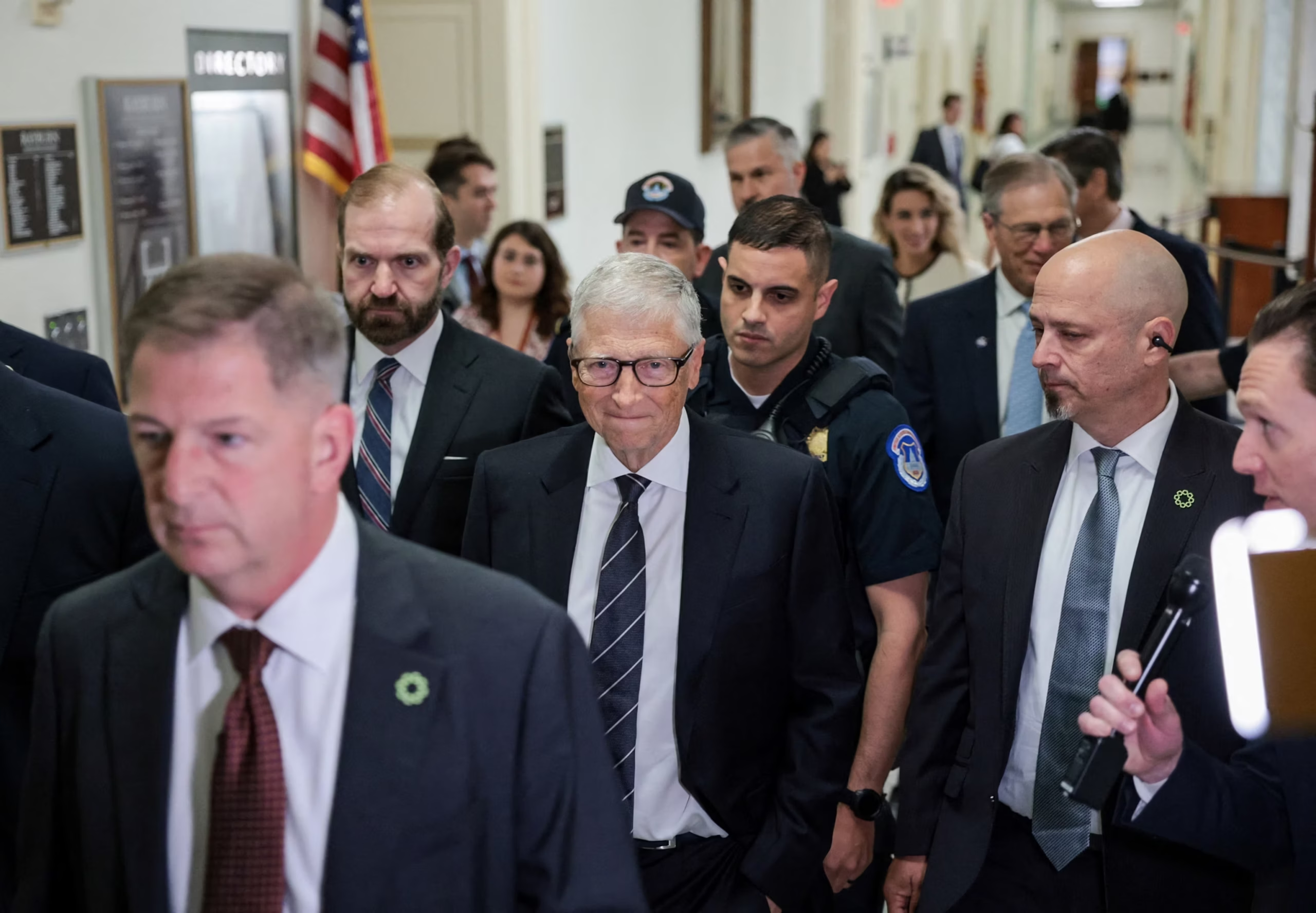
The Bill Gates Epstein investigation entered a new phase as the Microsoft co-founder and philanthropist appeared before members of Congress to answer questions about his past relationship with Jeffrey Epstein. The closed-door interview was conducted as part of an ongoing House Oversight Committee inquiry examining connections between Epstein and prominent public figures.
During his testimony, Gates stated that he never witnessed, participated in, or had knowledge of Epstein’s criminal conduct. He also acknowledged that maintaining contact with Epstein after learning of his prior legal issues was a mistake, describing the relationship as a significant error in judgment.
The appearance places Gates among a growing list of high-profile individuals questioned as lawmakers continue reviewing documents, testimony, and evidence connected to the late financier and convicted sex offender.
Gates Says He Did Not Know the Full Extent of Epstein’s Crimes
According to prepared remarks released ahead of the interview, Gates explained that he first met Epstein in 2011 through contacts associated with philanthropic and global health initiatives.
Gates stated that he engaged in discussions with Epstein regarding potential charitable donors and fundraising opportunities related to global health projects. Information about Gates’ philanthropic work can be found through the Gates Foundation.
During his testimony, Gates acknowledged that he was aware Epstein had previously faced legal issues but said he did not fully understand the scope of the crimes that later became widely known.
He emphasized that Epstein never held any formal role in his charitable organizations and did not receive compensation connected to philanthropic activities. Gates also stated that he ended communication with Epstein after concluding that promised fundraising opportunities would not materialize.
Lawmakers questioned Gates extensively about why he continued interacting with Epstein after the financier’s 2008 conviction involving crimes against minors. Gates responded that he believed the relationship could potentially help secure significant financial support for global health initiatives.
The testimony focused largely on decisions surrounding those interactions rather than allegations of criminal conduct involving Gates himself.
Congressional Investigators Examine Epstein’s Network of Connections
The House Oversight Committee’s investigation seeks to better understand Epstein’s relationships with influential figures across business, politics, finance, and philanthropy.
Information regarding congressional investigations and oversight activities can be found through the House Committee on Oversight and Government Reform.
Committee members from both parties have questioned multiple witnesses in recent months as part of a broader effort to examine unanswered questions surrounding Epstein’s network and activities.
Several lawmakers indicated that Gates was cooperative during questioning, though they noted disagreements regarding aspects of his decisions and judgment.
Members of Congress have expressed particular interest in understanding why numerous influential individuals continued associating with Epstein after his criminal conviction became public. Investigators are also examining whether Epstein used personal information, business connections, or social influence to maintain relationships with prominent figures.
The inquiry is expected to continue with additional interviews involving former associates, business leaders, attorneys, and other individuals connected to Epstein.
Lawmakers have stated that their goal is to gather information that could help provide greater transparency regarding Epstein’s activities and the broader network that surrounded him.
Survivors Continue Seeking Accountability and Transparency
The congressional investigation remains closely watched by survivors of Epstein’s abuse and advocacy organizations that have called for additional accountability.
Epstein was arrested on federal sex-trafficking charges in 2019 and later died while in custody. Authorities ruled his death a suicide. Information regarding federal criminal proceedings can be found through the U.S. Department of Justice.
Survivors and their advocates have repeatedly emphasized the importance of obtaining complete and accurate information regarding Epstein’s relationships, operations, and support networks. Many have urged witnesses appearing before Congress to provide detailed testimony rather than limiting responses to narrow legal questions.
The investigation has also drawn renewed attention to previously released documents, correspondence, and records that reference interactions between Epstein and various public figures. Investigators continue to review those materials alongside witness testimony.
Information regarding victim advocacy and survivor support initiatives is available through organizations such as the Rape, Abuse & Incest National Network (RAINN).
As congressional investigators continue gathering testimony, the Bill Gates Epstein investigation remains one of several high-profile components of a broader effort to understand the extent of Epstein’s connections and influence. Additional interviews are expected in the coming months as lawmakers seek further information about individuals who maintained contact with Epstein after his criminal conviction and the circumstances surrounding those relationships.