White Phosphorus in Lebanon: What It Is and Why Its Use Is Under International Scrutiny
White phosphorus in Lebanon has become a focus of international attention. This follows reports alleging that the incendiary substance was used near populated areas during the recent escalation of hostilities between Israel and Hezbollah. Human rights organizations and independent investigators have raised concerns about the potential impact on civilians. Meanwhile, debates continue regarding the legality of its deployment under international law.
The issue has gained renewed visibility amid ongoing military operations along the Israel-Lebanon border. Both sides have exchanged attacks despite diplomatic efforts aimed at reducing tensions. Reports of white phosphorus use have intensified discussions among governments, legal experts, and humanitarian organizations. As a result, debates now focus on the protection of civilians in armed conflicts.
Understanding what white phosphorus is, how it functions, and why it remains controversial is essential. This knowledge is key to evaluating the broader implications of its use in modern warfare.
What Is White Phosphorus and How Is It Used?
White phosphorus is a chemical substance that ignites rapidly when exposed to oxygen. Because of its highly reactive nature, military forces around the world have historically used it for several purposes. These include creating smoke screens, illuminating battlefields, and marking targets during combat operations.
The substance is classified as an incendiary agent rather than a chemical weapon under international agreements. Information regarding international arms-control frameworks can be found through the Organisation for the Prohibition of Chemical Weapons.
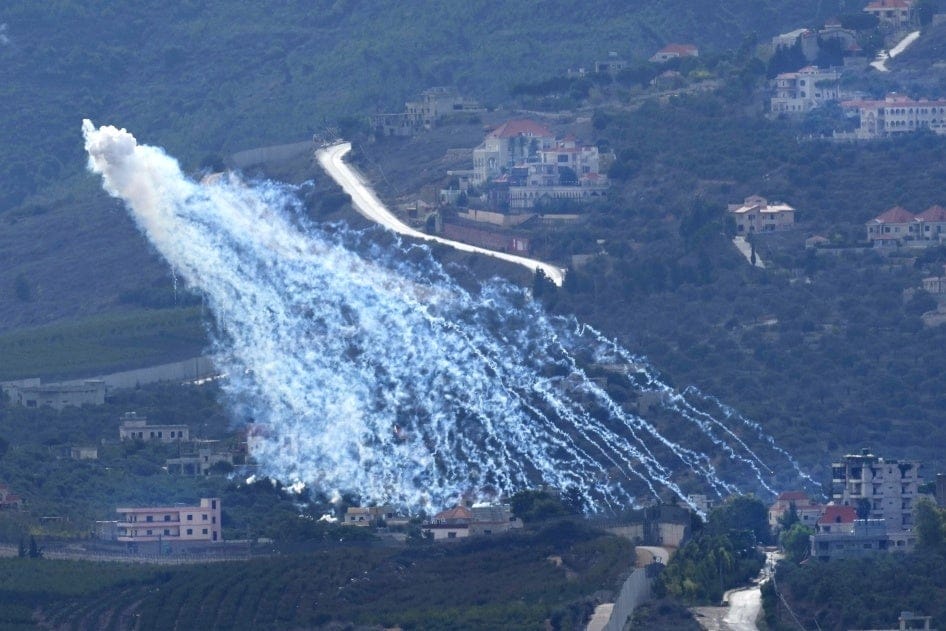
When deployed through artillery shells, mortars, or other munitions, white phosphorus disperses burning particles over a wide area. These particles generate thick smoke that can obscure troop movements and reduce visibility on the battlefield.
Military organizations have argued that such capabilities provide tactical advantages during combat operations. However, concerns arise when these munitions are used in or near populated areas. In those cases, civilians may be exposed to their effects.
The legal debate surrounding white phosphorus does not generally focus on the substance itself. Instead, it centers on the circumstances under which it is used and whether civilian populations are placed at risk.
Why White Phosphorus Is Considered Dangerous to Civilians
The primary concern surrounding white phosphorus stems from its potential to cause severe injuries and widespread harm. The risk is higher when it is deployed near civilian communities.
Once ignited, the burning particles can adhere to skin, clothing, structures, and vegetation. Contact may result in deep thermal injuries, respiratory complications, eye damage, and other serious medical conditions. Because the substance continues burning while oxygen is present, injuries can be particularly difficult to treat.
Medical and humanitarian organizations have documented cases in which exposure resulted in long-term physical consequences. Information regarding humanitarian concerns in armed conflicts is available through the International Committee of the Red Cross.
Another challenge is that white phosphorus particles may remain active after initial deployment. If remnants are disturbed and exposed to oxygen again, they can reignite. Consequently, ongoing risks arise for civilians, emergency responders, and cleanup teams.
Human rights groups argue that these characteristics make the use of white phosphorus especially problematic in urban environments. In such areas, population density increases the likelihood of civilian exposure.
As a result, international humanitarian law places significant restrictions on the use of incendiary weapons in areas where civilians may be present.
Reports of White Phosphorus in Lebanon Renew Legal and Humanitarian Debate
Recent allegations concerning white phosphorus in Lebanon emerged amid intensified fighting between Israeli forces and Hezbollah. Several organizations have stated that they verified videos and images that appear to show incendiary munitions being used over towns and populated areas in southern Lebanon.
Human rights organizations have asserted that some incidents involved civilian locations. Meanwhile, Israeli officials have maintained that military operations comply with applicable legal standards. The differing accounts have contributed to ongoing international scrutiny.
Information regarding international humanitarian law and civilian protections during armed conflict can be reviewed through the United Nations and the Amnesty International human rights organization.
The controversy is not new. Allegations involving the use of white phosphorus have surfaced during previous conflicts in the Middle East, including military operations in Lebanon and Gaza. Similar concerns have also arisen in conflicts involving other countries. This pattern demonstrates that debates over incendiary weapons extend beyond any single military force or region.
Legal experts generally note that white phosphorus itself is not universally prohibited under international law. Instead, assessments typically focus on factors such as military necessity, proportionality, target selection, and the potential impact on civilian populations.
As fighting continues in parts of the Middle East, reports involving white phosphorus in Lebanon are likely to remain part of broader discussions. These will center on international humanitarian law, civilian protection, and the conduct of military operations in densely populated areas.