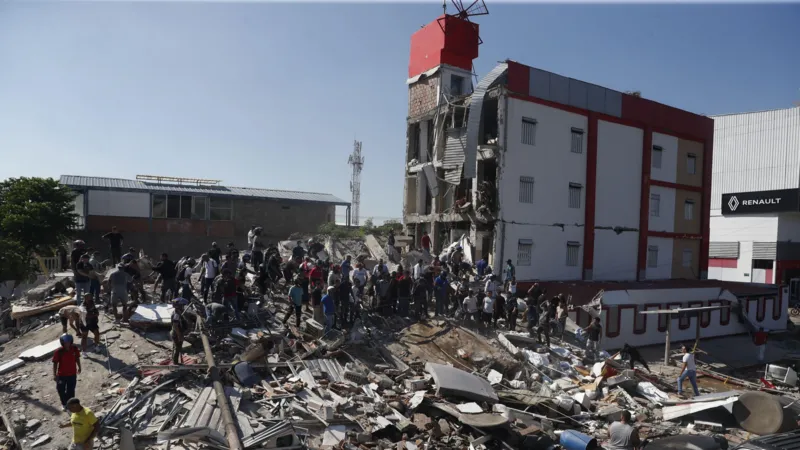
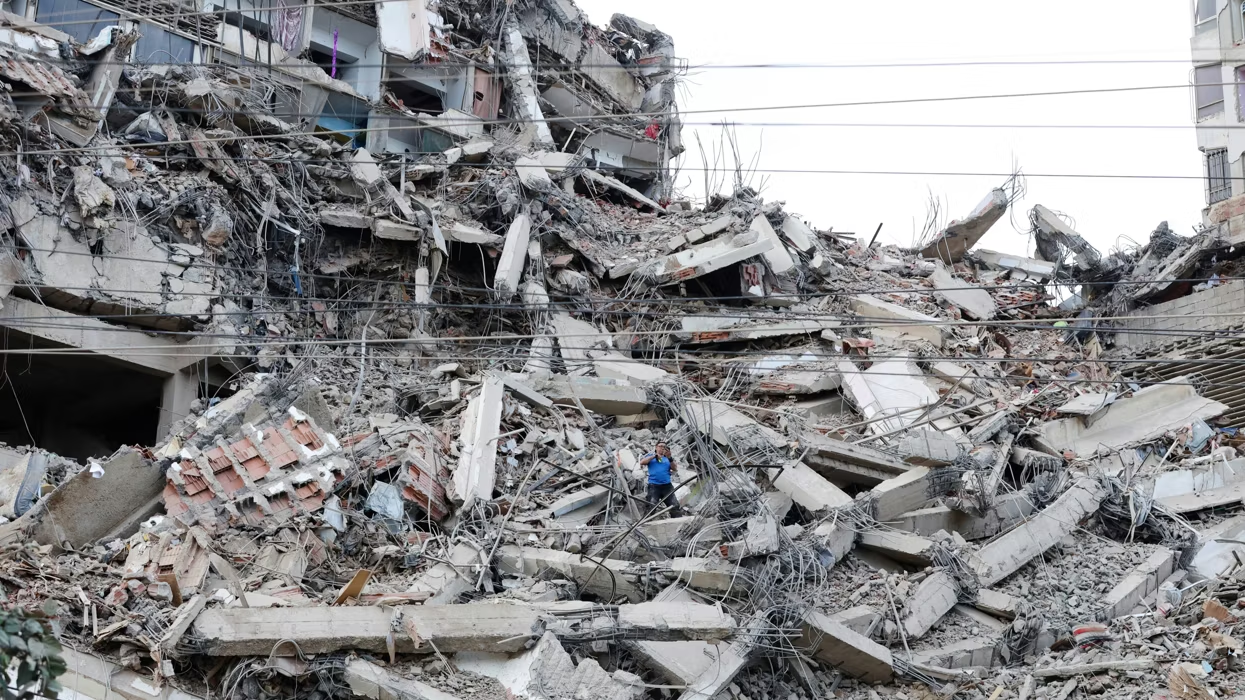
The Venezuela earthquakes have drawn global attention after two powerful seismic events struck northern Venezuela less than one minute apart. This created an unusually destructive sequence that left widespread damage near densely populated areas. Seismologists say the combination of two major earthquakes occurring within seconds dramatically increased the intensity of ground shaking. Moreover, it complicated emergency response efforts.
While a single earthquake of this magnitude would have posed a serious threat on its own, researchers believe the rapid succession of two powerful ruptures created a far more severe disaster. Moreover, the proximity of the epicenters to major urban centers, including the Caracas metropolitan region, further amplified the impact.
Scientists continue to analyze the event to better understand the geological processes that triggered this exceptionally rare sequence.
Additional earthquake monitoring information is available through https://earthquake.usgs.gov” target=”_blank” rel=”noopener noreferrer”>U.S. Geological Survey Earthquake Hazards Program.
Scientists Believe Multiple Faults May Have Ruptured
Early analyses suggest that the Venezuela earthquakes may not have occurred along a single fault line. Instead, researchers believe the two earthquakes could have originated on separate but interconnected faults within a geologically complex region.
Northern Venezuela lies near the boundary between major tectonic plates where numerous faults intersect. These intricate geological structures make the region particularly challenging for scientists studying seismic hazards.
If further investigations confirm that multiple faults ruptured in rapid succession, the event would join a small number of documented multifault earthquakes. These rare events have reshaped scientific understanding of earthquake behavior.
Traditionally, many seismic hazard models assumed that large earthquakes would remain confined to individual fault systems. However, recent research has demonstrated that stress released during one rupture can sometimes trigger movement along neighboring faults.
Educational resources on earthquakes and tectonic processes can be found through https://www.noaa.gov” target=”_blank” rel=”noopener noreferrer”>National Oceanic and Atmospheric Administration.
Multifault Earthquakes Challenge Traditional Seismic Models
One of the most significant examples of this phenomenon occurred during the 2016 Kaikōura earthquake in New Zealand. That event surprised scientists because it involved a cascade of ruptures across numerous connected faults rather than a single fault movement.
The Venezuelan sequence appears to share several characteristics with that earlier event. However, researchers emphasize that detailed geological investigations remain underway before definitive conclusions can be reached.
Understanding multifault earthquakes is becoming increasingly important because many tectonically active regions around the world contain interconnected fault networks. Areas such as California’s San Andreas Fault system include similar geological complexity. This complexity could potentially produce comparable cascading ruptures under certain conditions.
The latest event provides scientists with another valuable opportunity to improve earthquake forecasting models. In addition, it offers a chance to refine hazard assessments for regions with complicated fault systems.
Further information about earthquake science is available through https://www.iris.edu” target=”_blank” rel=”noopener noreferrer”>Incorporated Research Institutions for Seismology (IRIS).
Urban Preparedness Remains Critical in Earthquake-Prone Regions
Experts note that the severity of the Venezuela earthquakes was influenced not only by the unusual seismic sequence but also by their proximity to heavily populated areas. Strong shaking beneath cities containing older buildings significantly increases the potential for structural damage and casualties.
Many structures in earthquake-prone regions worldwide were constructed before modern seismic engineering standards became widely adopted. Retrofitting aging infrastructure remains a major challenge because of the enormous financial and logistical resources required to upgrade entire urban areas.
Although several earthquakes occurred elsewhere around the world during the same period, including seismic events in Japan and California, scientists emphasize that these earthquakes were unrelated. Earthquakes occur frequently across the globe, but only a small percentage strike populated areas where they produce significant humanitarian consequences.
Researchers hope that detailed analysis of the Venezuela earthquakes will contribute to improved building standards, more accurate hazard models, and stronger emergency preparedness strategies for vulnerable communities worldwide.
More information about disaster preparedness and seismic resilience is available through https://www.fema.gov” target=”_blank” rel=”noopener noreferrer”>Federal Emergency Management Agency