
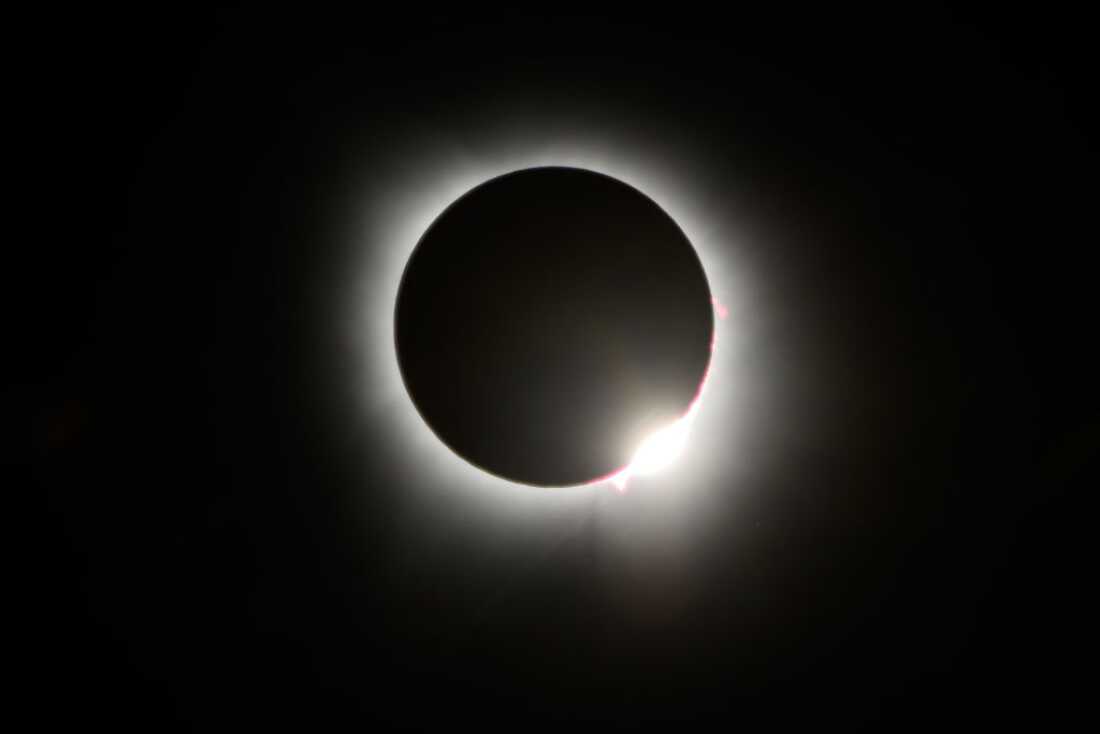
Skywatchers across Europe and parts of the United States will have an opportunity to witness a solar eclipse on August 12, 2026. Some regions will experience totality, while others will see only a partial eclipse.
The astronomical event will occur when the Moon moves between Earth and the Sun. As a result, the Moon temporarily blocks some or all of the Sun from view.
Where Will the Total Solar Eclipse Be Visible?
A total solar eclipse will be visible across parts of Iceland, Greenland, northern Russia, Spain and Portugal.
During totality, the Moon completely covers the Sun’s visible disk. This creates a dramatic period of darkness in the middle of the day.
For Spain, the event is particularly notable. It will be the first total solar eclipse visible from mainland Spain since 1905, according to the European Space Agency.
In Reykjavík, Iceland, totality is expected to begin at approximately 5:48 p.m. local time. In León, Spain, totality will begin around 8:28 p.m. local time and is expected to last approximately two minutes.
Parts of the U.S. Will See a Partial Eclipse
The eclipse will also be visible from portions of the United States.
NASA says areas stretching from Alaska to North Carolina will experience a partial solar eclipse. However, the amount of the Sun covered will vary depending on location.
In Washington, D.C., the partial eclipse is expected to begin at approximately 1:17 p.m. ET, with around 4% of the Sun’s disk covered by the Moon.
During a partial eclipse, the Moon does not completely align with the Sun and Earth. As a result, only part of the Sun is obscured, giving it the appearance of a crescent.
How to Watch the Eclipse Safely
Anyone planning to observe the eclipse should use specialized eclipse glasses or approved solar viewers.
Regular sunglasses are not sufficient protection for viewing the Sun. Looking directly at the Sun during an eclipse can cause serious eye injuries, including permanent vision loss.
The safety precautions are important even during a partial eclipse because the Sun remains bright enough to cause eye damage.
Scientists Will Study the Eclipse
Beyond providing an extraordinary spectacle for the public, the eclipse will also give scientists an opportunity to study Earth’s atmosphere. In addition, it offers a chance to study the Sun’s outer atmosphere.
NASA plans to deploy scientific instruments, including balloons and a high-altitude aircraft. This will help study changes that occur in the atmosphere as daylight is temporarily reduced.
A total solar eclipse is particularly valuable for solar research because it allows scientists to observe the Sun’s corona. This is the outermost layer of the Sun’s atmosphere, and it can be seen from Earth during the eclipse.
When Is the Next Solar Eclipse?
Skywatchers won’t have to wait long for another eclipse.
A partial solar eclipse will be visible across parts of the United States on August 2, 2027. In contrast, totality will be visible from areas including Spain, the Middle East and parts of North Africa.
For the contiguous United States, the next major opportunity to see a total solar eclipse will come on August 23, 2044.
The August 2026 eclipse therefore offers a rare opportunity for millions of people to witness one of nature’s most spectacular astronomical events. This is provided they observe it with the proper eye protection.