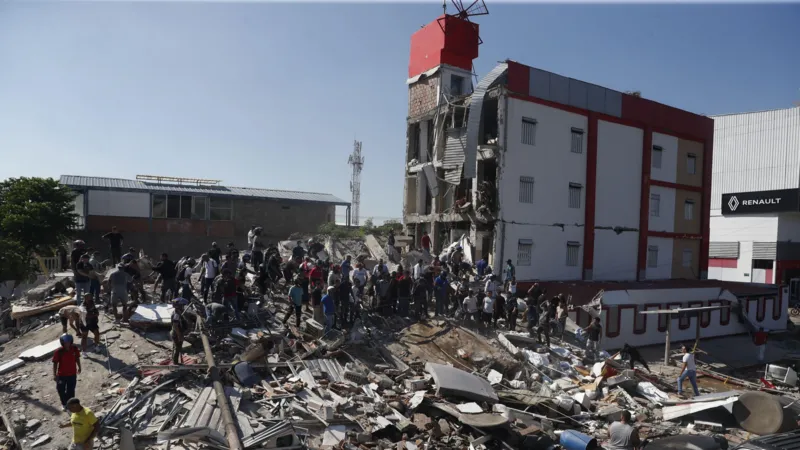
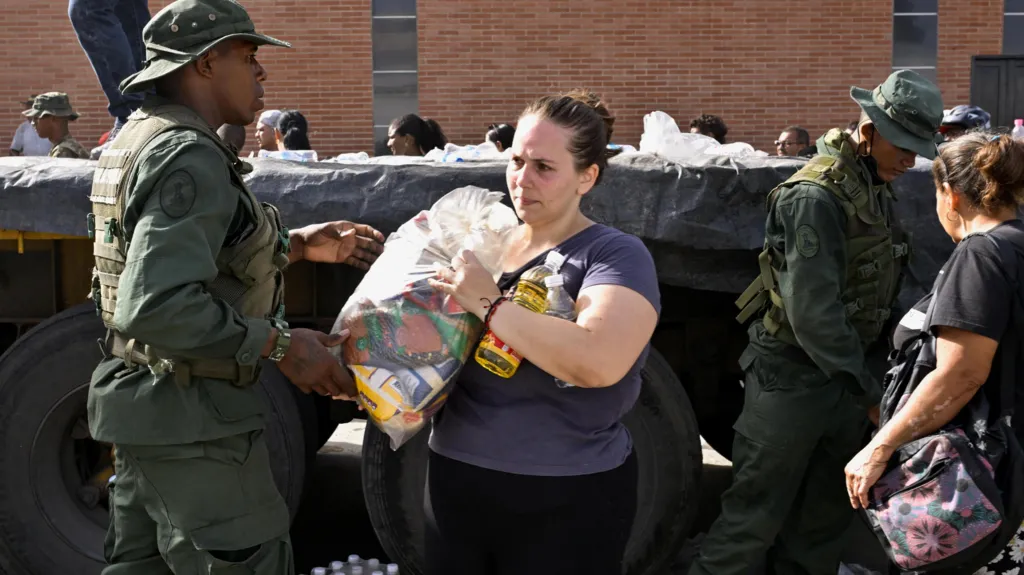
The Venezuela earthquake rescue efforts have entered a critical phase as emergency crews continue working through collapsed buildings, damaged hospitals and devastated neighborhoods following the powerful twin earthquakes that struck northern Venezuela. Authorities have confirmed that the disaster has claimed hundreds of lives, while thousands of people remain injured or displaced and many families are still waiting for news of missing relatives.
Search operations have expanded across several states after the two major earthquakes triggered widespread structural failures in residential buildings, shopping centers, hospitals and transportation infrastructure. Rescue teams from Venezuela and abroad are working around the clock, using heavy equipment, thermal imaging technology, drones and specially trained search dogs in an effort to locate survivors before time runs out.
Officials warn that casualty figures are expected to change as rescue crews gain access to heavily damaged areas that remained unreachable during the first hours after the disaster.
Venezuela Earthquake Rescue Efforts Face Enormous Challenges
The Venezuela earthquake rescue efforts have been complicated by damaged roads, interrupted communications and unstable structures that continue to threaten both survivors and first responders. Hundreds of aftershocks have forced repeated evacuations of rescue personnel while engineers inspect buildings at risk of further collapse.
Entire communities along Venezuela’s northern coastline suffered severe destruction, with La Guaira emerging as one of the areas experiencing the greatest impact. Apartment buildings, hotels, commercial centers and public infrastructure sustained extensive damage, leaving thousands without permanent shelter.
According to seismic information published by the https://earthquake.usgs.gov/“>U.S. Geological Survey, earthquakes of this magnitude are capable of producing widespread structural damage, particularly in densely populated urban areas where older buildings may not meet modern seismic standards.
Hospitals that remained operational have been forced to expand emergency treatment areas outside their facilities as patient numbers continue to exceed available capacity. Temporary medical centers have also been established to provide trauma care, emergency surgery and psychological support for survivors.
For many families, the uncertainty has become one of the hardest parts of the disaster. Outside collapsed buildings, relatives continue waiting for updates from emergency personnel while rescue teams carefully remove debris in hopes of finding additional survivors.
International Teams Join the Rescue and Humanitarian Response
As the Venezuela earthquake rescue efforts continue, international assistance has grown steadily. Urban search-and-rescue specialists, emergency physicians, engineers and humanitarian organizations have begun supporting local authorities with technical expertise, equipment and medical supplies.
Several governments have deployed specialized rescue personnel along with aircraft capable of transporting emergency equipment into affected regions. International cooperation has also accelerated the delivery of field hospitals, generators, clean water systems and temporary shelters.
Emergency preparedness guidance published by the https://www.ifrc.org/“>International Federation of Red Cross and Red Crescent Societies emphasizes rapid coordination between local responders and international organizations to improve survival rates during the first days following major earthquakes.
Humanitarian agencies are also assessing longer-term needs, including housing assistance, debris removal, restoration of public utilities and mental health support for families who have lost relatives or homes.
Medical professionals continue warning that shortages of equipment, medicine and essential supplies may become more severe if transportation routes cannot be restored quickly.
Recovery Expected to Continue for Months
The Venezuela earthquake rescue efforts are gradually transitioning from immediate life-saving operations toward a broader recovery mission that will require substantial national and international support. Engineers are inspecting thousands of buildings to determine whether they can be repaired or must be demolished, while utility crews work to restore electricity, telecommunications and clean water services.
Disaster management specialists note that rebuilding critical infrastructure often becomes one of the longest phases following a major earthquake, particularly in regions where public services were already under significant strain before the disaster.
Technical guidance on disaster risk reduction and post-earthquake recovery continues to be published by the https://www.undrr.org/“>United Nations Office for Disaster Risk Reduction, while humanitarian coordination remains supported through the https://www.unocha.org/“>United Nations Office for the Coordination of Humanitarian Affairs as emergency teams continue searching damaged communities and assisting displaced residents across northern Venezuela.