
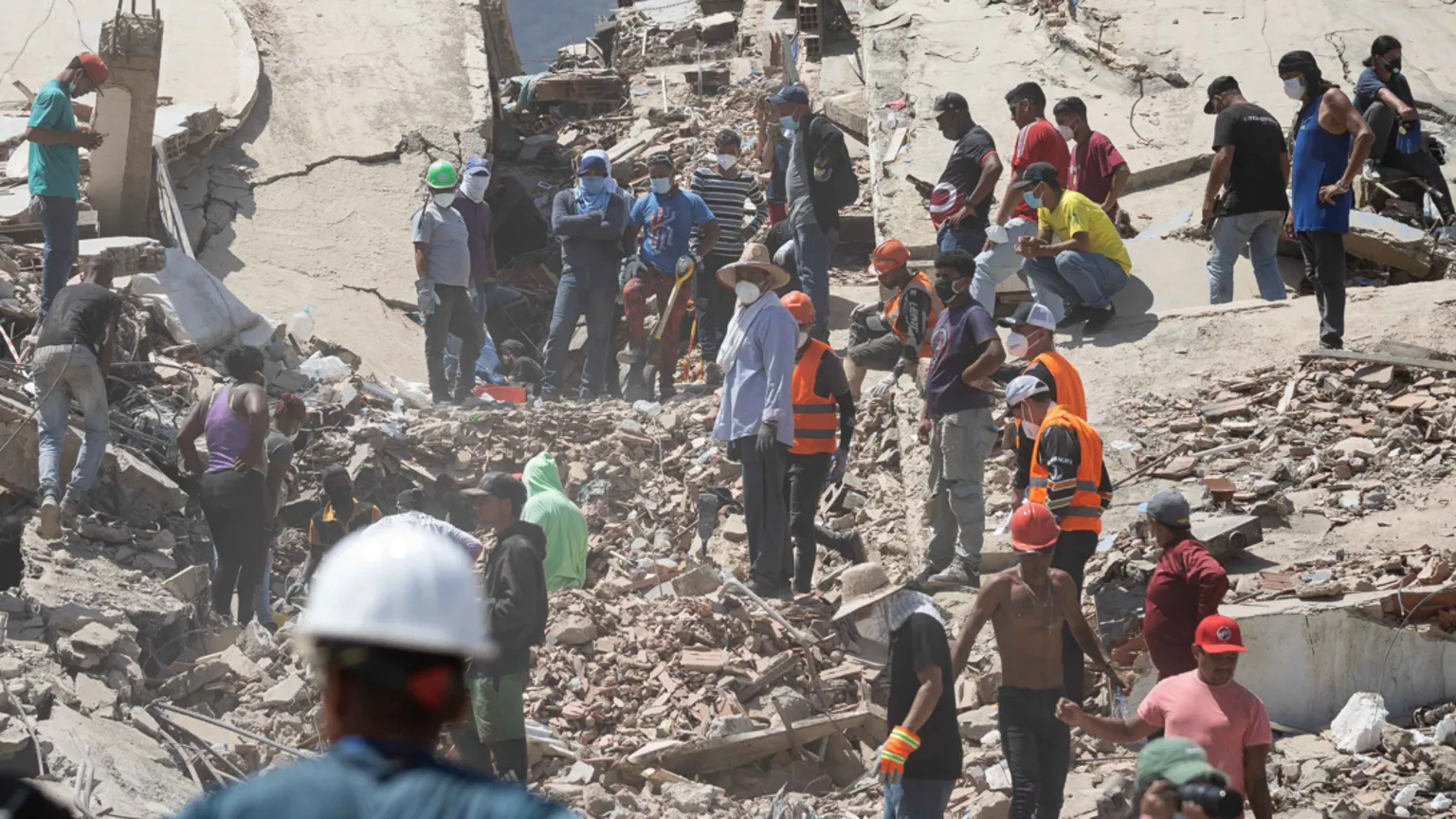
The Venezuela earthquake recovery effort is shifting from emergency rescue operations to the far more complex task of rebuilding communities damaged by one of the country’s most destructive natural disasters in modern history. While search teams continue inspecting collapsed buildings in areas where survivors could still be found, local authorities, humanitarian organizations and international partners are increasingly focusing on restoring essential services and helping thousands of displaced residents begin the long process of recovery.
Entire neighborhoods remain without reliable electricity, clean water and telecommunications after powerful seismic activity damaged roads, bridges, hospitals and public infrastructure. In several affected regions, temporary shelters have become home to families who lost their houses or whose properties remain unsafe until engineers complete structural inspections.
Emergency officials say recovery will likely require months of coordinated work involving government agencies, international organizations, construction specialists and local communities.
Venezuela Earthquake Recovery Moves Beyond Emergency Rescue
The Venezuela earthquake recovery operation has gradually evolved as the immediate search for survivors gives way to infrastructure assessments and humanitarian support. Engineers are evaluating schools, hospitals, apartment buildings and transportation corridors to determine which structures can safely reopen and which require demolition or extensive repairs.
Local governments have also begun registering displaced residents to coordinate temporary housing, financial assistance and access to medical care. Mobile health clinics continue operating in communities where permanent healthcare facilities remain damaged or overcrowded.
Technical guidance on post-earthquake recovery is available through the https://www.undrr.org/“>UnitedNations Office for Disaster Risk Reduction, which supports governments in strengthening resilience following major natural disasters.
Humanitarian organizations emphasize that restoring basic services is becoming just as important as the initial rescue mission. Reliable drinking water, sanitation systems, waste removal and public transportation are essential for preventing secondary public health emergencies during the weeks following a major earthquake.
Mental health professionals have also expanded support services, noting that survivors frequently experience anxiety, grief and emotional exhaustion after prolonged rescue operations and repeated aftershocks.
International Assistance Supports Communities Facing Long-Term Challenges
International cooperation has become a central component of the Venezuela earthquake recovery process. Multiple countries have contributed emergency medical supplies, temporary shelters, engineering expertise and logistical support to accelerate rebuilding efforts.
Humanitarian agencies continue delivering food, clean water, hygiene kits and emergency healthcare while coordinating closely with local authorities to identify the communities with the greatest needs.
Information about international humanitarian operations can be found through the <a href=”https://www.unocha.org/“>United Nations Office for the Coordination of Humanitarian Affairs</a>, while emergency food assistance programs continue to be coordinated by the <a href=”https://www.wfp.org/“>World Food Programme</a>.
Recovery specialists caution that rebuilding damaged infrastructure requires more than repairing physical structures. Schools must resume classes, businesses need financial support to reopen and healthcare systems require sustained investment to return to normal operations.
Many local business owners have also begun assessing economic losses, hoping that reconstruction projects will gradually restore employment opportunities and stimulate regional economic activity.
Stronger Infrastructure May Shape Venezuela’s Future Preparedness
As the Venezuela earthquake recovery continues, policymakers and engineers are examining how reconstruction can improve resilience against future natural disasters. Experts argue that rebuilding damaged communities presents an opportunity to modernize infrastructure using stronger construction standards and updated seismic engineering practices.
Urban planners are expected to evaluate zoning regulations, emergency evacuation routes and building inspection procedures to reduce future risks. Disaster preparedness specialists also recommend expanding community education programs that teach residents how to respond during earthquakes and other large-scale emergencies.
Additional resources on emergency preparedness and resilient infrastructure are available through the <a href=”https://www.fema.gov/“>Federal Emergency Management Agency (FEMA)</a>, whose guidance highlights the importance of planning, mitigation and coordinated recovery following major disasters.
Although the humanitarian response remains active, many residents recognize that the next stage will depend on sustained investment, transparent coordination and continued international cooperation. For thousands of families, rebuilding homes, restoring livelihoods and returning to everyday life will be measured not in days or weeks, but in the years ahead.