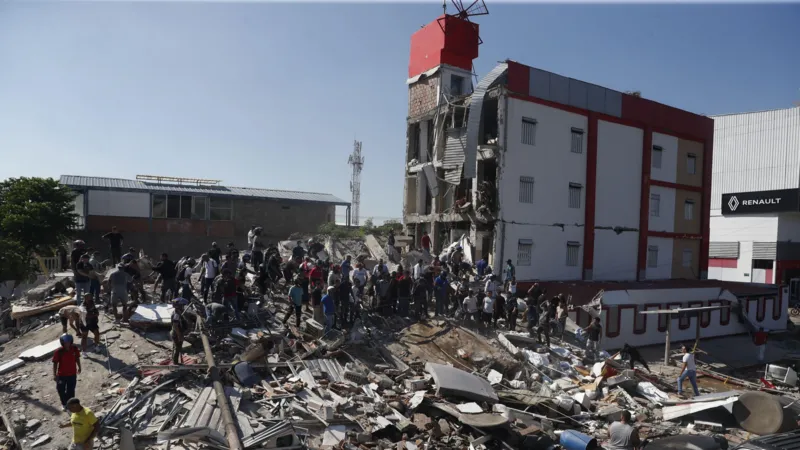
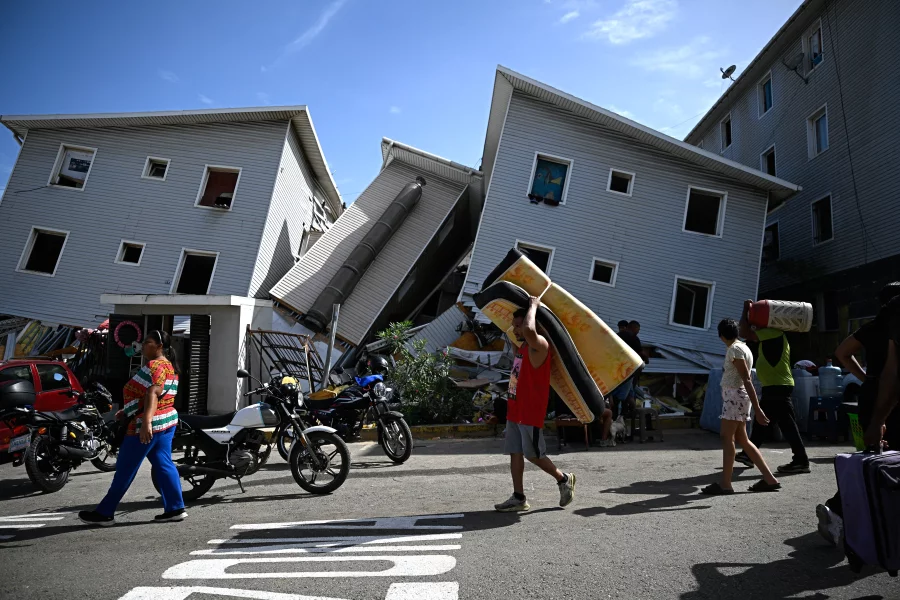
The U.S. earthquake relief Venezuela operation has become one of Washington’s largest international disaster responses in recent years. Emergency rescue personnel, humanitarian organizations and military logistics are being mobilized to support recovery efforts after the devastating earthquakes that struck northern Venezuela.
As emergency crews continue searching collapsed buildings for survivors, the United States has announced a broad package of assistance. This package combines financial support, specialized search-and-rescue capabilities and transportation resources intended to accelerate relief operations. The announcement comes as Venezuela faces an escalating humanitarian emergency marked by widespread infrastructure damage, overwhelmed hospitals and thousands of displaced residents.
The response also signals a renewed emphasis on rapid disaster deployment following criticism surrounding previous international emergency operations. Officials stress that both immediate life-saving efforts and longer-term recovery will require sustained international cooperation.
U.S. Earthquake Relief Venezuela Includes Funding, Search Teams and Logistics
The U.S. earthquake relief Venezuela package combines humanitarian funding with operational support. This is designed to reach affected communities as quickly as possible.
Emergency search-and-rescue specialists, accompanied by trained canine units, have been assigned to assist Venezuelan responders in locating survivors trapped beneath collapsed structures. Additionally, logistical support is expected to improve the transportation of emergency personnel, medical supplies and heavy rescue equipment into disaster zones. Damaged infrastructure has slowed response efforts.
A significant share of U.S. assistance is being directed toward humanitarian organizations already operating in the region. Funding will support emergency food distribution, temporary shelter, medical supplies and coordination activities. Relief agencies are expanding operations in the hardest-hit communities.
International emergency coordination continues through organizations including the https://www.wfp.org/“>World Food Programme, which provides food assistance during humanitarian crises. The https://www.unocha.org/“>United Nations Office for the Coordination of Humanitarian Affairs is responsible for coordinating international disaster response.
Disaster specialists note that the first several days following a major earthquake remain the most critical period for locating survivors. Therefore, rapid deployment of experienced rescue teams is particularly valuable.
Experts Say Recovery Will Extend Well Beyond Initial Rescue Operations
Although rescue operations remain the immediate priority, emergency management specialists caution that rebuilding damaged communities will require months—or even years—of sustained investment.
Healthcare systems have experienced severe disruption in several affected regions after hospitals and clinics sustained structural damage. Temporary treatment centers have been established to accommodate injured residents while emergency medical personnel continue working under difficult conditions.
Aid organizations also face challenges restoring essential services such as drinking water, sanitation systems, electricity and telecommunications. Damage to transportation infrastructure has complicated the delivery of supplies, especially in communities where roads remain partially blocked by debris.
Emergency preparedness guidance published by the https://www.fema.gov/“>Federal Emergency Management Agency (FEMA) emphasizes that successful disaster recovery depends not only on emergency rescue. It also depends on restoring critical infrastructure and strengthening local resilience before future emergencies occur.
Analysts have observed that international disaster assistance increasingly combines immediate humanitarian relief with technical expertise in engineering, logistics and public health. This approach accelerates recovery while reducing future risks.
International Cooperation Becomes Central to Venezuela’s Recovery
The U.S. earthquake relief Venezuela initiative is unfolding alongside assistance from multiple governments and humanitarian organizations. As a result, this is one of the largest multinational disaster responses the country has experienced in decades.
International rescue personnel continue working with Venezuelan emergency agencies to assess damaged structures, coordinate debris removal and expand access to isolated communities. Additionally, engineers are evaluating public buildings, bridges and transportation corridors. They are determining which facilities can safely reopen.
Humanitarian organizations have emphasized that recovery efforts should include investments in stronger construction standards, disaster preparedness planning and emergency response capacity. These measures can reduce the impact of future seismic events.
Additional guidance on reducing earthquake risk and strengthening long-term resilience is available through the https://www.undrr.org/“>United Nations Office for Disaster Risk Reduction. This organization supports governments in improving disaster preparedness, infrastructure planning and community resilience following major natural disasters.