A run of intense heat and dry weather is changing the appearance of vegetables grown across the UK, with farmers reporting smaller potatoes, curled cucumbers, pale or sun-tanned cauliflowers and pest-damaged greens.
The problem is not simply cosmetic. Hotter conditions are putting crops under stress, reducing yields and making it harder for growers to meet the strict size and appearance standards normally demanded by supermarkets.
The pressure comes after an unusually warm spring and a prolonged dry spell. Farmers are warning that some crops could become harder to source as the season continues. The effects are being felt from potato fields in Cambridgeshire to vegetable farms in Worcestershire.
At the same time, supermarkets face a practical choice: accept more unusual-looking produce or rely more heavily on imports. The UK agricultural statistics show how important domestic production remains to the country’s food supply.
Sun-tanned cauliflowers and stressed cucumbers
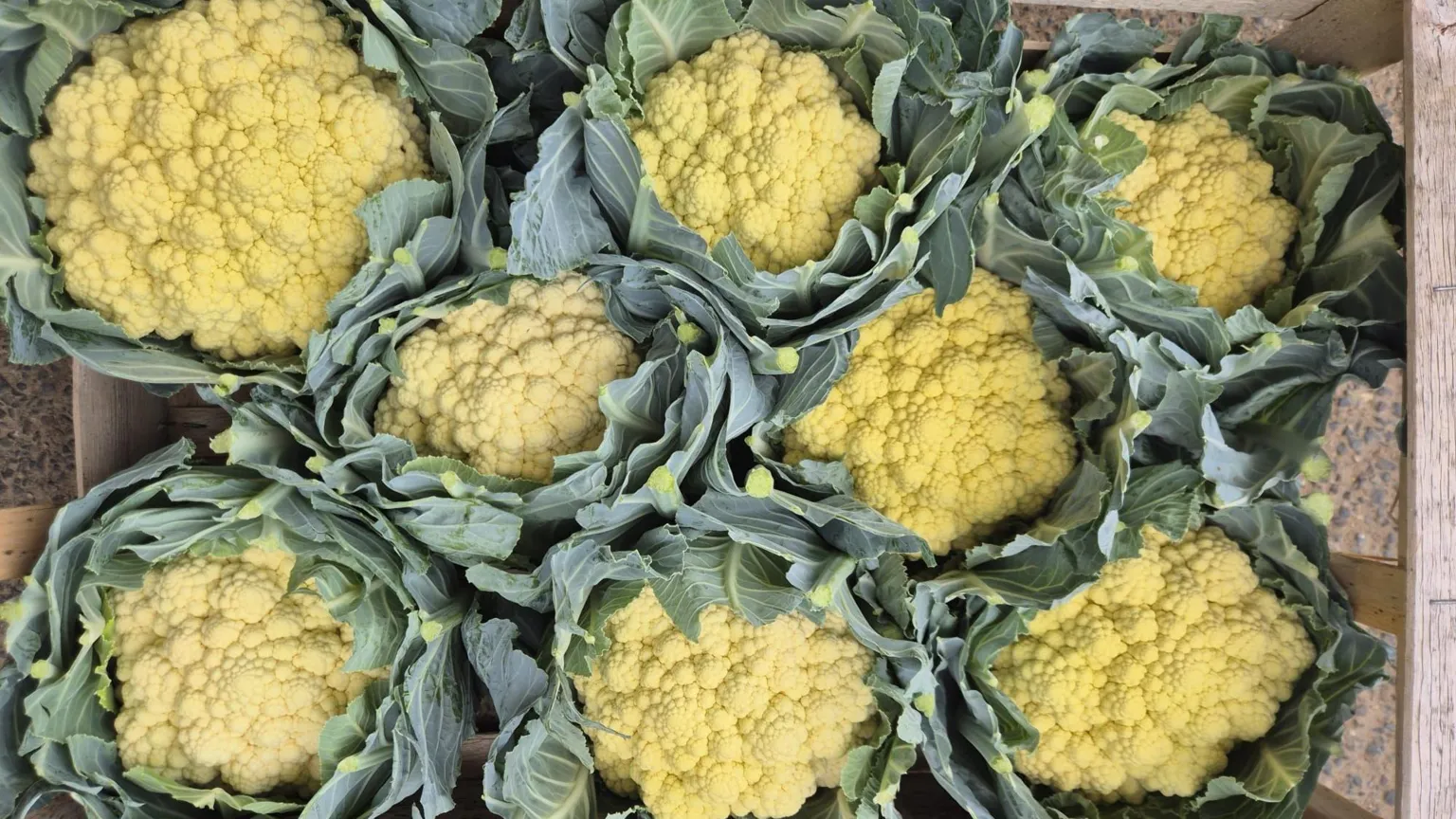
Cauliflowers are particularly vulnerable to prolonged heat because they need a steady supply of water while developing their heads.
Normally, the plant’s leaves protect the cauliflower from direct sunlight. During hot, dry conditions, however, the leaves may not provide the same level of protection. More sunlight can reach the developing head, leaving it with a yellow or brownish appearance.
That does not necessarily mean the vegetable has gone bad.
Growers and surplus-food businesses say the change is largely cosmetic. The cauliflower can still be cooked and eaten normally, even though it may not meet the appearance standards used by major retailers.
Water availability is becoming a bigger concern, too. When reserves fall, brassicas such as cauliflower and broccoli can grow more slowly. That can reduce the amount available for supermarkets just as demand remains steady.
Cucumbers are showing another response to heat. Greenhouse crops can struggle when temperatures remain unusually high, even when growers continue irrigating them.
Instead of developing into the familiar straight shape, some cucumbers can become curved or spiral-like. Again, the appearance does not necessarily indicate a food-safety problem.
For growers, however, appearance matters because retailers have traditionally rejected produce that falls outside narrow specifications. The Food Standards Agency food safety guidance makes an important distinction between food safety and appearance: an unusual shape does not automatically make a vegetable unsafe.
Holey pak choi and knobbly potatoes reveal the cost of extreme weather
Heat and dry conditions can create another problem in vegetable fields: pests.
Pak choi growers have reported increased damage from flea beetles, which can leave small holes in the leaves. Hot, dry weather can create favourable conditions for these insects, while restrictions on some crop protection products have made pest management more difficult.
The result is a crop that may be perfectly edible but visually unacceptable to a supermarket.
Farmers are increasingly relying on protective netting and other methods to reduce damage. Some retailers have also shown more flexibility when weather conditions make perfect produce harder to obtain.
Potatoes present a different challenge.
After a period of extreme heat, tubers can stop developing normally. When cooler conditions return, growth may resume unevenly, producing small protrusions or “knobbly” shapes.
For a shopper, the difference is mostly an inconvenience. An oddly shaped potato can still be peeled and cooked. For farmers, however, it can become a serious source of waste if supermarkets, processors or restaurants refuse to buy it.
That creates an uncomfortable contradiction. A crop can be edible, nutritious and commercially unusable at the same time.
The UK government’s food waste information highlights the wider problem of food being lost or discarded before it reaches consumers. Extreme weather adds another layer to that problem by increasing the amount of produce that falls outside normal retail specifications.
Supermarkets face a choice between wonky vegetables and imports
British supermarkets already sell imperfect vegetables through dedicated ranges, but the current growing conditions could test how far those programmes can go.
Retailers can relax requirements for size, colour and shape. That gives farmers more opportunities to sell crops that would otherwise be rejected and can reduce unnecessary waste.
But cosmetic flexibility cannot solve a shortage of vegetables.
If drought and heat reduce production enough, supermarkets may have to source additional supplies from overseas. That can help maintain availability, but it also exposes retailers to higher transport costs, weather conditions in other countries and changes in international supply.
The situation is particularly difficult for farmers because growing seasons cannot simply be extended when conditions turn against them. A missed planting window or damaged crop cannot be replaced overnight.
The UK’s climate is also becoming a bigger consideration for agriculture. The UK Met Office climate projections show why farmers are increasingly having to plan for changes in temperature, rainfall and the frequency of extreme weather.
For consumers, the most visible result may simply be a supermarket shelf filled with vegetables that look slightly different.
A smaller potato, a curved cucumber or a cauliflower with a darker head may not look like the produce shoppers are accustomed to seeing. But the bigger issue is what those imperfections reveal about the pressure being placed on the farms producing the UK’s food.