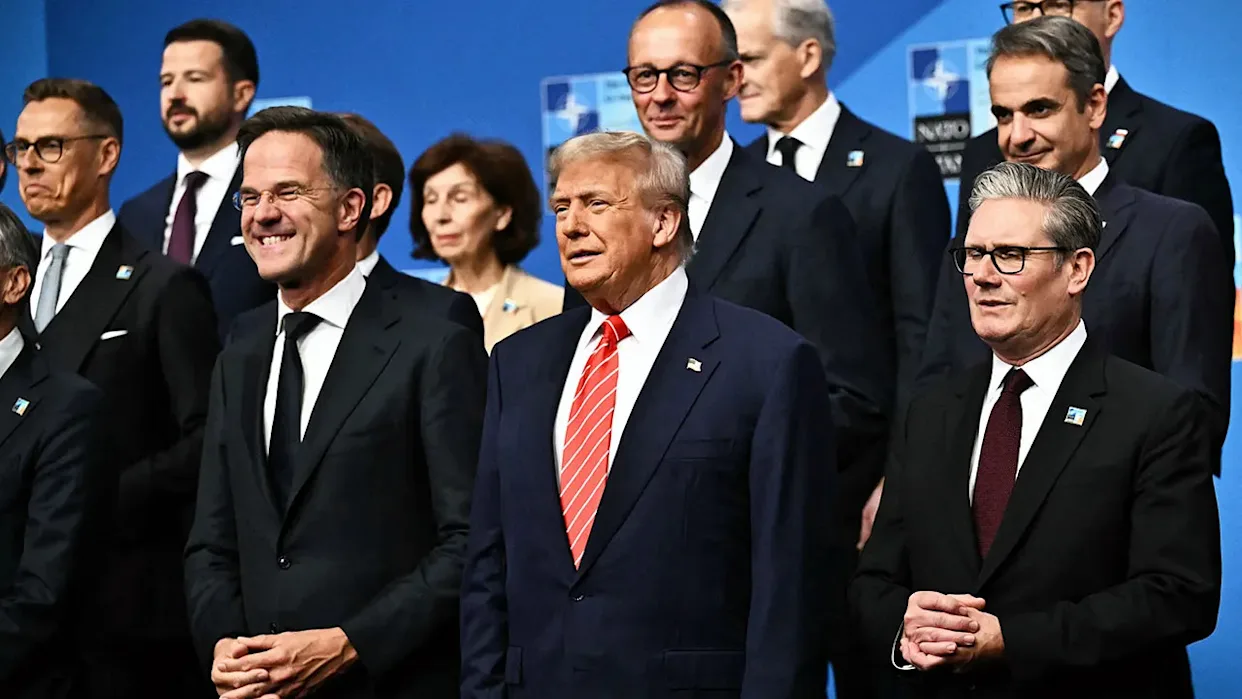
The Trump NATO summit begins with renewed attention on defense spending, burden sharing, and the future direction of the North Atlantic alliance. As leaders from NATO’s 32 member nations gather in Ankara, Turkey, President Donald Trump has once again questioned whether the United States is carrying a disproportionate share of the organization’s defense responsibilities.
For years, Trump has argued that many allied governments have relied too heavily on American military resources while failing to meet their own defense investment commitments. Those concerns have remained a defining feature of his foreign policy approach and continue to shape discussions at this year’s summit.
Although NATO leaders are expected to reaffirm their collective security commitments, analysts say financial contributions and alliance cohesion will remain central topics throughout the meeting.
Official information about the alliance is available through <a href=”https://www.nato.int” target=”_blank” rel=”noopener noreferrer”>North Atlantic Treaty Organization</a>.
Defense Spending Remains the Summit’s Central Issue
One of the primary objectives of the summit is evaluating how member states share responsibility for collective defense. NATO members have agreed to increase military investment in recent years, particularly following the deterioration of Europe’s security environment after Russia’s invasion of Ukraine.
Despite those increases, President Trump continues to argue that the United States contributes significantly more resources than many of its allies and has repeatedly encouraged European governments to assume a larger financial role in maintaining the alliance’s military capabilities.
Defense spending has become one of the most persistent issues discussed during NATO meetings, with member countries balancing domestic budget priorities against evolving security challenges.
Additional information about U.S. defense policy is available through <a href=”https://www.defense.gov” target=”_blank” rel=”noopener noreferrer”>U.S. Department of Defense</a>.
Alliance Unity Faces Ongoing Political Challenges
Beyond financial issues, the summit also reflects broader questions about the long-term cohesion of the transatlantic alliance. During both of his presidential terms, Trump has criticized aspects of NATO while encouraging reforms that he believes would strengthen burden sharing among member states.
Meanwhile, European leaders continue emphasizing the alliance’s importance as a cornerstone of regional security. Russia’s ongoing military actions in Eastern Europe have reinforced NATO’s role in coordinating defense planning, military readiness, and collective deterrence across the continent.
Foreign policy specialists note that maintaining unity among 32 member nations requires balancing differing national priorities while preserving NATO’s principle of collective defense under Article 5 of the North Atlantic Treaty.
Background on U.S. foreign policy is available through <a href=”https://www.state.gov” target=”_blank” rel=”noopener noreferrer”>U.S. Department of State</a>.
Leaders Seek Stability During a Critical Security Period
Security experts expect this year’s NATO summit to focus on maintaining alliance stability rather than announcing major institutional reforms. In addition to defense spending, leaders are expected to discuss regional security, military modernization, emerging technologies, and continued cooperation among allied armed forces.
Observers suggest that many participating governments are seeking to avoid divisions that could weaken the alliance during a period of heightened geopolitical uncertainty. As a result, summit discussions are likely to emphasize practical cooperation while continuing negotiations over long-term defense investment commitments.
The outcome of the meeting may influence future transatlantic relations, particularly regarding military spending, strategic planning, and NATO’s ability to respond collectively to evolving global security challenges. While disagreements over funding are expected to continue, alliance leaders remain focused on preserving cooperation among member nations during an increasingly complex international security environment.