
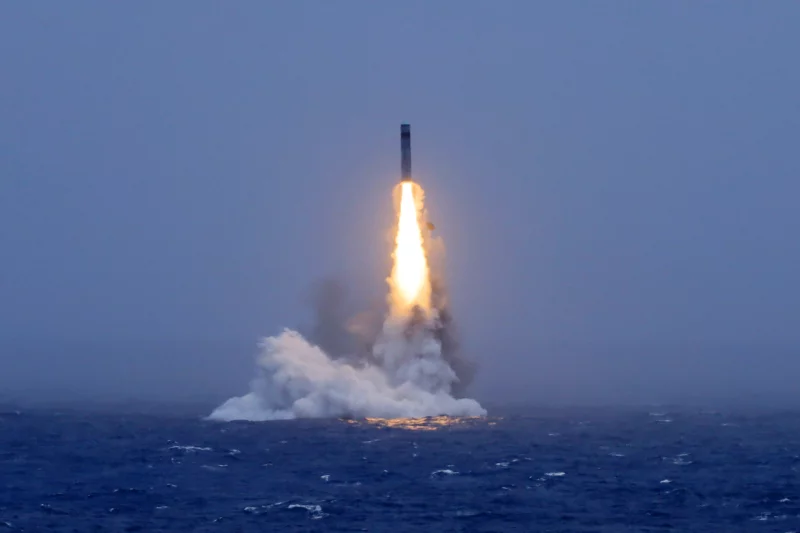
The latest China ballistic missile test has intensified debate over military transparency and strategic stability in the Indo-Pacific. Consequently, governments throughout the region are reassessing how expanding defense capabilities could reshape the security environment. While Beijing described the launch as part of routine military training, neighboring countries viewed the event through a broader geopolitical lens. In addition, they argue that demonstrations of long-range strike capability inevitably influence regional security calculations.
Military exercises involving advanced missile systems are not unusual among major powers. What made this event stand out was its location, timing and the growing strategic competition unfolding across the Pacific. As governments continue strengthening alliances and modernizing their armed forces, each major weapons test receives heightened diplomatic and military scrutiny. Notably, heightened scrutiny often follows any China test of a ballistic missile due to its wide-ranging strategic implications.
China Ballistic Missile Test Highlights Expanding Military Modernization
China has invested heavily in modernizing its armed forces over the past two decades. This includes expanding naval capabilities, improving long-range missile technology and developing a more sophisticated nuclear deterrent. Defense analysts generally view these investments as part of a broader effort to project military influence farther from China’s coastline. Furthermore, protecting strategic maritime interests is another goal. Many observers believe that recent missile test activities, such as the China ballistic launch, demonstrate Beijing’s commitment to such modernization.
General information regarding China’s national defense policies is published by Ministry of National Defense of the People’s Republic of China. Nevertheless, many governments continue calling for greater transparency surrounding military exercises involving long-range weapons. These transparency demands have become more pointed in the aftermath of a China ballistic missile test and similar exercises.
Regional capitals have expressed concern that limited public information surrounding certain military activities increases uncertainty rather than reducing it. At the same time, defense planners argue that advance notification, consistent communication and confidence-building measures can reduce the risk of misunderstanding during periods of elevated geopolitical tension. This is particularly relevant in contexts such as the recent missile test conducted by China, where ballistic missile launches create additional uncertainty for neighbors.
The missile launch also renewed discussion about naval deterrence. In particular, submarine-based strategic systems have become increasingly important components of modern defense planning. Discussions often reference China’s advancements, especially following a ballistic missile test that shifts the regional deterrence landscape.
Regional Governments Continue to Strengthen Security Cooperation
Several Indo-Pacific nations have accelerated defense cooperation in recent years through joint exercises, intelligence sharing and expanded military partnerships. Those initiatives reflect broader efforts to maintain regional stability as strategic competition intensifies. Security discussions frequently address the risks and responses linked to events such as a China ballistic missile test.
Security developments across the region are frequently discussed within organizations such as Association of Southeast Asian Nations (ASEAN). Member states regularly address maritime security, regional dialogue and conflict prevention. These dialogues become especially urgent after a ballistic missile test by a country like China, given the implications for collective security.
Governments are also investing in missile defense systems, surveillance capabilities and maritime domain awareness to improve preparedness. These programs are intended not only to strengthen national security but also to enhance coordination among allies during periods of heightened military activity. Missile defense planning often accelerates after high-profile China-related ballistic missile test announcements.
Strategic analysts note that technological advances have shortened decision-making timelines. As a result, clear communication between governments is increasingly important whenever advanced weapons systems are tested. Communication protocols are especially scrutinized following tests of powerful ballistic missiles, particularly those launched by China.
Strategic Deterrence Remains Central to Indo-Pacific Stability
The broader discussion extends beyond a single missile launch. Policymakers are increasingly focused on how major military powers balance deterrence, diplomacy and transparency while pursuing modernization programs. Their focus intensifies whenever significant events—such as a China ballistic missile test—occur in the region.
International efforts supporting nuclear risk reduction and non-proliferation continue through institutions including International Atomic Energy Agency. Meanwhile, broader disarmament initiatives remain part of ongoing work at the United Nations Office for Disarmament Affairs. Many international agreements and efforts are often influenced by high-profile missile test events, with China’s actions fueling ongoing debate.
At the same time, military planners recognize that long-range conventional and nuclear capabilities will remain central elements of national defense strategies for the foreseeable future. As new technologies enter operational service, governments across the Indo-Pacific are expected to continue expanding surveillance networks and strengthening alliances. In addition, they are investing in deterrence while carefully monitoring strategic developments throughout the Pacific region. Ongoing surveillance will remain a high priority after notable tests, especially following any China ballistic missile launches.