
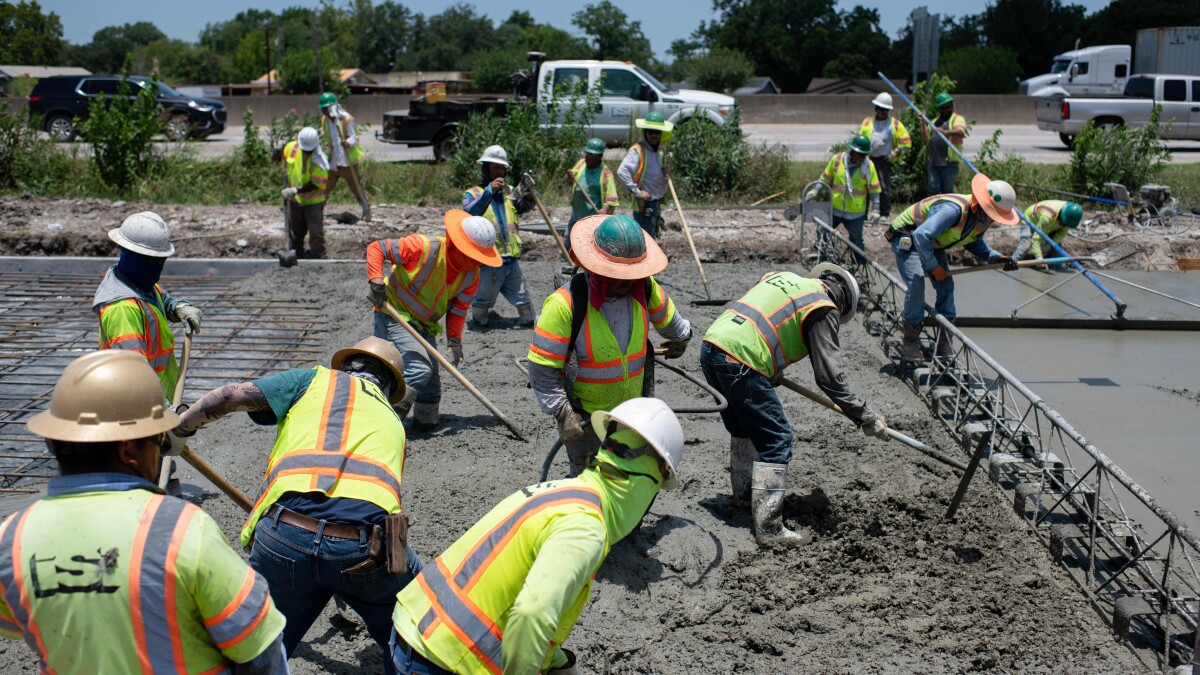
Climate change damaging roads is becoming an increasingly visible challenge as prolonged heat waves and heavier rainfall place growing pressure on transportation infrastructure across the United States. Recent episodes of extreme heat caused pavement failures in multiple states, disrupting travel during one of the busiest holiday weekends of the year and highlighting the vulnerability of highways built for historical weather conditions.
Transportation engineers warn that rising temperatures, more frequent heat waves, and increasingly intense precipitation are accelerating wear on roads, bridges, and highways. As these climate patterns become more common, governments may face significantly higher costs for infrastructure maintenance, repairs, and future construction.
The growing challenge is prompting transportation agencies and researchers to reconsider how roads are designed so they can better withstand the changing climate over the coming decades.
Extreme Heat and Heavy Rainfall Accelerate Pavement Damage
Road surfaces naturally expand during periods of intense heat. When moisture weakens the ground beneath pavement, that expansion can cause concrete slabs to lift, crack, or buckle, creating hazardous driving conditions that often require immediate repairs.
Engineers explain that concrete highways rely on expansion joints and steel reinforcement to accommodate normal temperature changes. However, when temperatures exceed the conditions anticipated during the original design process, pavement can expand beyond its intended limits and fail unexpectedly.
Asphalt roads respond differently. Instead of buckling, asphalt softens under prolonged heat, making it more susceptible to rutting and surface deformation, particularly in areas with slow-moving or heavy traffic. While asphalt can often be repaired more quickly than concrete, it generally requires more frequent maintenance throughout its lifespan.
Engineers Explore More Resilient Road Designs
Civil engineers are increasingly evaluating construction methods capable of improving road durability under more extreme weather conditions. Potential solutions include stronger concrete reinforcement, modified expansion joint spacing, higher-performance asphalt mixtures, and improved drainage systems that reduce water accumulation beneath road surfaces.
Many experts emphasize that infrastructure design depends heavily on accurate long-term climate projections. Roads have traditionally been engineered using historical weather data, but shifting climate conditions may require updated design standards that account for more frequent temperature extremes and heavier rainfall events.
Although more resilient construction techniques are available, they generally increase initial project costs. Transportation agencies must therefore balance long-term durability with budget limitations while determining acceptable levels of risk for future infrastructure investments.
Adapting Infrastructure Will Require Long-Term Investment
Infrastructure specialists increasingly agree that adapting transportation systems to changing climate conditions will require sustained planning, innovation, and investment. Roads, bridges, and other public assets constructed decades ago may no longer be designed for the environmental conditions they now experience.
Modern engineering practices continue evolving as researchers develop stronger materials, improved construction techniques, and more sophisticated predictive models that help transportation agencies anticipate future climate risks. Sharing research across universities, government agencies, and industry partners will play an important role in improving infrastructure resilience.
As climate patterns continue changing, investments in more durable transportation networks may help reduce long-term repair costs, improve public safety, and minimize disruptions caused by increasingly frequent extreme weather events. The decisions made today regarding road design and maintenance are likely to shape the reliability of America’s transportation infrastructure for decades to come.