
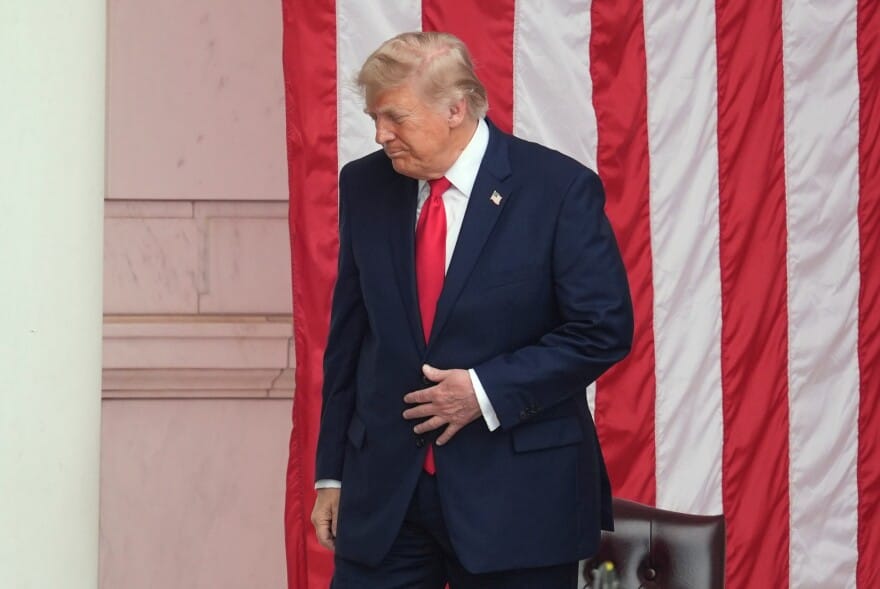
Donald Trump is scheduled to undergo another medical evaluation at Walter Reed National Military Medical Center as public attention surrounding the president’s health and physical condition continues to intensify during his second term in office.
The White House described Tuesday’s appointment as a “routine annual dental and medical assessment” and emphasized that the visit is part of the president’s standard preventive healthcare schedule. However, the appointment marks Trump’s third trip to Walter Reed within a 13-month period, fueling continued speculation and debate regarding his overall health.
Trump, who turns 80 in June, is currently the oldest individual ever sworn into the presidency. Questions about presidential fitness, aging and cognitive ability have remained central topics in American politics over the last several election cycles, particularly following concerns that surrounded former President Joe Biden during the 2024 campaign season.
The White House has repeatedly defended Trump’s physical stamina and mental sharpness, pointing to his packed political schedule, frequent travel and ongoing public appearances as evidence of strong health and endurance.
For additional political coverage and White House updates, readers can visit The White House and Congress.gov.
Walter Reed Visits Continue to Draw Public Attention
Trump’s latest appointment follows a series of previous medical visits that generated significant media scrutiny.
His last full annual physical examination reportedly took place in April of last year. Shortly afterward, Trump publicly stated that he had performed exceptionally well on a cognitive assessment administered during the evaluation. White House physicians later released a memo describing him as being in “excellent health.”
Several months later, Trump returned to Walter Reed for what officials called a scheduled follow-up appointment. The visit immediately triggered renewed speculation online regarding possible health concerns due to the unusual frequency of presidential medical evaluations.
In December, White House physician Capt. Sean Barbabella disclosed that Trump had also undergone a CT scan intended to assess his cardiovascular and abdominal health. Officials again stated that the president remained in strong physical condition.
Despite those reassurances, public speculation persisted after several appearances showed visible bruising on Trump’s hands and occasional swelling around his ankles. During an interview earlier this year, Trump addressed the bruising directly and said he believed it was linked to frequent aspirin use.
The president also reportedly expressed regret about undergoing the October CT scan because it intensified public speculation surrounding his health.
Medical transparency surrounding U.S. presidents has historically remained a sensitive issue, particularly because presidential health can directly influence public confidence, financial markets and international diplomacy.
Additional information about presidential healthcare and military medicine can be found through Walter Reed National Military Medical Center and U.S. Department of Health and Human Services.
Health and Age Continue to Shape Modern Presidential Politics
Trump’s health remains politically significant partly because physical and cognitive fitness became major themes during the 2024 presidential campaign.
Throughout the election cycle, Trump frequently criticized Biden’s age, stamina and verbal performance, often using nicknames and questioning whether Biden was capable of continuing as commander-in-chief. Biden’s public appearances later became increasingly scrutinized after several highly publicized verbal mistakes and a difficult debate performance during the campaign.
Biden eventually withdrew from the race less than a month after the widely discussed debate, dramatically reshaping the political landscape heading into the election.
Now serving another term, Trump faces many of the same questions once directed at his predecessor. Political analysts note that concerns about aging leadership have become increasingly common in Washington as several of the nation’s highest-ranking officials continue serving well beyond traditional retirement age.
The White House communications team has aggressively promoted Trump’s energy levels and demanding work schedule in response to ongoing concerns. Officials regularly highlight his meetings with international leaders, campaign events and extended public appearances.
White House Communications Director Steven Cheung recently praised Trump’s work ethic during discussions surrounding U.S.-Iran diplomatic negotiations, describing the president as intensely focused and constantly engaged in government operations.
Meanwhile, cabinet officials have also weighed in publicly regarding Trump’s health. Earlier this year, Robert F. Kennedy Jr. discussed Trump’s medical evaluations during a podcast interview and claimed physicians reviewing the president’s records were impressed by several health indicators.
Presidential Health Transparency Remains a National Issue
The debate surrounding Trump’s health underscores broader questions about how much medical information presidents should disclose to the public while serving in office.
Presidents of the United States receive continuous monitoring from White House physicians and have direct access to some of the most advanced preventive medical care in the world. Walter Reed visits are commonly used for annual physical exams, advanced imaging procedures and specialized consultations.
At the same time, presidential administrations have historically controlled the amount of health information released publicly, often balancing transparency with privacy and national security considerations.
Trump’s previous hospitalization for COVID-19 in 2020 demonstrated how rapidly presidential health concerns can become global political issues. Since then, scrutiny surrounding the physical condition of American presidents has only intensified.
As Trump prepares for another medical assessment at Walter Reed, political observers, voters and international allies alike are expected to closely watch for any new details regarding the president’s condition and long-term fitness for office.