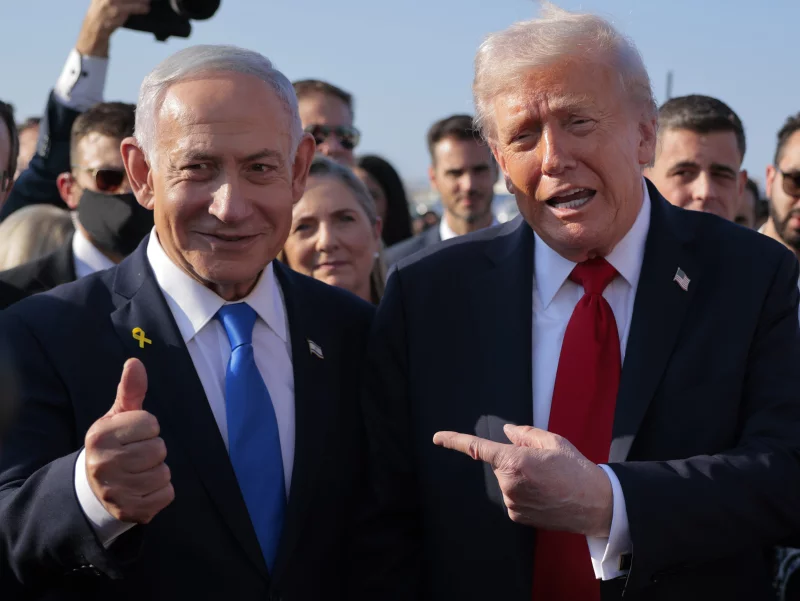
The Trump Netanyahu relationship has come under renewed attention after President Donald Trump publicly confirmed that he sharply criticized Israeli Prime Minister Benjamin Netanyahu during a recent phone conversation. This conversation concerned planned military operations in Lebanon. The exchange reportedly resulted in Israel postponing airstrikes targeting areas near Beirut. This outcome highlights growing differences between the two leaders over regional security strategy and the future direction of Middle East diplomacy.
Trump acknowledged using strong language during the conversation when discussing Israel’s continued military actions against Hezbollah positions in Lebanon. Despite the unusually direct criticism, the president emphasized that his personal and professional relationship with Netanyahu remains intact. Nevertheless, the episode exposed emerging policy disagreements at a time when Washington, Jerusalem, and regional actors continue navigating a fragile security environment.
The incident has intensified debate among political observers, military analysts, and policymakers about the future of the Trump Netanyahu relationship. Both leaders must now balance military objectives, ceasefire arrangements, and broader geopolitical considerations involving Iran and its regional allies.
Trump Netanyahu Relationship Tested by Lebanon Escalation
Tensions escalated after Israel expanded military operations in southern Lebanon in response to Hezbollah attacks targeting communities in northern Israel. Israeli officials argued that continued military pressure was necessary to degrade Hezbollah’s capabilities and reduce threats against Israeli civilians.
As operations intensified, Netanyahu publicly reaffirmed Israel’s commitment to maintaining military pressure on Hezbollah. Reports of potential airstrikes against targets located in Beirut’s southern suburbs raised concerns about a broader escalation. This area is widely regarded as a significant Hezbollah stronghold. Moreover, it has frequently been at the center of regional security tensions.
During this period, Trump reportedly contacted Netanyahu directly to express concerns regarding the widening conflict. The discussion became one of the most notable moments in the Trump Netanyahu relationship since Trump’s return to the White House. Information regarding U.S. foreign policy priorities and presidential actions can be found through The White House.
Following the conversation, planned strikes on Beirut were halted, at least temporarily. However, Israeli military activities continued in parts of southern Lebanon. This reflects Israel’s determination to pursue security objectives while managing diplomatic pressures from allies.
The developments also affected civilians in Lebanon. Concerns over possible attacks near densely populated urban areas prompted significant movement of residents. This created traffic congestion and increased fears of a wider confrontation.
Regional Diplomacy and Iran Add New Pressure
The Trump Netanyahu relationship is also being shaped by differing approaches toward Iran. While both leaders previously supported aggressive measures aimed at limiting Iranian influence across the region, recent developments suggest potential divergence regarding long-term strategy.
Iran reacted to Israel’s operations in Lebanon by signaling that indirect negotiations with the United States would be suspended. The move complicated diplomatic efforts already affected by regional instability and ongoing security concerns.
Trump has increasingly emphasized the possibility of negotiated arrangements that could reduce tensions and avoid a broader regional conflict. Information regarding diplomatic initiatives and international security discussions can be accessed through U.S. Department of State.
Netanyahu, meanwhile, has consistently favored maintaining substantial military pressure against Iranian-backed groups operating throughout the Middle East. Israeli officials argue that sustained operational pressure remains necessary to weaken hostile networks and prevent future attacks against Israeli territory.
These differences do not necessarily indicate a complete break between the two leaders. Instead, they reflect competing assessments regarding how best to achieve regional stability while protecting national security interests. Strategic issues involving Lebanon, Hezbollah, and Iran continue to influence decision-making across governments and international institutions. This includes United Nations discussions focused on regional peace and security.
Political Reactions Highlight Growing Debate
The latest developments have triggered extensive political debate within Israel and abroad. Critics of Netanyahu argue that Israel has become increasingly constrained by Washington’s diplomatic priorities. In contrast, supporters contend that maintaining close coordination with the United States remains essential for Israel’s long-term security interests.
Several Israeli political figures and commentators have suggested that the Trump Netanyahu relationship now includes more visible disagreements than in previous years. Some argue that U.S. influence has played a decisive role in shaping Israel’s approach toward ceasefires and military operations across multiple fronts.
At the same time, many analysts note that the strategic partnership between the United States and Israel remains one of the strongest bilateral relationships in global politics. Security cooperation, intelligence sharing, defense initiatives, and regional coordination continue through institutions supported by organizations such as NATO and allied governments.
Despite public disagreements, Trump reiterated that he maintains a positive working relationship with Netanyahu and respects the challenges facing Israel’s leadership during a period of ongoing conflict. Netanyahu has likewise emphasized the importance of preserving close ties with Washington while pursuing policies he believes are necessary to safeguard Israeli security.
The evolving Trump Netanyahu relationship is expected to remain a central factor in discussions surrounding Lebanon, Iran, regional ceasefires, and future diplomatic negotiations. Policymakers will assess the next phase of Middle East security dynamics moving forward.