
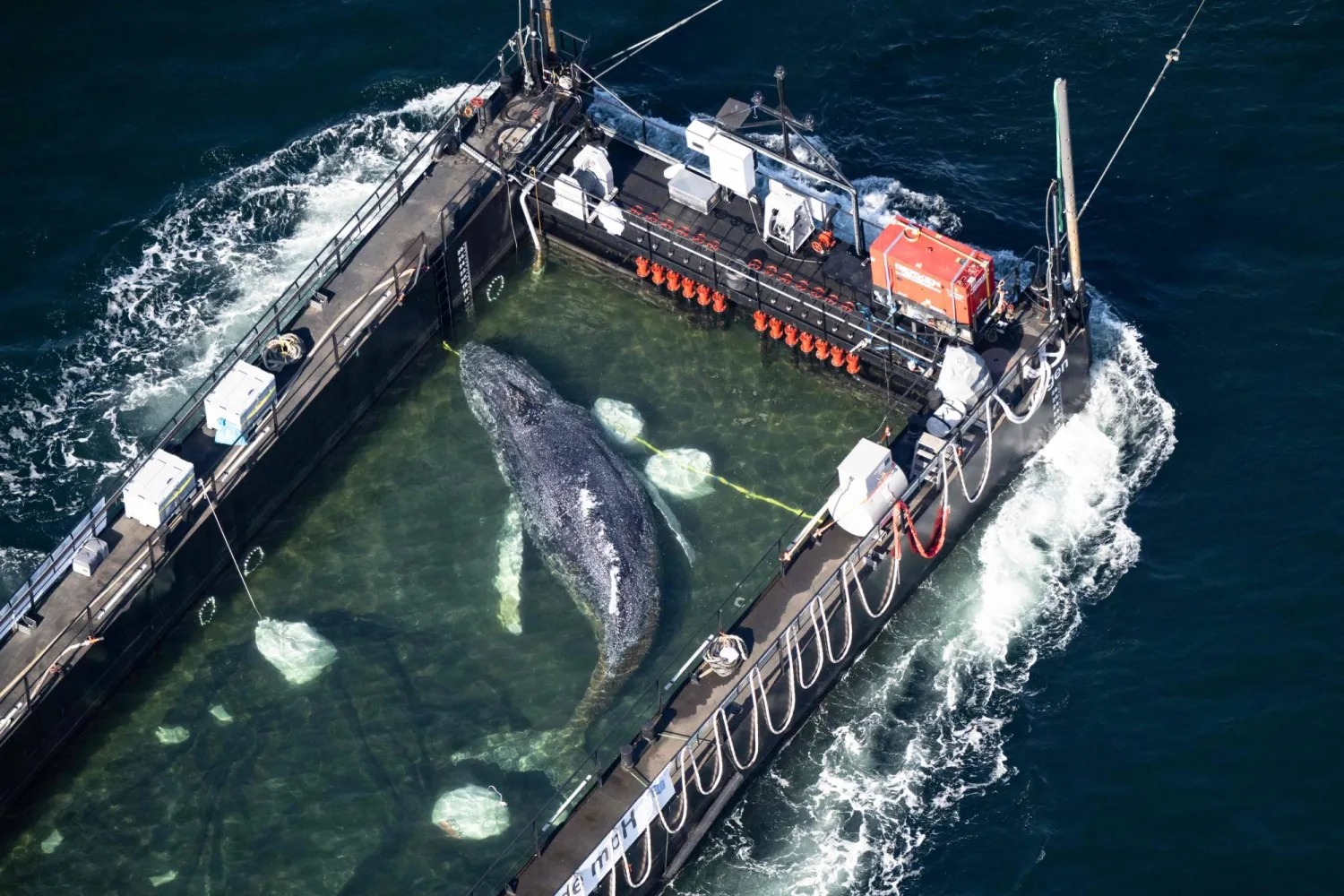
The humpback whale known as Timmy has been successfully released into the North Sea after weeks of being stranded in shallow coastal waters near Germany. The rescue, which drew global attention, marks the culmination of multiple attempts to return the animal to deeper waters.
Complex Rescue Operation Draws Global Attention
Timmy, measuring approximately 40 feet in length, had been trapped in shallow waters since March, sparking concern among marine experts and the public alike. The final rescue attempt—reportedly the fifth—required an extensive logistical operation involving a specially designed, water-filled barge.
The mission was financed by private donors, enabling teams to transport the whale safely from restricted coastal zones into the open sea. Footage of the release showed Timmy actively swimming and expelling water through its blowhole, an encouraging sign that suggested at least short-term recovery following the relocation.
The story quickly gained international traction, with social media users and environmental observers closely following each stage of the rescue.
Health Concerns Cloud Outcome
Despite the apparent success of the operation, marine specialists have expressed concern about Timmy’s long-term survival. Prolonged stranding can severely impact a whale’s physiology, including muscle damage, dehydration, and stress-related complications.
The International Whaling Commission had previously advised against intervention, warning that moving the whale could increase stress without significantly improving its chances of recovery. According to the organization, such actions, while well intentioned, may not always produce positive outcomes for animals already in critical condition.
Even after the release, experts emphasize that the whale’s ability to survive will depend on whether it can resume normal behaviors, including feeding and migration.
Rescue Marks Beginning, Not the End
Authorities and conservation groups caution that Timmy’s release should not be viewed as a definitive success, but rather as the start of a recovery process. For the rescue to be considered fully effective, the whale must demonstrate sustained mobility, regain strength, and reintegrate into its natural habitat.
The case underscores the challenges of wildlife intervention, particularly with large marine mammals, where decisions often involve balancing ethical considerations with uncertain outcomes. While the rescue showcased significant technical and financial commitment, its ultimate success will only be determined over time as Timmy navigates the open waters of the North Sea once again.