
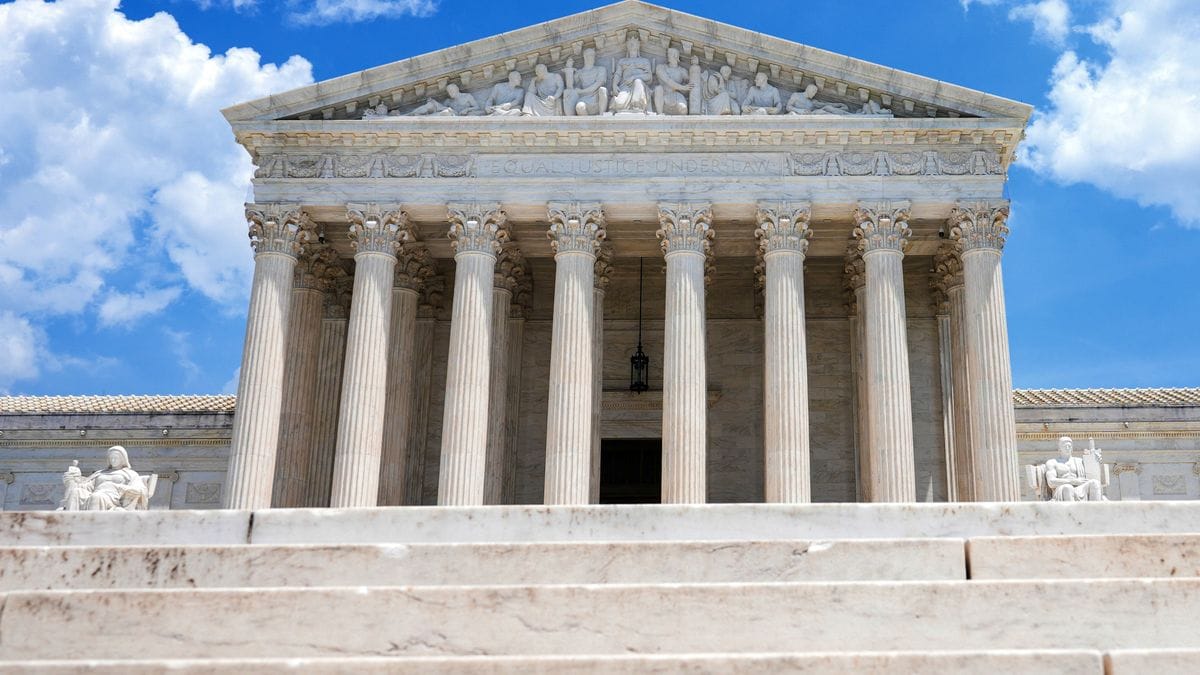
The Supreme Court marijuana user gun rights decision has become one of the most closely watched constitutional rulings of the year. This comes after the United States Supreme Court unanimously determined that the federal government’s prosecution of a Texas cannabis user for possessing firearms violated the Second Amendment. As a result, the ruling highlights the growing legal tension between federal firearm regulations and the expanding legalization of marijuana across the country.
The case centered on Ali Hemani, a Texas resident who was charged under a federal statute prohibiting unlawful drug users from possessing firearms. While the Court’s decision was narrowly tailored to the facts of the case, it is expected to influence future legal challenges involving gun ownership. Furthermore, it could impact federal drug laws and constitutional protections.
As marijuana use becomes increasingly common in the United States, courts continue to face complex questions regarding how long-standing federal statutes should apply. This is especially concerning millions of citizens living in states where cannabis use has been legalized or decriminalized. Additional information regarding federal firearm regulations can be found through Bureau of Alcohol, Tobacco, Firearms and Explosives.
Supreme Court Marijuana User Gun Rights Case Focused on Constitutional Protections
The legal dispute began after federal agents conducted a search of Hemani’s residence in 2022 and discovered a handgun along with approximately 60 grams of marijuana. During the investigation, Hemani acknowledged that he used marijuana regularly. Reportedly, he used marijuana every other day.
Federal prosecutors relied on a law that prohibits unlawful users of controlled substances from possessing firearms. Hemani challenged the statute, arguing that it violated his constitutional right to keep and bear arms. Moreover, he claimed it failed to clearly define who qualifies as an “unlawful user.”
The Supreme Court agreed that the government’s application of the statute raised serious constitutional concerns. Writing for the Court, Justice Neil Gorsuch emphasized that the ruling was limited in scope. Thus, it did not automatically invalidate all restrictions involving drug users and firearm possession.
The decision leaves open the possibility that Congress could enact more narrowly tailored regulations. Alternatively, prosecutors could pursue cases supported by individualized evidence demonstrating that a person’s drug use presents a specific danger to public safety.
Additional constitutional information related to the Second Amendment can be reviewed through Cornell Law School Legal Information Institute.
Growing Marijuana Legalization Intensifies Federal Gun Law Debate
One of the central issues highlighted by the case is the rapidly changing legal status of marijuana throughout the United States. More than 40 states have adopted some form of medical or recreational cannabis legalization. This has created a significant contrast between state-level policies and federal law.
Attorneys representing Hemani argued that the statute’s language is overly vague because it does not specify how frequently an individual must use marijuana to qualify as an unlawful user. Due to the absence of a clear definition, they argued, millions of Americans could be exposed to criminal penalties. This could happen despite posing little risk of firearm misuse.
The case attracted support from a broad coalition of organizations with differing political views. Civil liberties advocates and gun rights groups joined in urging the Court to rule in favor of stronger constitutional protections. Meanwhile, supporters of stricter gun regulations defended the federal law as an important public safety measure.
Current information regarding federal cannabis policy can be accessed through Substance Abuse and Mental Health Services Administration.
Second Amendment Challenges Continue Following Landmark Gun Rights Rulings
The Supreme Court marijuana user gun rights decision is part of a broader legal trend that emerged after the Court’s landmark 2022 Second Amendment ruling. That earlier decision established a new constitutional framework. It requires the government to demonstrate that firearm regulations are consistent with the nation’s historical tradition of gun regulation.
Since then, courts across the country have examined numerous firearm restrictions under this historical analysis test. As a result, hundreds of legal challenges have been filed against federal, state, and local gun laws.
The Court’s latest ruling does not eliminate all restrictions involving drug users and firearms. Instead, it reinforces the principle that regulations affecting constitutional rights must be carefully drafted and supported by clear legal standards.
Legal observers expect additional litigation involving firearm ownership and controlled substances as lawmakers, courts, and regulators continue to navigate the intersection of constitutional rights and public safety concerns. At the same time, they must respond to evolving cannabis laws. Further details about Supreme Court decisions and opinions are available through Supreme Court of the United States.